BaseMTG · Guides
MTG Reserved List Explained: 572 Cards, Never Reprinted
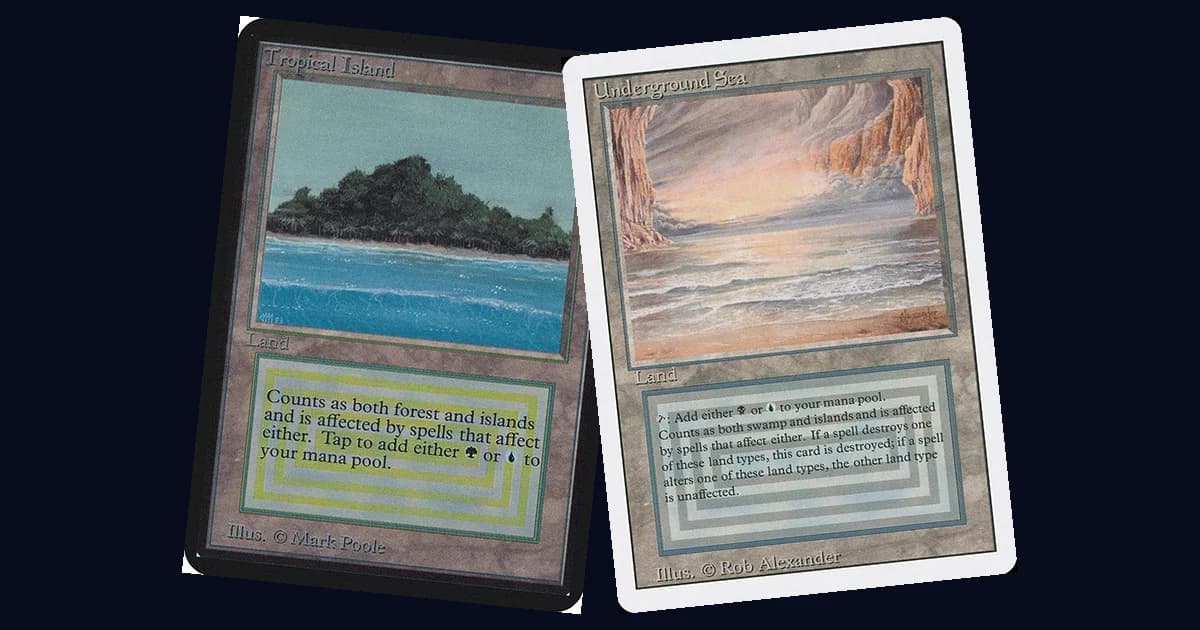
MTG Reserved List explained: it is a public promise that permanently limits reprints for 572 early Magic cards. The policy began as a response to collector concerns, and its long record is now central to how the market prices scarcity, a very different force from the ordinary preorder-week volatility a brand-new set shows before supply catches up.
TL;DR: The MTG Reserved List is exactly 572 cards, published March 4, 1996, that Wizards has permanently promised never to reprint. The cards were originally printed no later than June 1999, mostly from Magic's earliest sets. Because supply is frozen by a 30-year public policy while demand keeps growing, prices for cards like original dual lands can run around $500 each, making a 4-color Commander manabase cost $2,000-3,000 in dual lands alone.
Key Takeaways
- The Reserved List contains exactly 572 Magic cards.
- Wizards published it on March 4, 1996, after collectors objected that reprints could reduce the value of early cards.
- The cards were originally printed no later than June 1999 and mostly come from Magic's earliest sets.
- Wizards' policy says no cards will be added to or removed from the list, and the listed cards will not be reprinted.
- The result is a fixed-supply market. Demand from new players and Commander can make Reserved List cards very expensive, but scarcity alone does not make every card a good purchase.
What Is the Reserved List? (quick answer)
The Reserved List is a list of exactly 572 Magic cards, established in 1996, that Wizards of the Coast has permanently promised never to reprint. It covers cards originally printed no later than June 1999, and Wizards' policy also says that no further cards will be added to or removed from the list. (MTG Wiki)
That definition matters because the list is a supply rule, not a ranking of the most powerful or valuable cards. A card can be old, rare, expensive, or popular without being Reserved List. Its status depends on whether it appears on the list and whether its original printing falls within the policy's history.
Why the Reserved List Exists
Wizards first published the Reserved List on March 4, 1996, as part of Magic's reprint policy. The immediate issue was collector confidence. Early Magic cards had acquired value partly because they were old and difficult to replace, while reprints created concern that an identical new copy could reduce the value of cards already held as collectibles. The policy was Wizards' response to that backlash. (MTG Wiki)
This origin explains why the Reserved List is different from an ordinary product decision. A normal set can omit a card because the design team did not need it, because the card does not fit the environment, or because a future release may use it later. The Reserved List addresses a promise about supply. It tells collectors that certain cards will not return in a regular reprint, even if a future set could otherwise use them.
The policy did not make every listed card equally desirable. It also did not promise that prices would rise in a straight line. It created a common baseline for the market: for these 572 cards, a new tournament or Commander demand spike cannot be answered by printing more copies of the same card. That distinction is the foundation for both the appeal and the criticism surrounding the list.
The Exact Numbers: 572 Cards, Frozen in 1999
The number is 572, not an estimate and not a count that changes whenever a new set arrives. Each card on the list was originally printed no later than June 1999. Wizards' stated policy is that no additional cards will ever be added and no cards will ever be removed. (MTG Wiki)
Most of the list comes from Magic's earliest sets: Alpha, Beta, Unlimited, Arabian Nights, Antiquities, Legends, The Dark, and Fallen Empires. That concentration makes historical sense. These sets established the early card pool, and they are the releases most closely associated with the collector concerns that led to the policy.
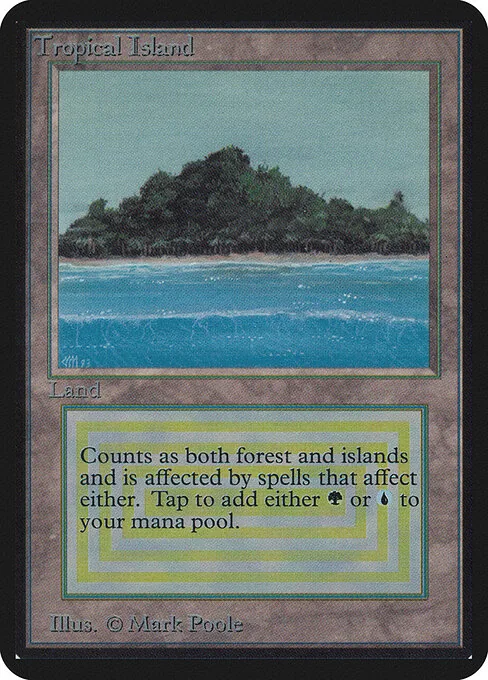 An original Alpha printing of Tropical Island, a classic dual land and one of the 572 cards on the Reserved List.
The cutoff is useful, but it is not a substitute for checking the list. "Printed before June 1999" describes the population from which the cards come, not a blanket rule that every card from that period is protected. Some early cards are not on the Reserved List, while a listed card's status is ultimately confirmed by the policy's card-by-card record.
The same numbers also clarify what the list does not mean. It does not freeze all old Magic cards, all rare cards, or all cards from early sets. It freezes a defined group of 572 cards under a stated reprint policy. That precision is important when evaluating a purchase or explaining why one old card carries a different supply risk from another.
Why Wizards Can't Just Print More
The short answer is that the Reserved List is a public policy Wizards has maintained for about 30 years, not a casual suggestion made for one product announcement. Wizards has never violated the policy by reprinting the listed cards, and it has stated that the list will not gain or lose cards. (MTG Wiki)
That history is what gives the word "permanent" practical meaning. A collector is not relying only on a recent marketing statement. The same policy has been visible since 1996, and the company has continued to operate within it through many changes in Magic's sets, formats, and player base. Past performance does not guarantee any future price, but it does explain why buyers and sellers treat the supply cap as credible.
There is an important distinction between a public company policy and a claim that a particular card will always be valuable. The policy limits one route for increasing supply. It does not control demand, gameplay preferences, card condition, macroeconomic conditions, or the prices of similar cards. A Reserved List card can still lose value if fewer people want it. What is unusually durable is the reprint restriction, not a guaranteed return.
This is also why substitutes matter. Wizards can print a new card with similar gameplay, and players can choose non-Reserved List lands or spells. Those options may reduce demand for an individual card, but they do not create additional copies of the original. For the original card, the policy still leaves the historical supply in place while the audience for Magic can expand.
The Dual Land Price Example
Original dual lands are a clear way to see the policy in a deckbuilding budget. At the category level, a single original dual land can cost around $500. A four-color Commander manabase can therefore run about $2,000-3,000 in dual lands alone, before a single spell is purchased. These are category-level figures, not a promise that every copy has the same price. (Hoardgate)
The arithmetic is simple, but the cause is structural. The original dual lands are Reserved List cards, so Wizards cannot respond to increased demand by printing more copies of those same cards. At the same time, Commander has brought more players toward multicolor decks, which increases the number of people who may value efficient access to several colors. Fixed supply meets a larger and continuing demand pool.
That does not mean every Commander player needs those lands. A deck can use other mana sources, and a player may reasonably decide that several thousand dollars belongs elsewhere. The example is useful because it turns an abstract policy into a budget question: reprint protection can make the cost of a single category of lands comparable to the cost of an entire deck built from modern cards.
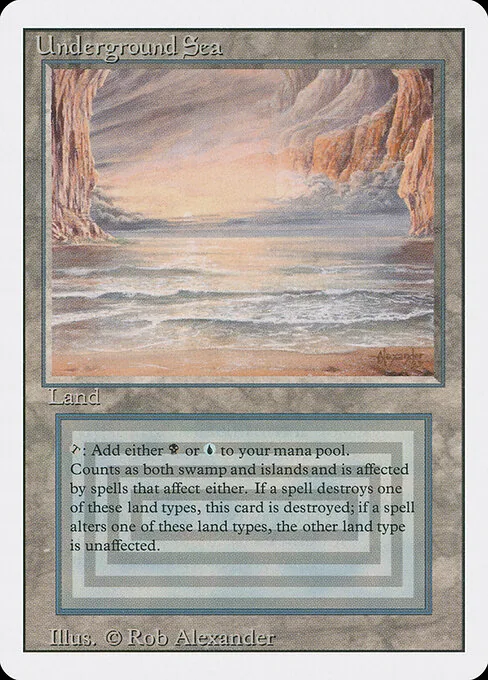 A Revised (white-border) printing of Underground Sea. Border and edition change the collector premium, but every printing of a Reserved List card carries the same reprint protection.
GODEEPER: New sets also carry their own reprint risk before the Reserved List is even a factor. Secret Lair Reprint Risk: The Reserved List Framework →
It also shows why price discussions should separate scarcity from quality. The Reserved List explains why supply cannot expand through a direct reprint. It does not, by itself, determine whether a card is the best option for a deck, whether its price will rise, or whether the player experience justifies the expense.
Step-by-Step: Checking If a Card Is on the Reserved List
1. Confirm the original printing. Check when the card was first printed. The Reserved List covers cards originally printed no later than June 1999, so an old-looking card is only a starting point, not a conclusion.
2. Compare it with a reliable list. Check the card against Wizards' official Reserved List page or a verified database such as MTG Wiki. Use the card-by-card record rather than relying on a seller's label or a forum comment.
3. Separate rarity from policy status. Do not assume that an old rare is protected. The list contains a defined set of cards, and not every early rare appears on it. Rarity may affect demand and price, but it does not establish Reserved List status.
4. Keep foil rules separate. Foil versions of some post-1999 cards have their own separate rules. Those rules are unrelated to the original Reserved List, so do not treat a foil policy or a special printing rule as evidence that the underlying card is on this list.
What the Reserved List Means for Collectors
For a collector, the main benefit is clarity about one specific risk: a direct reprint of a listed card is excluded by Wizards' policy. That can make a Reserved List card attractive to someone who values historical scarcity, wants an original version for a collection, or wants to play with a card whose supply is unlikely to be expanded through a normal reprint.
The tradeoff is price. A fixed supply can support high prices when demand is strong, but it cannot create demand on its own. Before buying, decide whether the goal is collecting, playing, or speculation. A player may prefer a cheaper substitute and keep the rest of the budget for more cards. A collector may care more about owning an early piece of Magic history. A speculator must accept that policy protection does not guarantee appreciation.
Modern chase cards present a different decision. They may be easier to acquire today, but their future supply can be influenced by later products and reprints. Reserved List cards remove that particular uncertainty while introducing another: the purchase can require a large amount of money for a small number of cards. Comparing the two categories is therefore less about declaring one superior and more about matching the supply profile to the reason for buying.
The practical rule is to verify first and budget second. Confirm the exact card's status, understand that the cutoff does not cover every old rare, and use the price as one input rather than as proof of quality. The policy can explain a premium. It cannot tell you whether the premium fits your collection or your deck.
GODEEPER: Understanding a card's actual rules text and color identity matters just as much as its collector status when deciding what to buy for a specific deck. MTG Color Identity Explained: What Actually Counts →
Frequently Asked Questions
How many cards are on the MTG Reserved List?
There are exactly 572 cards on the MTG Reserved List. That count is part of Wizards' stated policy, not an approximate total that changes with each new expansion. The list is closed: Wizards says no additional cards will be added, and no current cards will be removed. (MTG Wiki)
When was the Reserved List created?
Wizards first published the Reserved List on March 4, 1996, as part of the Magic card reprint policy. It followed collector concerns that reprinting early cards could diminish their value as collectibles. The list was designed as a response to that concern, with the goal of limiting reprints for a defined group of cards.
Will Wizards ever remove a card from the Reserved List?
According to Wizards' policy, no. The policy says that no cards will be removed from the Reserved List and that no new cards will be added. Wizards has maintained that public policy for about 30 years, which is why the market generally treats the reprint restriction as permanent rather than as a temporary product decision.
Are dual lands on the Reserved List?
Original dual lands are part of the Reserved List category discussed here. Because those original cards cannot receive a direct reprint under the policy, a single copy can cost around $500, while a four-color Commander manabase can reach $2,000-3,000 in dual lands alone. Those figures describe a category range, not every individual copy.
Does every old rare belong to the Reserved List?
No. The list contains exactly 572 specified cards, mostly from early sets, but age and rarity do not automatically establish status. Check the card's original printing, then compare the exact card with Wizards' list or a verified database. Treat a seller's "Reserved List" description as a claim to verify, not as proof.
Can Wizards print a functional replacement for a Reserved List card?
Wizards can design other cards with similar roles, and players can use substitutes in many decks. That does not add copies of the original card. The policy limits reprinting the listed card itself, while new designs may still affect demand by giving players other ways to build a deck or access its colors.
Related Reading
- MTG Card Market Complete Guide: the full hub for price guides, grading, and collecting content.
- MTG Commander Deck Guide: Building, Budget, and cEDH: where a 4-color manabase and dual lands actually get used.
- cEDH Staples Guide: Fast Mana, Tutors, and Interaction: some of the highest-power decks that most want efficient multicolor mana.
References
- MTG Wiki, "Reserved List", for the policy history, exact card count, cutoff, and list rules.
- Hoardgate, "MTG Reserved List Dangers: 2026 Dual Lands, Legacy, Commander", for the category-level dual land and four-color Commander budget example.
Was this guide helpful?
About the author

Card Market & Collecting Analyst
Covers the MTG card market: set-review value calls, reprint-risk analysis, and buy/sell timing around spoiler season and Secret Lair drops. Not a financial advisor, calls it like a longtime speculator who has been wrong plenty of times too.
- Tracks TCGplayer market-price data across every new set
- Covers reprint announcements and their price impact
- Follows Universes Beyond crossover sets for crossover-collector demand
Keep reading
Secret Lair Reprint Risk: The Reserved List Framework
Guides · 12 min
MTG Card Price Guide: Values, Reprints, and Selling
Guides · 4 min
Dimir Midrange Standard Deck Guide for October 2026
Guides · 12 min
Bury MTG Meaning, Plus Extort and Discover Explained
Guides · 11 min
MTG Board Wipes Explained: How They Work and When to Cast
Guides · 10 min
Izzet Spellementals Standard Deck Guide (September 2026)
Guides · 12 min
Mono-Green Landfall Standard Deck Guide (September 2026)
Guides · 12 min
cEDH Meaning in MTG: What Competitive Commander Actually Is
Guides · 11 min
Disclaimer
This article is published for informational and entertainment purposes. It does not constitute professional financial, legal, or technical advice. Game performance, online services, patch schedules, and store listings change. Verify critical details (pricing, system requirements, regional availability) with publishers and storefronts before you buy. Affiliate links, where present, help support our editorial work and are labelled in our affiliate disclosure.