Loading…
Loading…
BaseMTG · Guides
How to play Magic: The Gathering, from turn structure to color identity. Covers the five colors, mana bases, deck-building basics, and format legality.
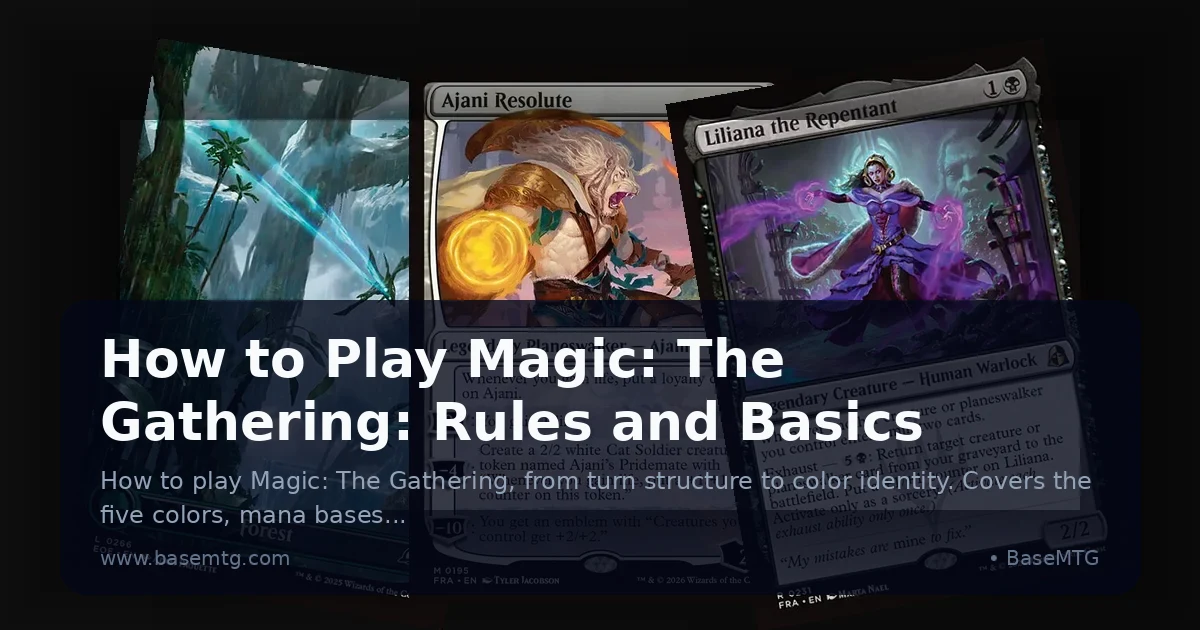
This page covers how to play Magic: The Gathering from the ground up. Every deck guide, set review, and tier list on this site assumes you already know the fundamentals covered here: the rules, the five colors, and the deck-building basics that everything else builds on.
TL;DR: Magic is played to 20 life with 60+ card decks (100-card singleton in Commander). The five colors, White/Blue/Black/Red/Green, each have a distinct philosophy, and color identity (every colored symbol on a card, including reminder text) governs what fits in a Commander deck. Standard uses only recent sets; Commander draws from nearly the whole card pool.
Each player starts at 20 life with a 7-card hand drawn from their own deck (the "library"). On your turn you can play one land, then cast spells by paying their mana cost using mana your lands produce. Creatures you control can attack; unblocked damage comes off your opponent's life total. The game ends when a player hits 0 life, tries to draw from an empty library, or a card explicitly says they lose.
Turn structure runs through untap, upkeep, draw, main phase, combat, second main phase, and end step, with each player getting a chance to respond to spells and abilities on what's called "the stack." New players don't need to memorize every phase name on day one; knowing you get priority before things resolve, and that you can hold up instant-speed responses, covers most of what matters at the table.
Before the game starts, every player draws a fresh 7-card hand and may mulligan: shuffle back in and draw a new 7, then put one card on the bottom of the library for each mulligan taken (the London mulligan). A hand with zero lands or all lands is an almost automatic mulligan; beyond that, whether to keep depends on the deck's curve and how many colors it needs to cast its early plays.
Magic's color pie assigns each color a philosophy: White values order and efficient creatures, Blue values card draw and control, Black values resource trades and reanimation, Red values speed and direct damage, Green values big creatures and mana ramp. Most competitive decks combine two or three colors to cover each other's weaknesses.
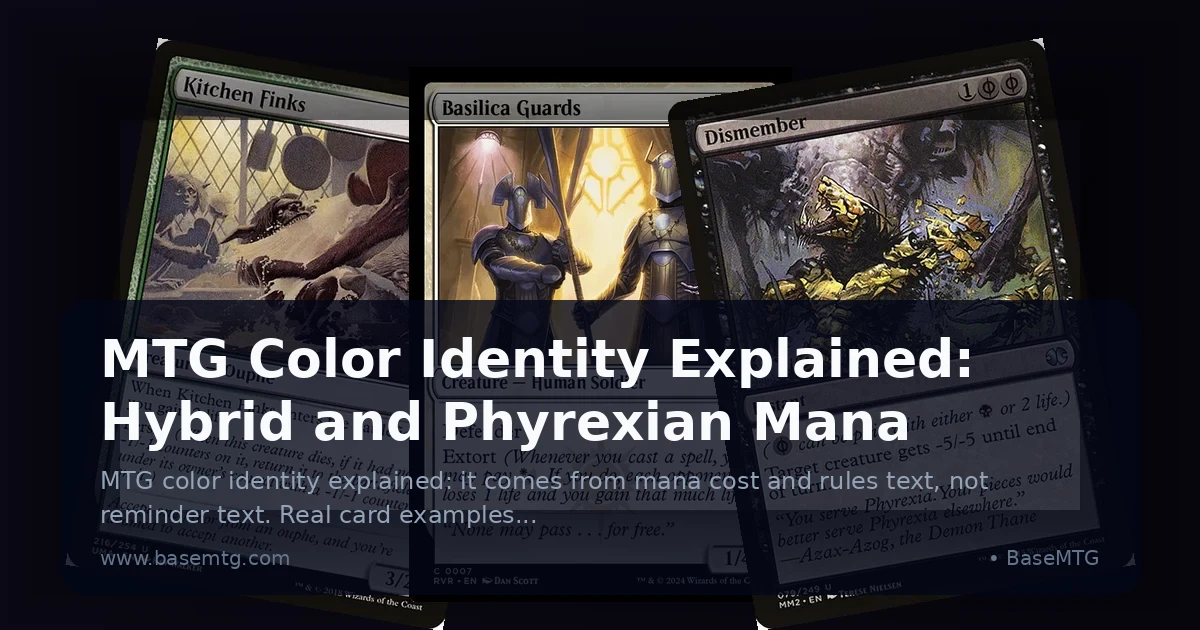
Color identity is a stricter concept than "what colors does this card cost." It includes every colored mana symbol anywhere on the card, including in reminder text. This mostly matters in Commander, where your 99 non-commander cards must all fit inside your commander's color identity, not just its casting cost.
About the author

Commander & Standard Deck Analyst
Commander and cEDH grinder covering deckbuilding, precons, and the Standard/Commander metagame. Plays out of a local game store scene, reads spoilers the day they drop.
Disclaimer
This article is published for informational and entertainment purposes. It does not constitute professional financial, legal, or technical advice. Game performance, online services, patch schedules, and store listings change. Verify critical details (pricing, system requirements, regional availability) with publishers and storefronts before you buy. Affiliate links, where present, help support our editorial work and are labelled in our affiliate disclosure.
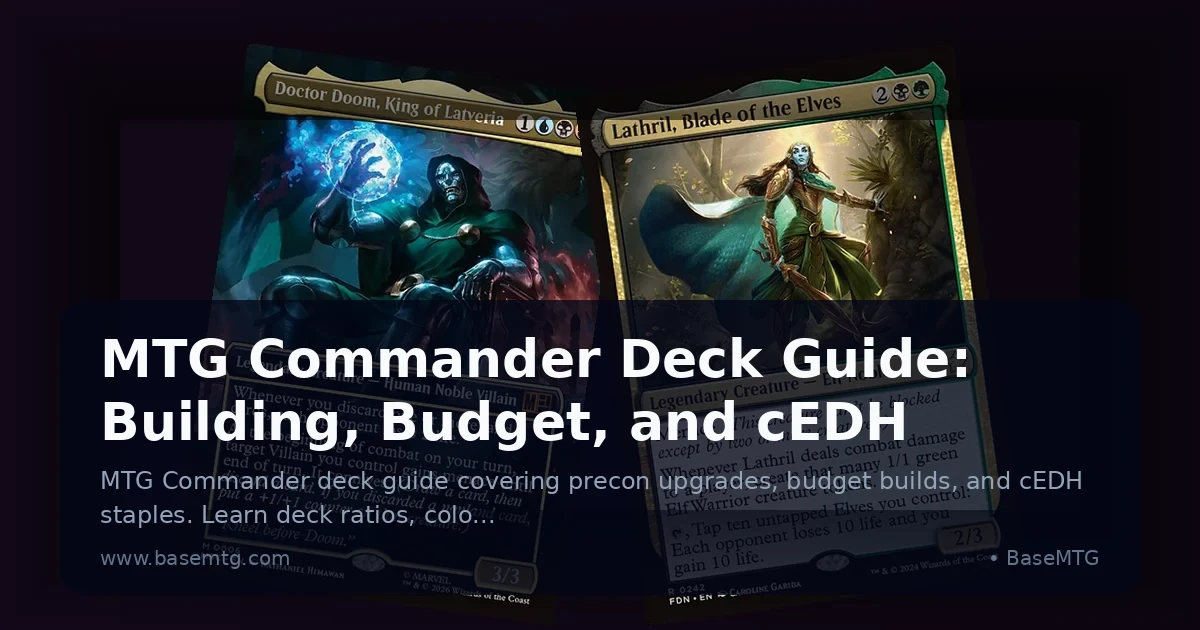
A Standard deck needs 60+ cards with a sensible mana base, typically 16-18 lands for a two-color deck before adjusting for curve. Building around a clear game plan (aggro, midrange, control, or combo) makes card choices easier than picking "good cards" in isolation. Commander deck-building works differently: 100 cards singleton, built around your commander's abilities and color identity, usually running 36-38 lands since the format supports slower, grindier games.
Whichever format you're building for, the same core categories repeat: enough lands to actually cast your spells, some source of card advantage so you don't run out of gas, and removal or interaction so you have an answer when the opponent's plan is working better than yours. Aggro decks lean the ratios toward cheap threats and away from card draw; control decks flip that, running fewer early plays and more answers, betting on winning a longer game.
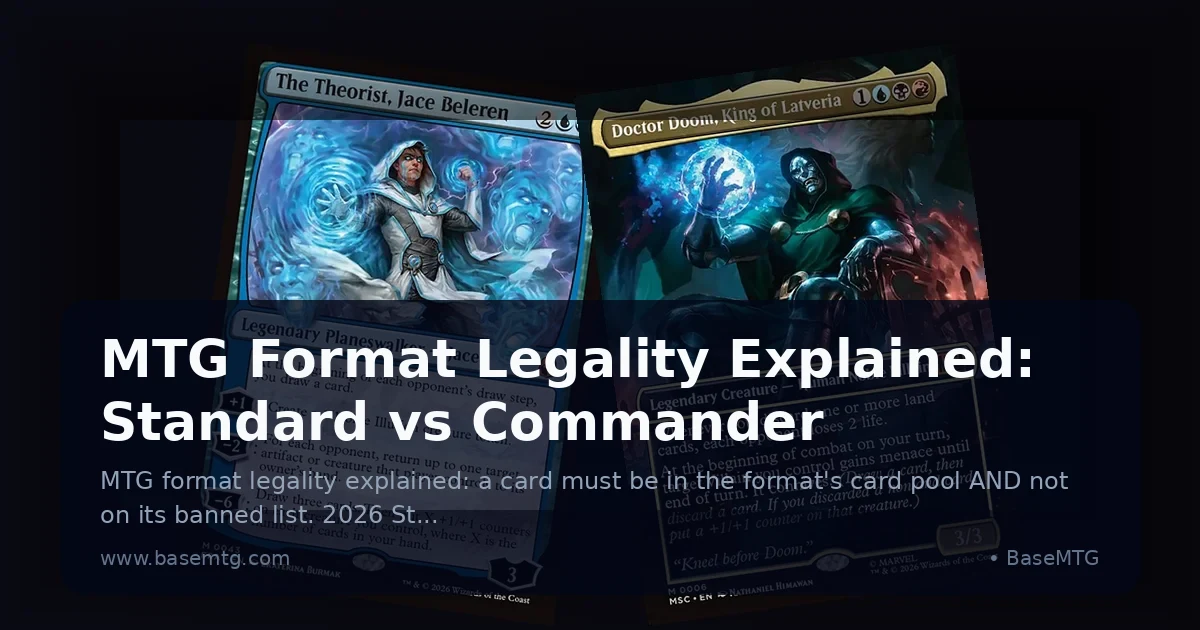
Standard uses only the most recently released sets and rotates periodically to keep the format from accumulating every card ever printed; 2026 specifically has no rotation event, with 18 sets legal simultaneously until the next rotation on 2027-01-23. Commander uses nearly the entire card pool back to Magic's earliest sets, restricted mainly by the banned list and each deck's color identity. Other formats (Modern, Pioneer, Pauper, Legacy) sit at different points on the same spectrum between "recent sets only" and "almost the whole card pool."
What is the goal of Magic: The Gathering? Reduce your opponent's life total from 20 to 0, though most games end another way first: decking them out (they run out of library) or resolving a specific win-condition card. A standard 1v1 game starts at 20 life on each side.
How many cards are in a Magic: The Gathering deck? A Standard-legal deck needs a minimum of 60 cards, with up to 4 copies of any non-basic-land card. Commander decks are the exception: exactly 100 cards, singleton (1 copy max per card, basic lands excepted).
What are the five colors in Magic: The Gathering? White, Blue, Black, Red, and Green (often abbreviated WUBRG). Each color has a defined philosophy and mechanical identity, for example Green ramps mana and plays big creatures, Blue draws cards and counters spells.
What is color identity in Magic: The Gathering? Color identity includes every mana symbol on a card, including in reminder text and mana costs of cards it references, not just its casting cost. It matters most in Commander, where every card in your deck must fit within your commander's color identity.
What's the difference between Standard and Commander? Standard is a 60-card constructed format using only the most recently released sets, built for 1v1 competitive play. Commander is a 100-card singleton format built around a legendary creature, usually played with 3-4 players and looser power-level norms.
Standard Metagame Tier List: Top 3 Decks (Sept 2026)
11 min read