Reality Fracture Draft Archetypes: All 10 Lanes Explained
Ten lanes, five built on a shared prepared spell and five on the Lorwyn Five. After two weeks of 17lands data, the blue pairs are on top and no lane is a trap.
Verdict
Start with blue: white-blue Fatehold and blue-black Theorix are the two best pairs on 17lands, and the gap to the worst lane is only about three and a half points, so draft the lane your packs give you.
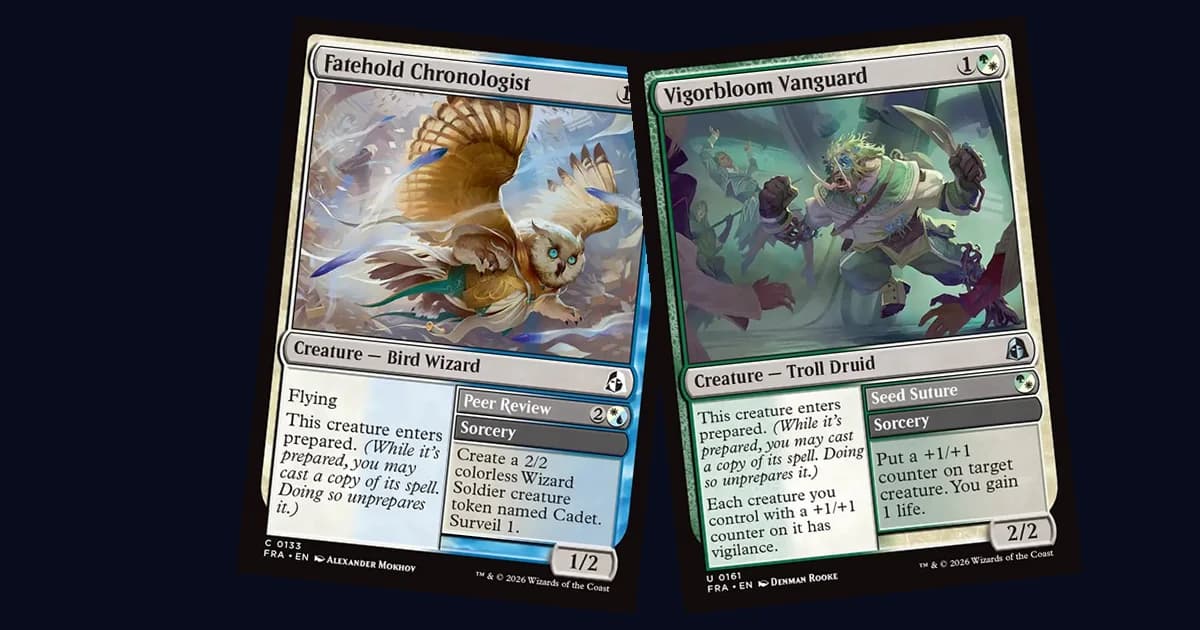
Reality Fracture draft archetypes come in two kinds: five lanes from the Hexhaven schools, and five enemy-color lanes built around the Lorwyn Five. Two weeks after the set reached MTG Arena, 17lands has more than 400,000 two-color Premier Draft games logged, enough to say which lanes win: white-blue Fatehold and blue-black Theorix lead, and green-blue Jace's Mastery trails. This guide covers what each lane wants, which signals mean something, and how to tell whether your seat supports a real deck. It keeps the set's mechanics brief and leaves the full rules to the Reality Fracture prerelease guide.
What Are the Reality Fracture Draft Archetypes?
Reality Fracture has ten draft archetypes, according to Wizards of the Coast: five ally-color school lanes from Hexhaven and five enemy-color lanes named for the Lorwyn Five. Each school shares one prepared spell across its commons and uncommons, which is the cleanest tell for what the lane wants. The enemy-color lanes don't have one, so you read them through Wizards' one-line goals and the cards you're passed.
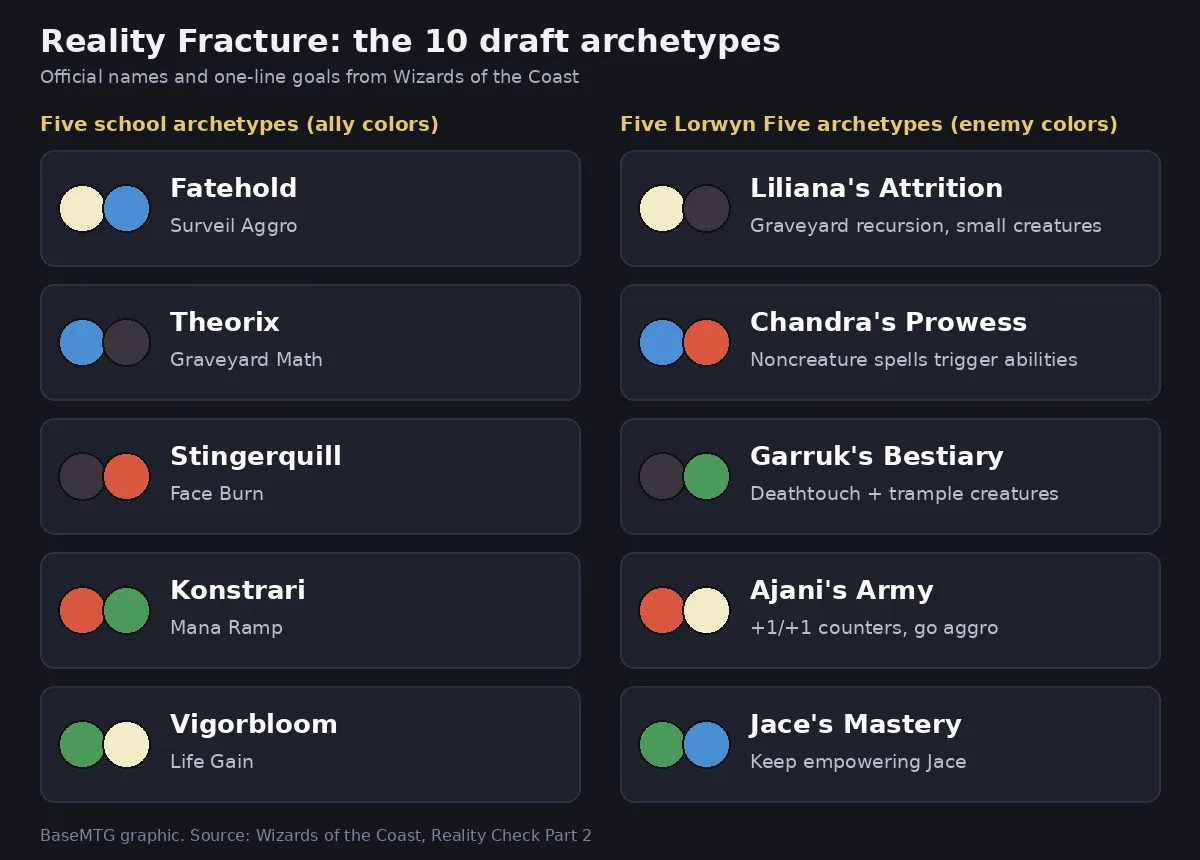 Image: BaseMTG graphic. Source: Wizards of the Coast, "Reality Check, Part 2" (names and one-line goals).
Reality Fracture Draft Archetypes: The Five Hexhaven Schools
Wizards designed the five ally-color pairs around the schools of Hexhaven and gave each school a single prepared spell, used only on that school's common and uncommon cards. That makes the shared spell the clearest signal in the set: when the same prepared spell keeps showing up on creatures in the same two colors, the lane is telling you what it wants. Treat it as an invitation to investigate, not proof that the table owes you the archetype.
White-blue Fatehold: scrying and surveilling
Wizards labels this lane Surveil Aggro, and it turns card selection into a game plan. The school's shared prepared spell is Peer Review, a {2}{W/U} sorcery that creates a 2/2 colorless Wizard Soldier token named Cadet and surveils 1. You can see it on Fatehold Chronologist // Peer Review  fra-133
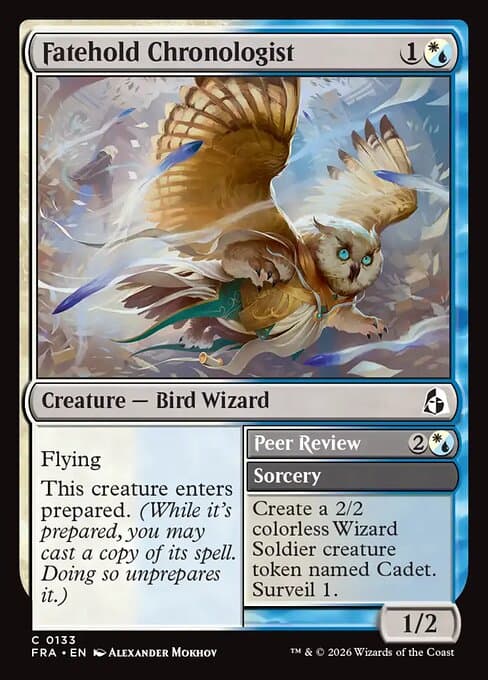 fra-133Shop on TCGplayer, a common that enters prepared, and Draftsim lists Prudent Fateseer and Semester Foreseer as creatures that carry the same spell. The deck wants selection that finds lands, interaction, and the right part of its curve while it controls combat.
Do not draft clever filtering without enough board presence. Fatehold needs playable creatures and defensive interaction so that its extra information changes the game. Several prepared creatures plus other white-blue playables is meaningful; one prepared creature by itself is not a reason to force the school lane.
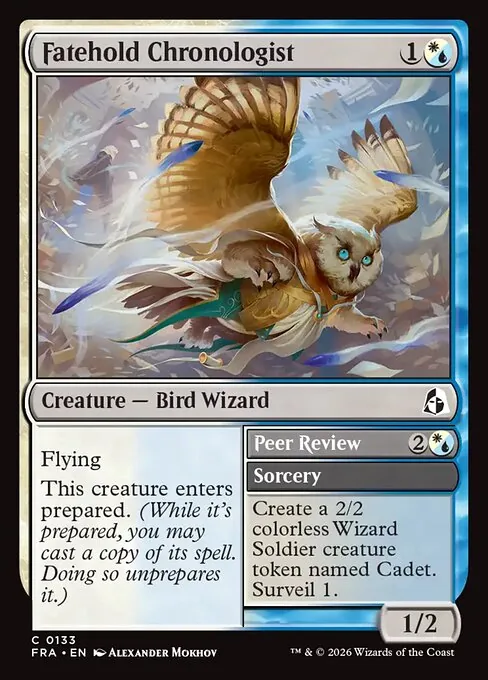 Image: Fatehold Chronologist // Peer Review. Source: Scryfall. Its prepared spell is the surveil payoff the lane is built around.
Blue-black Theorix: self-mill that empowers creatures
Wizards labels this lane Graveyard Math: mill yourself to reach threshold, then use the graveyard as a source of strength. Threshold here means seven or more cards in your graveyard. The school's shared prepared spell is Omit Variables, a {U/B} sorcery that mills three cards, and you can see it on the uncommon Paradox Shaper // Omit Variables  fra-143
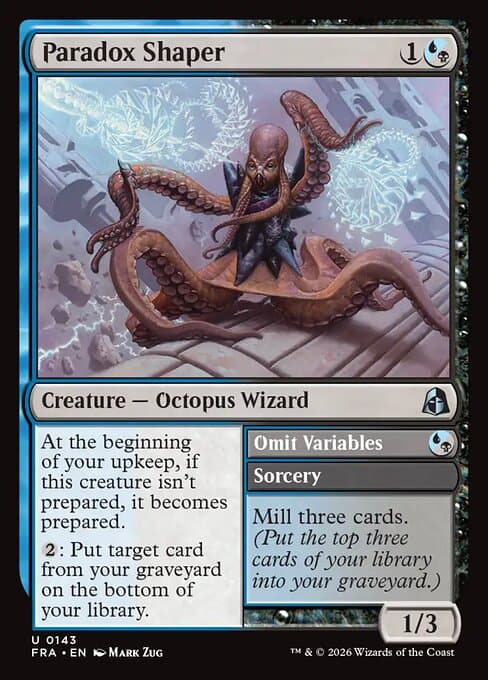 fra-143Shop on TCGplayer. The deck wants self-mill density and creatures that become more effective as the graveyard fills.
A pile of mill cards is not automatically a deck. You need creatures worth empowering, early plays that prevent you from falling behind, and a way to turn the graveyard plan into pressure or value. The best signal is a cluster: Omit Variables creatures, threshold payoffs such as Proft, Sinister Mastermind or Null Summoner (both named by Draftsim), and creatures that reward the resource you are building.
Theorix and white-black Liliana's Attrition both lean on the graveyard from different colors, so a pile of self-mill and recursion cards can point toward either lane. Let the colors of your best cards decide.
Black-red Stingerquill: face burn
Wizards labels this lane Face Burn: use cards that deal damage directly to your opponent, which in turn strengthens your cards. The school's shared prepared spell is Vicious Verse, a {B/R} sorcery that deals 1 damage to target opponent, and Stingerquill Voxmancer // Vicious Verse  fra-151
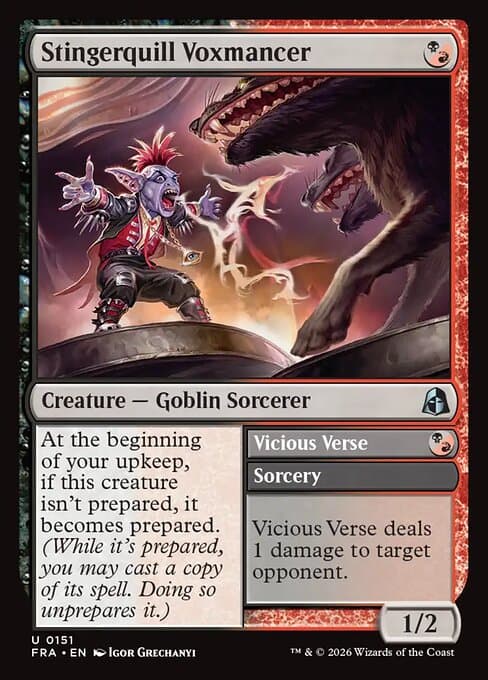 fra-151Shop on TCGplayer is an uncommon that carries it. Because the creature becomes prepared again at the beginning of your upkeep, the lane can produce a steady stream of cheap spells.
Vicious Verse only hits opponents, so this lane does not come with built-in creature removal. Count the real answers you can cast on time, then ask what the rest of the deck gains from a steady stream of one-damage spells. Draftsim points to Master of Barbs as a payoff and notes that cheap spells also fit prowess cards such as Tetsuko Umezawa, Pursuer. It still needs a curve, so do not trade every creature pick for an expensive answer.
Red-green Konstrari: mana ramp
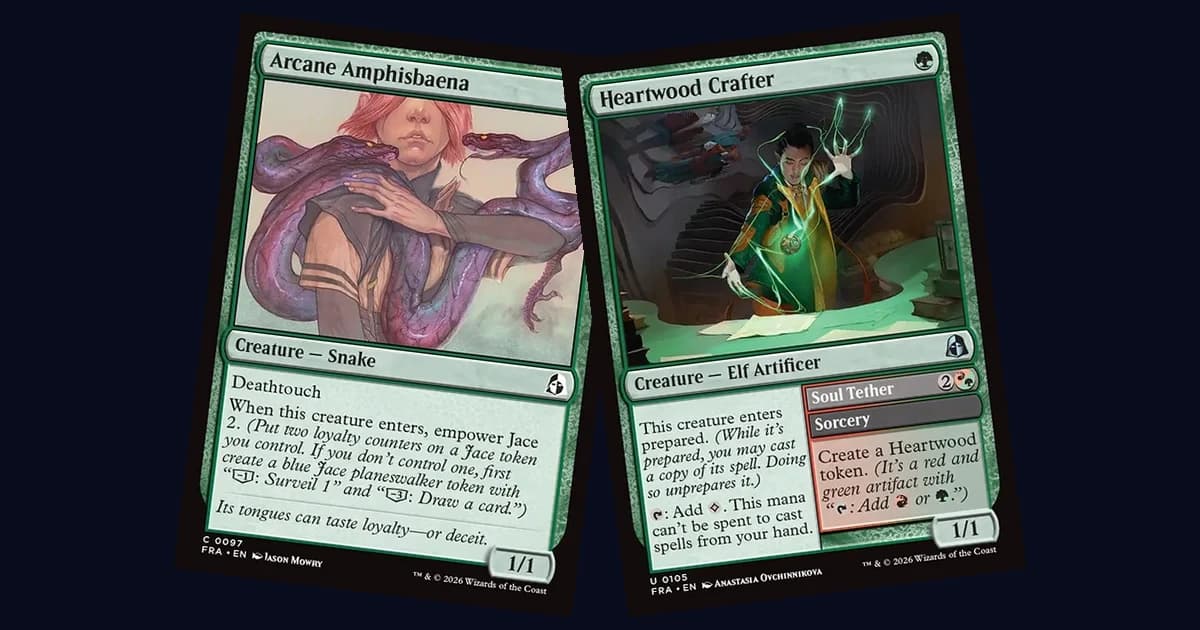
Wizards labels this lane Mana Ramp: create Heartwood tokens to get tons of mana and build big. The school's shared prepared spell is Soul Tether, a {2}{R/G} sorcery that creates a Heartwood token, an artifact that taps for {R} or {G}. Konstrari Improviser // Soul Tether  fra-139
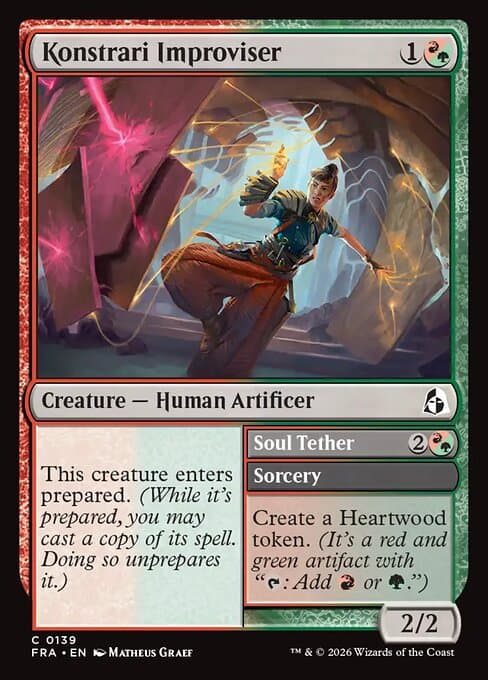 fra-139Shop on TCGplayer is a common that enters prepared, so the lane's first signal is cheap and plentiful.
Ramp needs a target and the deck needs early plays. Take creatures that stabilize the board, then prioritize the mana support and high-end threats that make the investment pay off. Draftsim lists Hungering Puppetbeast and Aerid Konstrari as other sources of Heartwood tokens. In the draft, use that support to evaluate a splash or larger curve carefully, not to excuse a deck that cannot function before its fixing arrives.
Green-white Vigorbloom: life gain and counters
Wizards labels this lane Life Gain: grow your creatures in a variety of ways while boosting life. The school's shared prepared spell is Seed Suture, a {G/W} sorcery that puts a +1/+1 counter on target creature and gains you 1 life. Vigorbloom Vanguard // Seed Suture  fra-161
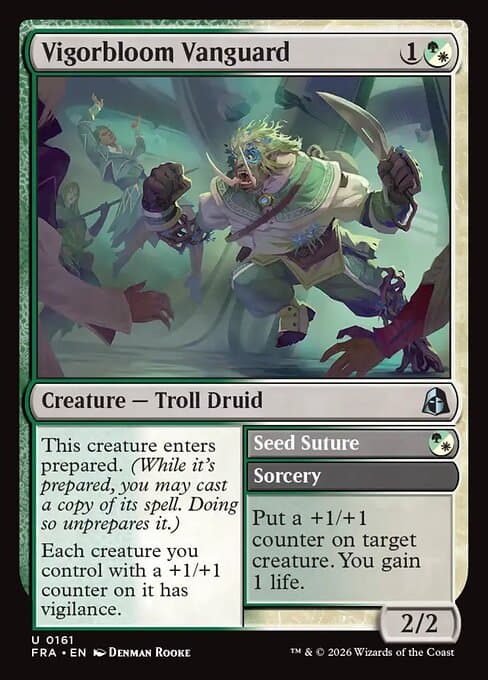 fra-161Shop on TCGplayer is an uncommon that carries it, and it also gives vigilance to each creature you control with a +1/+1 counter.
The deck wants life-gain effects that do more than pad the life total, creatures that benefit from +1/+1 counters, and enough bodies to turn those counters into combat pressure. Count the creatures that can attack profitably; a card that only mentions life gain doesn't add to that count. Without that density, take the best individual cards and stay open.
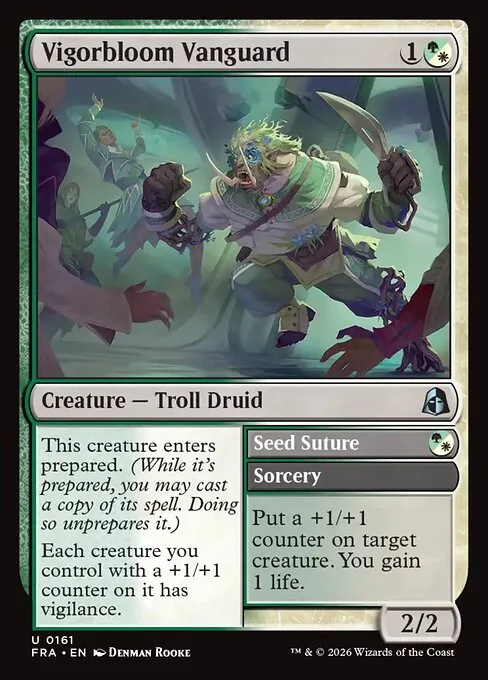 Image: Vigorbloom Vanguard // Seed Suture. Source: Scryfall. Both halves of the green-white plan: a counters payoff creature and a Seed Suture spell that adds a counter while gaining life.
GODEEPER: For the full explanation of Empower Jace, Heartwood, Prepared, and Exhaust, read the Reality Fracture Prerelease Guide: Jace, Tokens, Deck Tips →.
The Five Enemy-Color Archetypes: The Lorwyn Five
Wizards built these five around the Lorwyn Five and the two colors that represent them and their Echoverse counterparts. They do not share one prepared spell the way the schools do, so track whether the packs provide the cards each strategy needs rather than inventing a signpost card.
Red-white Ajani's Army: counters and aggro
Wizards describes Ajani's Army as strengthening your creatures with +1/+1 counters to go aggro. Prioritize a low curve, creatures that stay useful when they carry counters, and a way to turn a wide board into damage before an opponent stabilizes. A few cheap creatures are not enough if nothing makes the board matter.
Blue-red Chandra's Prowess: noncreature spells
Wizards describes Chandra's Prowess as casting noncreature spells to trigger abilities and keeping the heat on your opponent, so the lane combines prowess creatures with spells-matter tempo. It wants noncreature spells that help creatures win combat or preserve momentum. Keep the two in balance, since a pile of tricks has no pressure, while a creature-only deck never turns on the spell incentives. Look for threats and cheap, flexible spells arriving together.
Black-green Garruk's Bestiary: deathtouch, trample, and a debate
Wizards describes Garruk's Bestiary as bringing out fearsome creatures and combining deathtouch and trample to smash through defenses. Players are not sure that is the whole story. u/Copernicus1981, who started an r/magicTCG thread on the archetype list, read the lane as value-generating creatures and graveyard recursion, and wrote that deathtouch and trample "can play into that, but it doesn't seem to be a focus".
Treat that as a reason to read your own packs: take the black-green cards you are passed, whether they lean deathtouch, graveyard recursion, or plain good creatures, and let combat, removal, and value after trades decide the deck.
Green-blue Jace's Mastery: Empower Jace
Wizards describes Jace's Mastery as empowering Jace for a steady flow of cards, or picking a path to victory with cards that grant your planeswalkers abilities. Empower Jace appears across the set (Draftsim counts it on cards such as Fatehold Charm, Way of the Healer, and Campus Crier), so this pair is the one most built around it, not the only one that can use it. Do not treat it as the only threat. A planeswalker-focused deck still needs a normal Limited shell that can survive long enough to gain value.
White-black Liliana's Attrition: graveyard recursion
Wizards describes Liliana's Attrition as looking to the graveyard for effects that keep deploying small creatures until you bury your enemies. It is the least documented lane here: in its September 15 overview, Draftsim had seen only Edgar, Ancient Bloodlord for the pair, so judge it by the commons and uncommons you are actually passed instead of a fixed list. In our reading, it recycles creatures where blue-black Theorix mills toward threshold.
*Video: "The Mechanics & Archetypes of Reality Fracture", Nizzahon on YouTube, published September 11, 2026. It is an early look from midway through preview season, so check its calls against Wizards' list above.*GODEEPER: Limited archetypes tell you how to build the deck you are drafting. For a separate look at how Reality Fracture cards might fit into constructed play, see the Reality Fracture Standard Preview: Which Cards Made It →.
Which Lanes Are Winning: Two Weeks of 17lands Data
17lands collects games from players who run its tracker on MTG Arena. These are Premier Draft game win rates by two-color pair from September 29, when the set reached Arena, to October 16, 2026, with light splashes folded into the main pair:
| Lane | Pair | Game win rate | Share of all games |
|---|---|---|---|
| Fatehold (school) | white-blue | 56.6% | 12.3% |
| Theorix (school) | blue-black | 55.8% | 14.2% |
| Konstrari (school) | red-green | 55.3% | 9.8% |
| Garruk's Bestiary | black-green | 55.3% | 6.8% |
| Chandra's Prowess | blue-red | 55.3% | 8.1% |
| Vigorbloom (school) | green-white | 54.0% | 8.8% |
| Liliana's Attrition | white-black | 53.7% | 3.8% |
| Stingerquill (school) | black-red | 53.6% | 6.5% |
| Ajani's Army | red-white | 53.4% | 4.0% |
| Jace's Mastery | green-blue | 53.0% | 4.2% |
17lands users win more than the average Arena player, so read each number against the 54.7% average for every deck in the sample, not against a coin flip. On that scale white-blue and blue-black are clearly ahead, blue-black is also the most-drafted pair, and three lanes sit together at 55.3%. The spread from first to last is about three and a half points, which is narrow: none of the ten is a lane to avoid if it's the one flowing to you. Two results stand out. Black-red Stingerquill is the weakest of the five schools, and the black-green lane players argued about in the thread above is winning as often as red-green ramp.
Step-by-Step: How to Identify Your Archetype During a Draft
1. Read the signal in context. When a school's prepared creature appears, note its colors and the plan it rewards, then inspect the rest of the pack. A late signal is useful evidence, but it is not a command to abandon every card you already took. Look for a second indication that the colors are open.
2. Separate a theme from a deck. Write down what the lane needs to function. Fatehold needs a board plus selection, red-green needs acceleration plus meaningful top end, and blue-red needs both threats and spells. If you cannot name the deck's early plays and its way to win, you have identified an idea, not an archetype.
3. Compare neighboring lanes. Check whether your cards point to another plan in one of the same colors. Theorix and white-black Liliana's Attrition both use the graveyard, while red-white and green-white both care about building a board in different ways. The best lane is usually the one that uses the cards you are already being passed.
4. Commit when the support arrives. Commit after you have evidence of a playable curve, enough cards in both colors, and a clear way to interact with opposing threats. A school's prepared creature is more valuable when it joins a deck than when it sits alone in your pool. Keep your second color flexible until the support makes the choice obvious.
5. Pivot if a color is cut. If the signals dry up, stop paying for the theory with increasingly weak picks. Keep your strongest cards, identify which color is still open, and move into an adjacent lane that shares it. A clean pivot during the draft is better than finishing with a memorable signpost and an unplayable deck.
Tips for Drafting Reality Fracture
Treat signposts as invitations. The five school prepared spells are valuable signals because they identify a plan, but they are printed on commons and uncommons by design and do not guarantee that the rest of the table will pass you its support. Use them to ask better questions about the packs.
Draft jobs before labels. Every final deck needs creatures, interaction, mana, and a way to turn its plan into a win. A thematic card that cannot fill one of those jobs should not displace a playable card just because it has the right color pair.
Respect the difference between overlap and redundancy. Theorix and Liliana's Attrition both care about the graveyard, but one mills toward threshold and the other recurs small creatures. Not every graveyard card belongs in both decks, so choose the version that matches the payoffs you actually opened or were passed.
Protect your curve. Slow engines need early plays, and aggressive decks need enough follow-up to keep pressure on. Before adding another synergy piece, check how many cards you can cast in the first several turns and whether they affect the battlefield.
Do not force a splash from a signal. A hybrid card may be easy to cast, but the rest of the lane still needs reliable colored mana. Add a third color only when the payoff and fixing justify the cost, and make sure the deck still works when the fixing does not show up.
Use the data as a tiebreaker, not a script. The 17lands numbers say which lanes win more on average. They don't say what your seat is passing. When two lanes are equally open, take the one higher in the table; when one is clearly flowing, take that one.
Our Take: Draft Blue, Then Follow the Packs
Lean blue early. White-blue Fatehold and blue-black Theorix are the two best pairs after two weeks, and blue-red is level with the rest of the top group, so a strong blue card keeps three good lanes open. Inside a school, count how many creatures with the same prepared spell you've seen in your first picks; that's still the cheapest test of whether a lane is open. Don't write off the enemy-color pairs either: black-green Garruk's Bestiary is winning as often as red-green Konstrari. The two lanes we'd only take when they're clearly open are red-white Ajani's Army and green-blue Jace's Mastery, the bottom two by win rate.
Related Reading
- Reality Fracture Commander Preview: Colorshifted Cards: See how the set's character themes and color shifts matter outside Limited.
- MTG Mana Base Guide: The Land Count Formula Explained: Use mana and curve fundamentals when a draft lane tempts you into a splash or a high-end plan.
- Reality Fracture Story Explained: Jace and the Echoverse: Learn why the schools and the Lorwyn Five archetypes belong to the Echoverse setting.
References
Was this guide helpful?
About the author

Spoilers & New Sets Desk
Pen name for the BaseMTG new-sets desk: spoiler season, set reviews, Universes Beyond crossovers and rules news. Cards are read from the official text, and what is confirmed is kept apart from our own reading of it.
- Spoilers, set reviews and Universes Beyond
- Card text read from official sources
- Confirmed facts marked apart from our reading
Keep reading
Reality Fracture Story Explained: Jace and the Echoverse
Guides · 5 min
2026 MTG Sets: The Complete List and Release Schedule
Guides · 6 min
The 12 Best Cards in Reality Fracture, Ranked (2026)
Guides · 19 min
Star Trek MTG Commander Decks: 4 Decks, Prices and Dates
Guides · 18 min
MTG Universes Beyond Explained: Standard Legality in 2026
Guides · 7 min
Reality Fracture Prerelease Guide: Jace, Tokens, Deck Tips
Guides · 14 min
Reality Fracture Commander Preview: Mirrored Pairs and Karn
Guides · 14 min
Reality Fracture Standard Preview: Which Cards Made It
Guides · 13 min
Disclaimer
This article is published for informational and entertainment purposes. It does not constitute professional financial, legal, or technical advice. Game performance, online services, patch schedules, and store listings change. Verify critical details (pricing, system requirements, regional availability) with publishers and storefronts before you buy. Affiliate links, where present, help support our editorial work and are labelled in our affiliate disclosure.