BaseMTG · Guides
Reality Fracture Story Explained: Jace and the Echoverse
Reality Fracture story explained: Jace Beleren becomes the villain, building the Echoverse to erase Bolas, the Eldrazi, and Phyrexia from history.
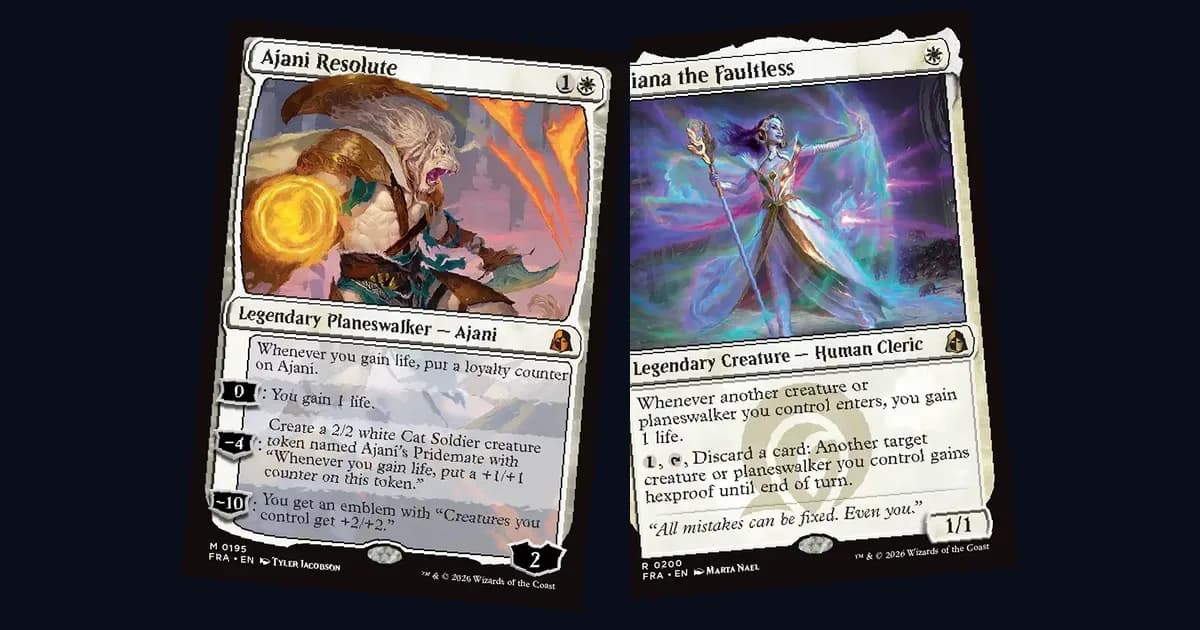
The Reality Fracture story is the conclusion of Magic's Metronome Arc, and it turns one of the game's most familiar heroes into its central threat. Jace Beleren has decided that the Multiverse itself is the source of every catastrophe, so he has built a replacement reality according to his own idea of perfection. This is a lore feature, not a set review: the point is to explain the characters, setting, and alternate versions that give Reality Fracture its identity.
TL;DR: Reality Fracture closes the three-year Metronome Arc by making Jace Beleren, now called The Theorist, the antagonist. He creates the Echoverse, a parallel Multiverse where Nicol Bolas never rose, the Eldrazi never invaded, and Phyrexia never compleated Vraska. Its main setting, Hexhaven, is a warped mirror of Strixhaven, while Ajani, Liliana, Garruk, and Chandra receive twisted Echoverse counterparts. Jace has no mirror because he is the one holding the mirror.
Key Takeaways
- Reality Fracture wraps up Magic's Metronome Arc, a three-year storyline that began with the non-Universes Beyond sets following 2023's Wilds of Eldraine.
- Jace Beleren becomes the story's antagonist after deciding that the Multiverse, rather than any single villain, is the problem.
- The Echoverse is Jace's parallel reality, designed as a "perfect" version of the Multiverse with several defining disasters removed from history.
- Hexhaven is the Echoverse's twisted reflection of Strixhaven, transformed into a fortress academy by Jace's reality-bending magic.
- Four members of the original 2007 Lorwyn 5 receive recognizable but altered mirrors: Ajani, Liliana, Garruk, and Chandra.
- Jace is the exception because he created the Echoverse. He is not another reflection inside it.
- The story premise also appears in card names, art, colors, and the set's reality-bending mechanics, even if you never read the story chapters.
What Is Reality Fracture's Story About? (quick answer)
Reality Fracture is about Jace trying to replace the flawed Multiverse with the Echoverse, a reality where its greatest disasters never happened. The story asks what happens when a former protector treats history as a problem to solve and gives himself the power to rewrite the answer.
The Metronome Arc Ends: Jace Becomes the Villain
Reality Fracture is the endpoint of the Metronome Arc, a three-year Magic storyline running through non-Universes Beyond sets since 2023's Wilds of Eldraine. That context matters because Jace's turn is not presented as an isolated change of allegiance. It is the result of a character who has spent years watching the Multiverse survive one existential crisis after another.
Jace has historically occupied the hero and anti-hero space. He is a strategist, investigator, and planeswalker who often solves problems through information, manipulation, or careful planning. In this story, those traits point in a darker direction. After the crises involving Nicol Bolas, the Eldrazi invasion, and Phyrexia's compleation of Vraska, Jace decides that the common factor is not simply the villains who caused those disasters. He decides the Multiverse itself is the flaw.
The official Planeswalker's Guide to Reality Fracture identifies Jace's new name as The Theorist. The title fits his new role. He is no longer trying to protect a world whose rules he accepts. He is testing a theory about how reality should work, and he is willing to impose that theory on everyone else.
The Metronome Arc therefore ends with a conflict over authorship. Who gets to define the Multiverse's correct history? Jace's answer is himself. Reality Fracture makes that answer visible through a new plane, a new identity, and familiar characters whose lives have been bent around his design.
The Echoverse: Jace's "Perfect" Multiverse
The Echoverse is a parallel reality that Jace tears open and builds to his own specification. It is not simply a distant plane with a similar name. It is Jace's proposed correction to the Multiverse, a place designed to remove the events he believes made the original reality broken.
The clearest way to understand the Echoverse is through the history Jace wants to prevent. In this reality, Nicol Bolas never rose, the Eldrazi never invaded, and Phyrexia never compleated Vraska. Those are not random omissions. They are the catastrophes that help explain why Jace concludes that the Multiverse cannot be trusted to remain whole on its own.
Calling the Echoverse "perfect" also reveals the danger in the idea. Perfection here means a reality filtered through one person's judgment about which histories count as unacceptable. Jace is not offering an open-ended refuge where every possible life can coexist. He is selecting the past he wants, removing the outcomes he rejects, and making the resulting world the new standard.
That makes the Echoverse a story about control as much as alternate reality. A parallel world can be wondrous, but Jace's version is built around the assumption that the creator has the right to edit everyone else's context. The setting's familiar names and altered identities are reminders that even a better-looking history can still be someone else's prison.
Hexhaven: A Dark Mirror of Strixhaven
Hexhaven is the Echoverse's twisted mirror of Strixhaven. Both are academy settings on Arcavios, but Hexhaven is not a simple reskin of the earlier plane. It shows what happens when a place built for learning is reshaped around Jace's control of reality.
When Jace, now The Theorist, arrived on Echoverse Arcavios, Hexhaven's campus became a fortress complex. At its center stands a bell tower, and Jace's reality-bending magic warped the surrounding architecture into the distorted form that defines the setting. The school is therefore both a recognizable echo of Strixhaven and a physical record of Jace's intervention.
That transformation gives the setting narrative purpose. Strixhaven suggests an academy, while Hexhaven keeps that structure inside a fortress complex shaped by Jace's reality-bending magic. Its campus is no longer only a place where students learn. It is part of the constructed reality he has imposed.
For players who know Strixhaven, the contrast is immediate. For players who do not, the basic idea still works. Hexhaven is a school that looks like it has been converted into a stronghold by someone trying to make a whole reality obey a single plan. That makes it a strong setting for a story about the limits of certainty.
The Mirrored Planeswalkers: Echoes of the Lorwyn 5
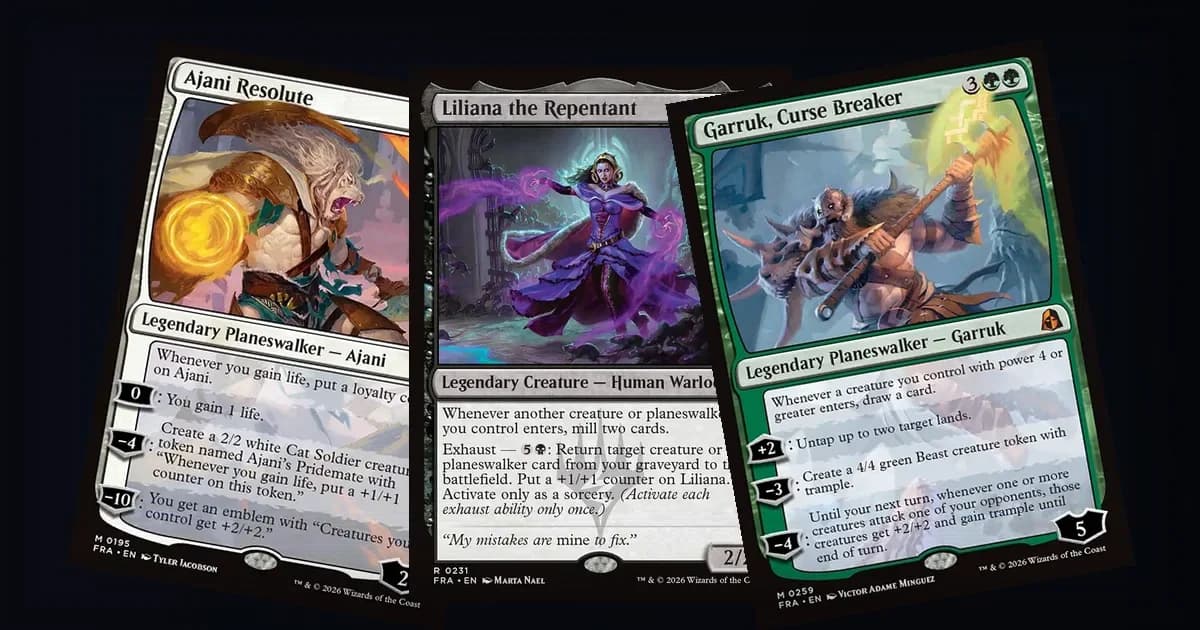
The original Lorwyn 5 were introduced in 2007 as a group of planeswalkers: Ajani, Liliana, Garruk, Chandra, and Jace. Reality Fracture brings four of them into the Echoverse as recognizable but twisted alternate versions. Ajani, Liliana, Garruk, and Chandra each receive a mirror shaped by the reality Jace created.
These mirrors are not just costume changes. They are alternate expressions of characters whose familiar identities have been placed under different conditions. The versions can feel recognizable while still being morally, visually, or mechanically distinct. They often appear in different colors from the versions players know, which reinforces the idea that a changed world can change the role a character occupies.
Jace does not receive an Echoverse mirror of his own. That omission is the central joke and the central warning. He is the one holding the mirror, because he is the one who created the reality in which the other four are reflected. Giving him another version would miss the point. The other characters are subjects of his design; Jace is the designer standing outside the frame.
The card treatment also requires a little care. Not every mirrored pair should be described as having the same card type. Our site's Scryfall confirmation shows that Liliana the Repentant and Liliana the Faultless are Legendary Creatures, not Planeswalkers. The Ajani and Garruk pairs are Legendary Planeswalkers, while Chandra's mirror is best discussed here as a narrative counterpart without making an unverified card-type claim.
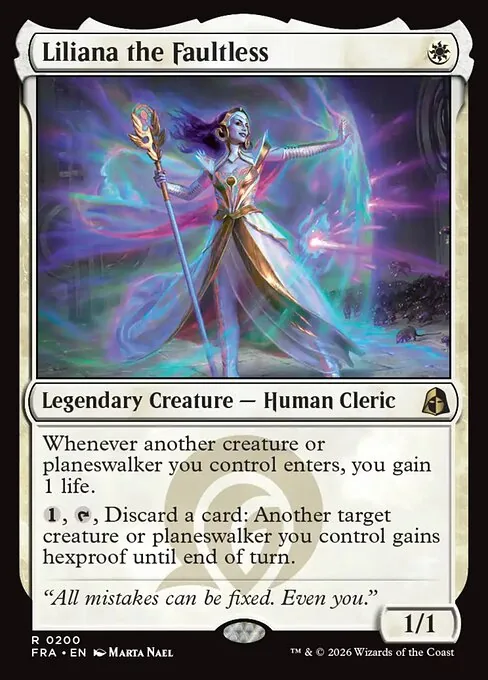 Liliana the Faultless is printed as a Legendary Creature, not a Planeswalker, unlike the Ajani and Garruk mirror pairs.
That difference is part of the story rather than a complication to ignore. A mirror can preserve a name and recognizable personality while changing the role that character plays. The card frame, colors, art, and title all become clues about how far the Echoverse has moved from the original. Players do not need to know every detail of the old Lorwyn 5 to understand the basic signal: these are familiar people seen through a reality that Jace has edited.
GODEEPER: For the mirrored cards and their Commander implications, read the Reality Fracture Commander Preview: Colorshifted Cards →.
Why This Matters If You Don't Follow Magic's Story
You can skip Magic's story and still understand what Reality Fracture is doing. Look for pairs of familiar names, contrasting titles, alternate colors, and art that places a known character in an unfamiliar role. The cards communicate the premise through those details before you know why the characters are different. Even the set's mechanics reflect the broader reality-bending theme, but the mechanics themselves are a separate Limited and rules question.
The practical payoff is that the lore gives card details a pattern. A mirrored Legendary Creature is not just another legendary card. A twisted academy is not just another setting. A character who appears in a different color is part of the set's question about whether identity survives when history changes. You can enjoy those connections at a glance, or use them as a reason to explore the story later.
GODEEPER: If you want the actual Limited mechanics, including Empower Jace, Heartwood tokens, Prepared, and Exhaust, use the Reality Fracture Prerelease Guide: Mechanics and Limited Play →.
Frequently Asked Questions
What is the Reality Fracture story about?
It follows Jace Beleren, now called The Theorist, as he tries to solve the Multiverse's repeated catastrophes by creating a replacement reality. The Echoverse is his attempt to build a perfect history according to his own specifications.
Why is Jace the villain in Reality Fracture?
Jace becomes the antagonist after deciding that the Multiverse itself is the problem. His response to the crises involving Nicol Bolas, the Eldrazi, and Phyrexia's compleation of Vraska is to create and impose a new reality rather than accept the original one.
What is the Echoverse?
The Echoverse is a parallel reality that Jace tears open and builds to his own design. In its intended history, Nicol Bolas never rose, the Eldrazi never invaded, and Phyrexia never compleated Vraska.
Is Hexhaven the same place as Strixhaven?
No. Hexhaven is the Echoverse's twisted mirror of Strixhaven. It began as the campus on Echoverse Arcavios, then became a fortress complex around a central bell tower after Jace's magic warped its architecture.
Which members of the Lorwyn 5 get Echoverse mirrors?
Ajani, Liliana, Garruk, and Chandra each receive a recognizable but altered alternate version. Jace does not get a mirror because he is the creator of the Echoverse and the person holding the mirror.
Are all the mirrored characters Legendary Planeswalkers?
No. Liliana the Repentant and Liliana the Faultless are Legendary Creatures, while the Ajani and Garruk pairs are Legendary Planeswalkers. The Chandra pair should not be assigned a card type here without a confirmed source.
When does Reality Fracture release?
The paper release is October 2, 2026. Digital release on MTGO and MTG Arena is expected around September 29, a few days earlier, according to Vice's release report.
Related Reading
- Reality Fracture Standard Preview: 2 Cards to Watch: See how the set's confirmed cards were being framed for Standard before the paper release.
- Magic: The Gathering 2026 Set Release Schedule Guide: Place Reality Fracture's release in the wider 2026 Magic calendar.
- MTG Color Identity Explained: What Actually Counts: Review the color identity basics that help explain why alternate versions can fit different decks.
- How to Play Magic: The Gathering: Rules and Basics: Use this primer if the card and plane references are new to you.
References
About the author

Commander & Standard Deck Analyst
Commander and cEDH grinder covering deckbuilding, precons, and the Standard/Commander metagame. Plays out of a local game store scene, reads spoilers the day they drop.
- Weekly Commander night regular, 6+ years
- Tracks EDHREC/MTGGoldfish data for every article
- Covers every Standard-legal set + Commander precon on release
Keep reading
Reality Fracture Draft Archetypes: All 10 Lanes Explained
Guides · 12 min
Reality Fracture Prerelease Guide: Sept 25-Oct 1, 2026
Guides · 13 min
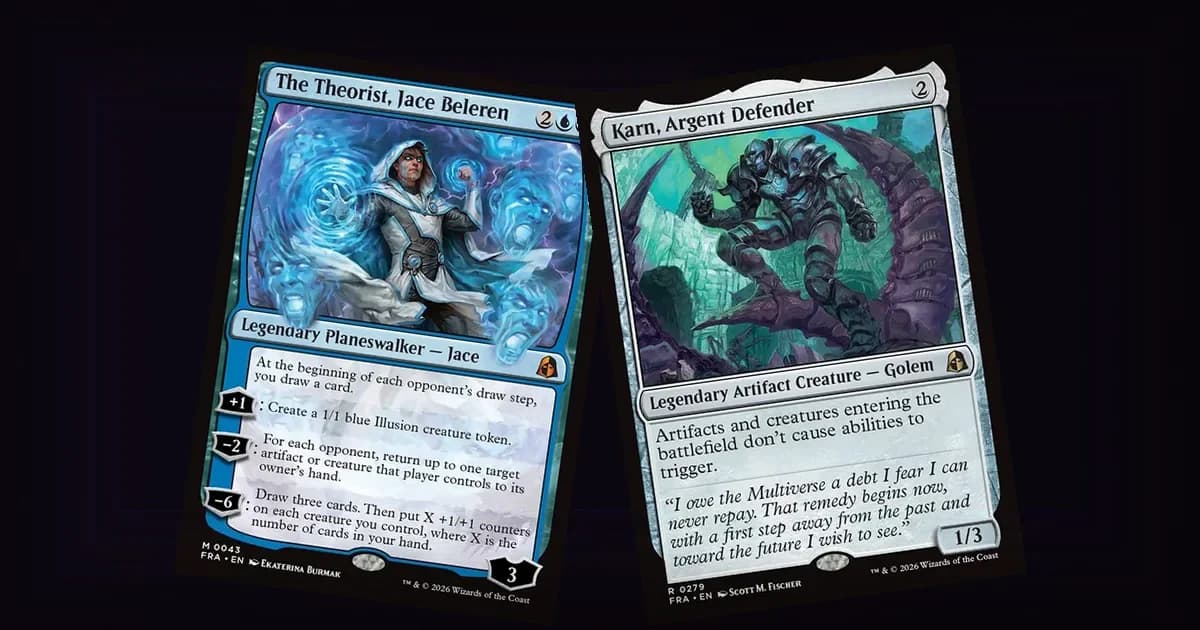
Reality Fracture Commander Preview: Colorshifted Cards
Guides · 11 min
Reality Fracture Standard Preview: 2 Cards to Watch
Guides · 11 min
Magic: The Gathering 2026 Set Release Schedule Guide
Guides · 4 min
MTG Reserved List Explained: 572 Cards, Never Reprinted
Guides · 12 min
Dimir Midrange Standard Deck Guide for October 2026
Guides · 12 min
Bury MTG Meaning, Plus Extort and Discover Explained
Guides · 11 min
Disclaimer
This article is published for informational and entertainment purposes. It does not constitute professional financial, legal, or technical advice. Game performance, online services, patch schedules, and store listings change. Verify critical details (pricing, system requirements, regional availability) with publishers and storefronts before you buy. Affiliate links, where present, help support our editorial work and are labelled in our affiliate disclosure.