

BaseMTG · Guides
Reality Fracture Prerelease Guide: Sept 25-Oct 1, 2026
Reviewing
Magic: The Gathering
Reality Fracture prerelease guide: spoilers are 100% complete, so the useful question is how its mechanics change your Limited decisions. The prerelease window is Sept 25-Oct 1, 2026, and the global release is Oct 2. All 280 cards were revealed on Sept 17, giving you a complete card pool to study before you sit down.
TL;DR: Reality Fracture's prerelease runs Sept 25 through Oct 1, 2026, with the global release on Oct 2. The marquee mechanic, Empower Jace, builds a single growing planeswalker token instead of handing out one-shot effects, and the superfriends archetype (built on proliferate) is the clearest Limited signal. Heartwood tokens (Gruul artifact mana) make a third color realistic in a random sealed pool. Prepared returns from Secrets of Strixhaven, and Exhaust is a new once-per-game activated ability.
Key Takeaways
- Empower Jace creates a Jace planeswalker token if you do not already have one, then gives it loyalty counters equal to the ability's value. If you already have a Jace token, it adds that many counters instead.
- The Jace token has two loyalty abilities: spend one counter to Surveil 1, or spend three counters to draw a card. That makes early loyalty management a central Limited decision.
- Heartwood tokens are Gruul-colored artifact tokens that tap for either red or green mana. They can make a three-color prerelease deck more realistic when your pool is short on fixing.
- Prepared returns from Secrets of Strixhaven, while Exhaust is a new activated ability that can be used only once per game. Read both mechanics closely before registering your deck.
- The clearest marquee archetype is a superfriends deck built around proliferate and Empower Jace. You want enough interaction to protect your planeswalker value, not just every card that mentions counters.
What's New in Reality Fracture? (quick answer)
Reality Fracture is the new set, with prerelease events running Sept 25-Oct 1, 2026, ahead of the Oct 2 global release. Its marquee mechanic is Empower Jace, which creates and grows a Jace planeswalker token, giving Limited players a repeatable source of selection and cards rather than a single one-turn effect.
Empower Jace, Explained
Empower Jace is a keyword action that checks whether you have a Jace planeswalker token. If you do not, the effect creates one and then puts loyalty counters on it equal to the value attached to the ability. If you already have a Jace token, Empower Jace does not create another one. It simply puts that many more loyalty counters on the token you have.
That distinction matters in a prerelease pool. You are not trying to collect several copies of the same token. Your cards are building one persistent resource over several turns. A small Empower Jace effect can establish the token, and later effects can add enough loyalty to keep it active or pay for a larger ability. The result is a threat that grows without needing multiple separate planeswalker cards clogging your curve.
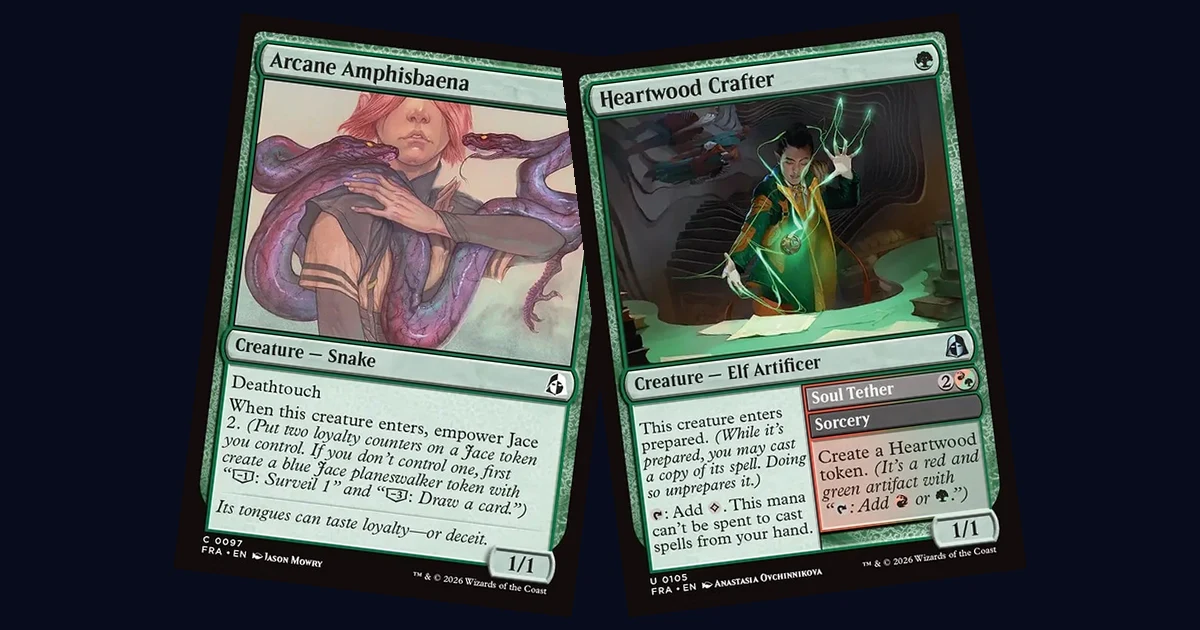
The token has two loyalty abilities. Its minus-one ability is "Surveil 1," which lets you look at the top card of your library and decide whether it belongs on top or in your graveyard. Its minus-three ability is "Draw a card." The first ability helps you find the next land, interaction spell, or creature you need. The second turns a sufficiently developed token into a source of raw card advantage.
At the table, count the loyalty you have now and the loyalty you can add before choosing an ability. Spending one counter to Surveil can smooth a shaky draw, but spending three to draw a card may be correct when your token has enough counters to survive the turn. You also need to account for combat. A Jace token that can draw a card is valuable, but an opponent who can attack it may force you to use the smaller ability or defend it with a creature.
Empower Jace therefore changes how you evaluate cards in the pool. A card that adds only a modest amount of loyalty can be stronger when the rest of your deck contains several ways to use the token. A card that looks impressive in isolation can be awkward if it asks you to spend a turn developing Jace while your opponent is applying pressure. Build around the full exchange: setup, protection, loyalty growth, and the point where the token starts drawing cards.
The official Reality Fracture mechanics article is the best rules reference for the keyword. At a prerelease, also read each card's complete text. The number after Empower Jace tells you how much loyalty the action contributes, while the token's current loyalty determines which ability you can afford afterward.
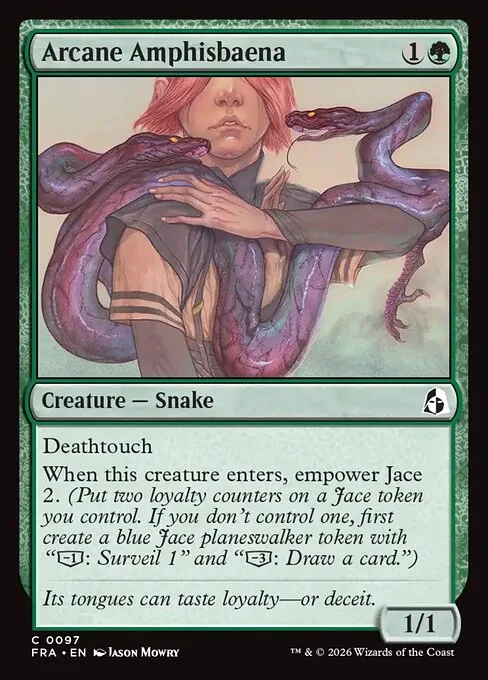 Arcane Amphisbaena shows the full Empower Jace reminder text: creating a Jace token with "-1: Surveil 1" and "-3: Draw a card" if you don't already control one.
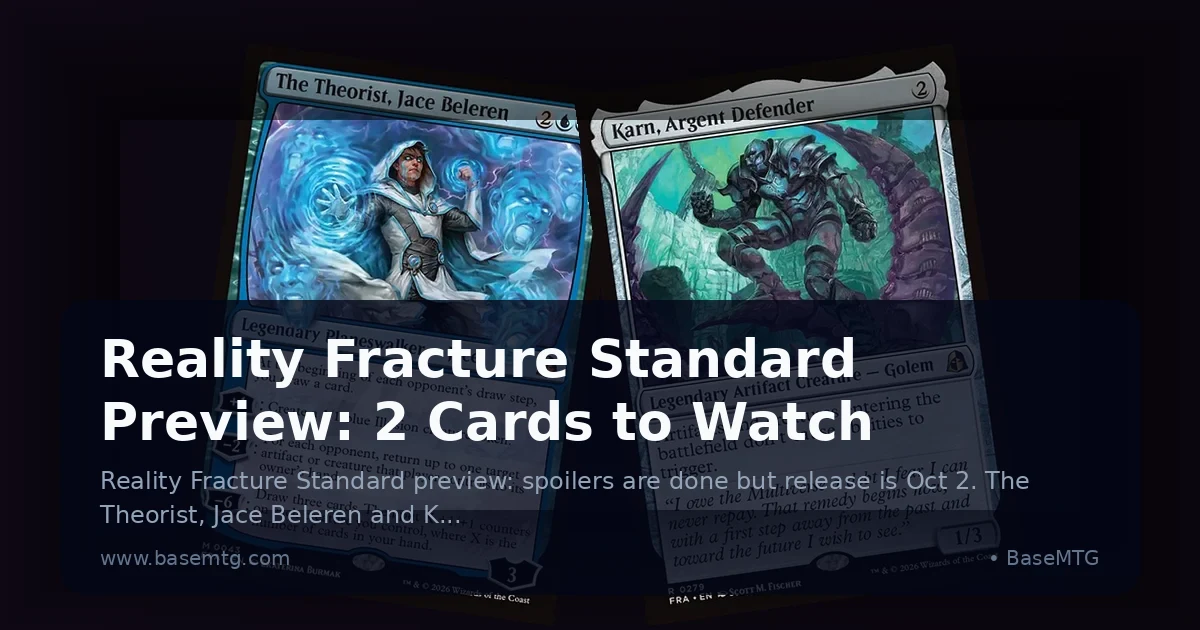
GODEEPER: Not sure which colors to prioritize once Standard legality kicks in on Oct 2? See our breakdown of the archetypes already confirmed for the set. Reality Fracture Standard Preview: 2 Cards to Watch →
Heartwood Tokens and Mana Fixing
Heartwood tokens are a new predefined token type. They are Gruul-colored artifact tokens that tap for either red or green mana, and they are introduced by the Konstrari school, a Gruul-colored faction in the set. Their role in Limited is straightforward: they give you a steady mana boost into the midgame while also helping you produce the color your hand requires.
That flexibility has more weight at a prerelease table than it does in a carefully tuned Constructed deck. Your sealed pool comes from random packs, so the lands and colored sources may not line up with your strongest spells. A Heartwood token can help a red-green deck cast its spells on time, but it can also make a third color more plausible when the splash is supported by actual cards worth casting.
Do not count every Heartwood token as a replacement for lands. It is a temporary source that may arrive after you already needed a color, and it may require a card or board position to create it. Start with a stable two-color manabase, then ask whether the tokens cover a clear gap. If your best cards are spread across three colors, prioritize the Heartwood-producing cards and other fixing while keeping the main colors deep enough to function without them.
Heartwood also affects mulligan decisions. A hand with two lands, a playable curve, and a way to make a token may be better than a hand with a splash card and no path to its color. Keep track of which color the token can provide before you commit to a line. Since it taps for red or green, it does not solve every color problem, so it should support a plan rather than become the plan by itself.
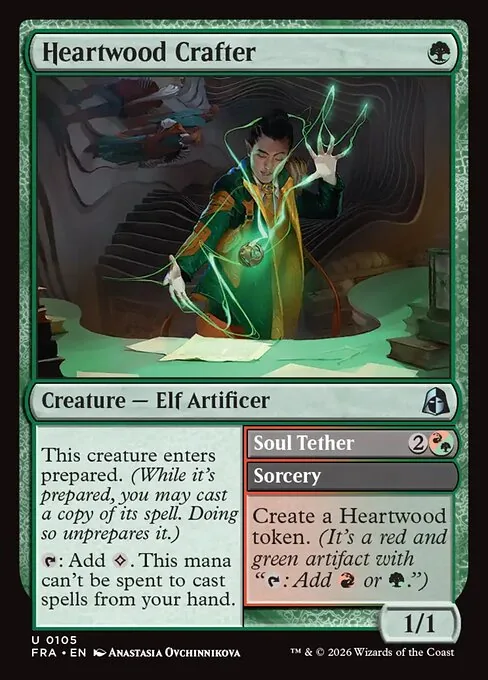 Heartwood Crafter // Soul Tether shows both new mechanics on one card: it enters prepared, and its prepared spell creates a Heartwood token that taps for red or green mana.
Prepared and Exhaust: The Other Two Mechanics
Prepared is a returning mechanic from Secrets of Strixhaven, a 2026 set. At a Reality Fracture prerelease, treat Prepared as a card-specific play pattern and read the full reminder text before building around it. Players familiar with its earlier appearance may recognize the structure, while everyone else should evaluate the actual condition, timing, and payoff printed on each card rather than assuming all Prepared cards work alike.
Exhaust is new, and its rule is easy to summarize: it is an activated ability you may activate only once per game. That restriction makes an Exhaust ability a one-shot resource. Do not fire it automatically the first time it is available. Compare the immediate gain with the value of waiting for a turn when the effect changes combat, saves a key permanent, or converts a stable position into a win.
Step-by-Step: Building Your Prerelease Deck
1. Sort the pool by color. Separate creatures, removal, combat tricks, mana sources, and noncreature cards inside each color. Put lands and colorless cards aside, then mark rares and other high-impact cards. This first pass shows which colors have enough playables for a real deck instead of a pile of individually interesting cards.
2. Identify your Empower Jace signal. Count the cards with Empower Jace, the cards that add or benefit from counters, and the creatures or spells that can protect a planeswalker token. If the pool has one strong Empower Jace card but no support, treat it as a value card. If it has several effects plus proliferate, consider the superfriends plan.
3. Check mana before adding colors. Start with the best two-color combination, then test a third color only when the payoff is worth the strain. If your pool leans toward three colors, prioritize Heartwood mana-fixing and count how many red or green sources you can actually access. A splash that looks strong on paper is not useful when your spells stay stranded in hand.
4. Count removal, interaction, and curve. Make sure the deck can answer an opposing creature or planeswalker and can affect the board before its expensive cards matter. Empower Jace needs time to accumulate loyalty, so cheap creatures and interaction are part of the engine's protection. Do not fill the deck with slow setup cards and leave yourself unable to contest the first turns.
5. Register 40 cards and test the land count. Begin with 17 or 18 lands, then adjust only when the curve, mana sources, and token production give you a clear reason. Fill the remaining slots with your best creatures, removal, card advantage, and combat tools. Play a few sample hands, check the colored requirements, and make sure the deck can cast spells without relying on a perfect draw.
The Superfriends Draft Archetype
Superfriends is the planeswalker-matters approach to Limited. In Reality Fracture, the natural center of that plan is a Jace token created and enlarged through Empower Jace, with proliferate adding more counters to permanents that already have them. Because loyalty is both the token's defense and the cost of its abilities, proliferate supports the same resource from two directions.
The deck still needs a normal Limited foundation. Start with creatures that can block, attack, or otherwise protect the token. Add removal so an opposing threat cannot ignore your Jace and race your card advantage. Then add the Empower Jace cards and proliferate effects that reward you for keeping the token on the battlefield. A deck with counters but no way to survive combat is not a superfriends deck, it is a slow collection of setup pieces.
When drafting, watch for signals rather than forcing the archetype from the first pick. Several Empower Jace cards, proliferate support, and playable cards in the same colors are a real invitation. One powerful card is not enough if the rest of the table is taking the support you need. Stay open until you know whether the lane has creatures, interaction, and mana to match the planeswalker plan.
The token's two abilities give the archetype a useful internal choice. Surveil 1 can help you find a land or place a weak card in the graveyard, while drawing a card is a larger payoff that costs more loyalty. Proliferate makes that choice less punishing because it can rebuild the counters you spent. Even so, protect the token first. The best draw engine is not useful if an attack removes it before your next turn.
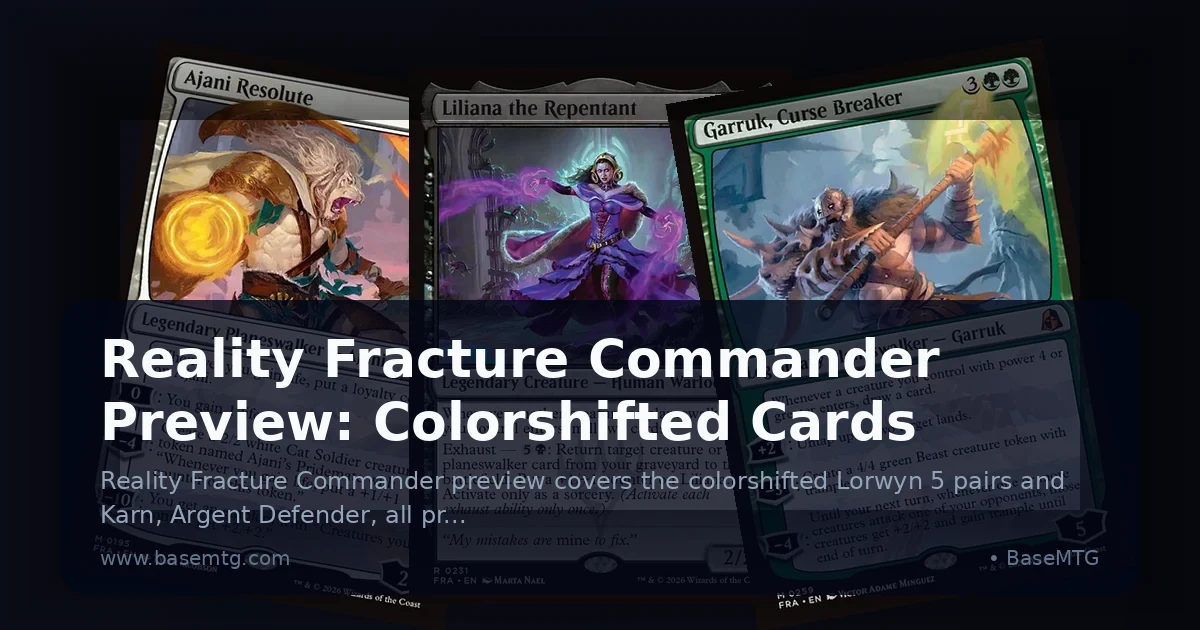
GODEEPER: Reality Fracture's colorshifted card pairs are one of the set's headline Commander-relevant features. Reality Fracture Commander Preview: Colorshifted Cards →
Tips for Prerelease Weekend
Protect your first Jace token. It is the center of the Empower Jace loop, so do not spend all your creatures on attacks when leaving one back keeps the token alive and lets it generate value next turn.
Choose the loyalty ability with the next turn in mind. Surveil 1 can fix the top of your deck for a land or answer, while drawing a card costs more. Count the counters you will have after the activation, not just the value you gain immediately.
Use Heartwood to support a plan. The token's red or green mana can help a three-color pool, but it does not excuse a weak main color or a splash with no payoff. Build a deck that functions before the fixing arrives.
Save Exhaust for a meaningful window. You can activate it only once per game. Look for the turn when the one-shot effect changes combat, protects your best permanent, or creates a decisive amount of value.
Frequently Asked Questions
When is the Reality Fracture prerelease?
Reality Fracture prerelease events run from Sept 25 through Oct 1, 2026. The global release is Oct 2, 2026. That means you can play with the set at prerelease-only events during the earlier window, while normal release timing begins on Oct 2. Check your local store for its event schedule and registration details.
What does Empower Jace do?
Empower Jace creates a Jace planeswalker token if you do not already have one, then puts loyalty counters on it equal to the ability's value. If you already have a Jace token, it adds that many counters instead. The token can spend one counter to Surveil 1 or three counters to draw a card.
What are Heartwood tokens?
Heartwood tokens are Gruul-colored artifact tokens that tap for either red or green mana. They are associated with the Konstrari school, a Gruul-colored faction in Reality Fracture. In Limited, they help smooth a red-green deck's mana and can make a carefully supported third color more playable when your prerelease pool has uneven colored sources.
Is Reality Fracture legal for Standard right away?
No. Reality Fracture is not legal to play in Standard until its Oct 2, 2026 release date. Prerelease events let participants play with the new cards early in those prerelease-only events, but that early access does not move the set's normal Standard legality date. Use the cards in the event format first, then in Standard after release.
How many cards are in Reality Fracture?
Reality Fracture contains 280 cards, and the full set was revealed on Sept 17, 2026. That complete reveal lets prerelease players study the available mechanics and plan their Limited priorities before opening packs. The set also includes special products and treatments, but the main set size is 280 cards.
How should I build around Empower Jace in Limited?
Build around Empower Jace when your pool has multiple ways to create or grow the token, plus creatures and interaction that protect it. Proliferate supports the loyalty-counter plan, but the deck still needs a functioning curve and reliable mana. Treat one isolated Empower Jace card as a value option, not proof that every color belongs in the deck.
Related Reading
- Secret Lair Reprint Risk: The Reserved List Framework: how to think about reprint risk once a new set's prices settle.
- MTG Set Reviews Complete Guide: the full 2026 Standard-legal release schedule.
- Standard Metagame Tier List: Top 3 Decks: the archetypes Reality Fracture will need to beat once it's legal.
References
Was this guide helpful?
About the author

Commander & Standard Deck Analyst
Commander and cEDH grinder covering deckbuilding, precons, and the Standard/Commander metagame. Plays out of a local game store scene, reads spoilers the day they drop.
- Weekly Commander night regular, 6+ years
- Tracks EDHREC/MTGGoldfish data for every article
- Covers every Standard-legal set + Commander precon on release
Disclaimer
This article is published for informational and entertainment purposes. It does not constitute professional financial, legal, or technical advice. Game performance, online services, patch schedules, and store listings change. Verify critical details (pricing, system requirements, regional availability) with publishers and storefronts before you buy. Affiliate links, where present, help support our editorial work and are labelled in our affiliate disclosure.