Loading…
Loading…
BaseMTG · Guides
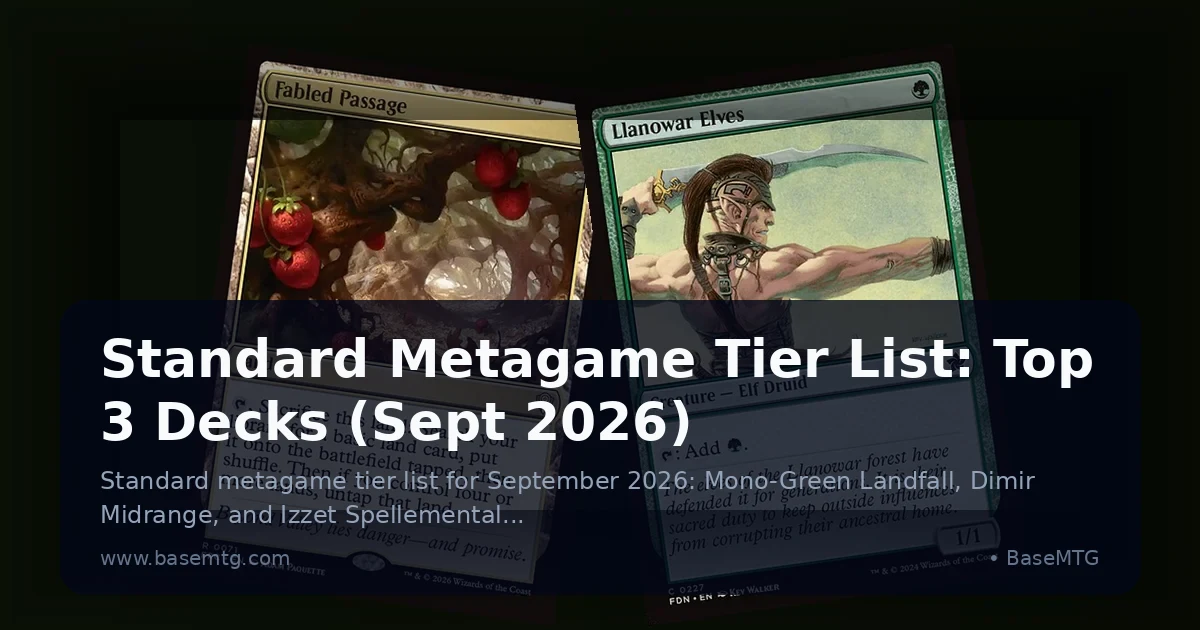
Standard metagame tier list for September 2026: Mono-Green Landfall, Dimir Midrange, and Izzet Spellementals lead, per Wizards' own RCQ data.
Reviewing
Magic: The Gathering
This Standard metagame tier list is a September 2026 snapshot built from Regional Championship Qualifier results, not a permanent ranking. The format has no fall rotation this year, so established shells are competing with a huge card pool instead of being reset overnight.
TL;DR: The official Wizards of the Coast Metagame Mentor report for September 2026 RCQs says Mono-Green Landfall, Dimir Midrange, and Izzet Spellementals together make up over half of the winner's metagame. Mono-Green Landfall is the deck to beat, Dimir Midrange is the efficient blue-black answer deck, and Izzet Spellementals is the spell-heavy blue-red pressure deck. Expect that picture to move as RCQ results accumulate.
Mono-Green Landfall, Dimir Midrange, and Izzet Spellementals are the three leading Standard archetypes in the September 2026 RCQ snapshot. That's the direct answer from Wizards of the Coast's official Metagame Mentor data, which reports that the three together make up over half of the winner's metagame.
The first thing to understand is what didn't happen in 2026. Standard didn't rotate in the fall. Eighteen sets are legal at the same time, and the next rotation is scheduled for January 23, 2027. Wizards announced the schedule change in its Standard rotation update, so this isn't a temporary rules quirk or a player assumption.
That matters because a normal rotation removes familiar engines, answers, and mana tools in one stroke. This year, successful decks keep their core pieces while new releases add options around them. Players are tuning strategies that already work, then looking for the best way to exploit the extra room.
Mono-Green Landfall benefits because it can assemble more than one route to a winning battlefield. Dimir Midrange gets more ways to trade resources and still find threats. Izzet Spellementals gets the cheap spells and payoffs its engine needs. The three decks don't win in the same way, but they cover three questions every Standard deck has to answer: can you survive the board, keep cards flowing, and develop while interacting?
The September 2026 RCQ report measures a winner's metagame, blending tournament presence with success at the top tables. It isn't a ladder popularity poll or a promise that every local event will look identical. It is the clearest official snapshot for this moment, and it shows where preparation should start.
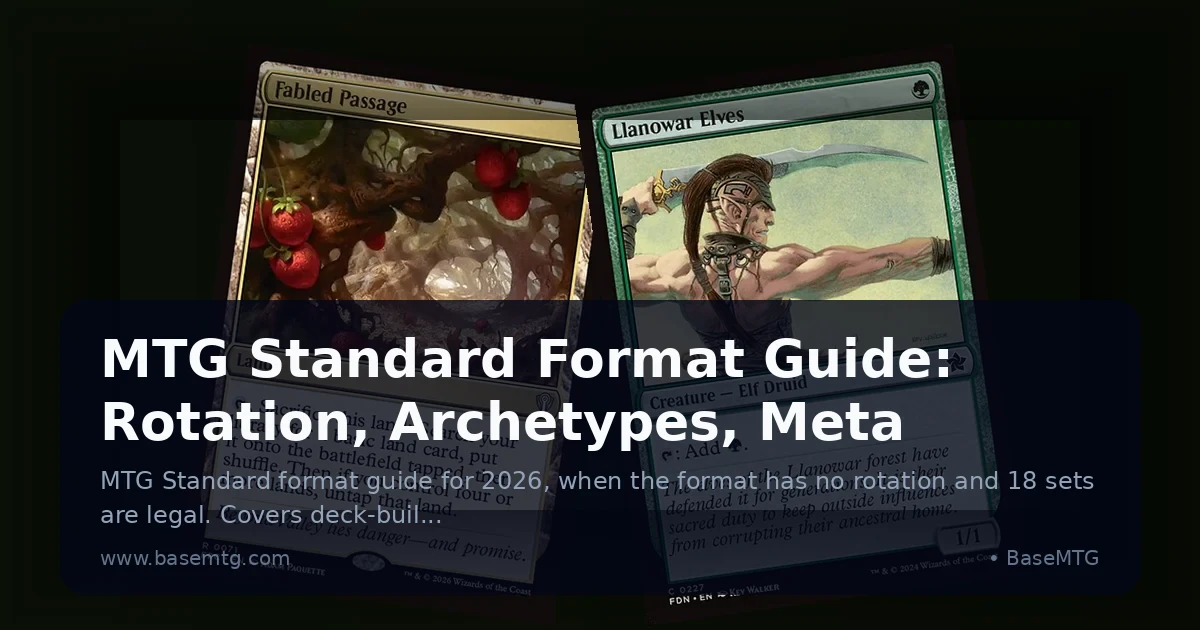
GODEEPER: Standard legality is easier to follow when you know how rotation and set legality shape the format. MTG Standard Format Guide: Rotation, Archetypes, Meta →
About the author

Commander & Standard Deck Analyst
Commander and cEDH grinder covering deckbuilding, precons, and the Standard/Commander metagame. Plays out of a local game store scene, reads spoilers the day they drop.
Disclaimer
This article is published for informational and entertainment purposes. It does not constitute professional financial, legal, or technical advice. Game performance, online services, patch schedules, and store listings change. Verify critical details (pricing, system requirements, regional availability) with publishers and storefronts before you buy. Affiliate links, where present, help support our editorial work and are labelled in our affiliate disclosure.
Mono-Green Landfall is the deck most players need to prepare for first. It turns an ordinary land drop into a chain of useful actions: creatures grow, mana accelerates, and the deck gains incremental value. That spread of functions is why it's probably the best deck in the format, and it's also why this is the most popular Mono-Green variant in the current snapshot.
The engine starts with extra land plays and landfall triggers. 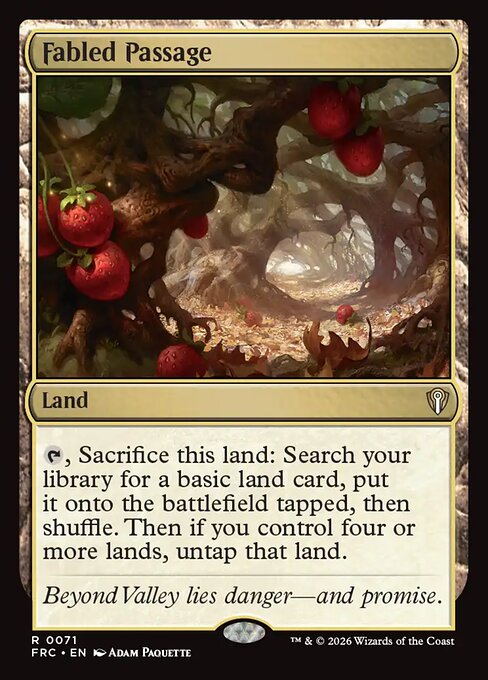 frc-71frc-71Shop on TCGplayer Fabled Passage is important because it can turn one land into multiple landfall events, while Icetill Explorer helps the deck keep those land drops coming.
 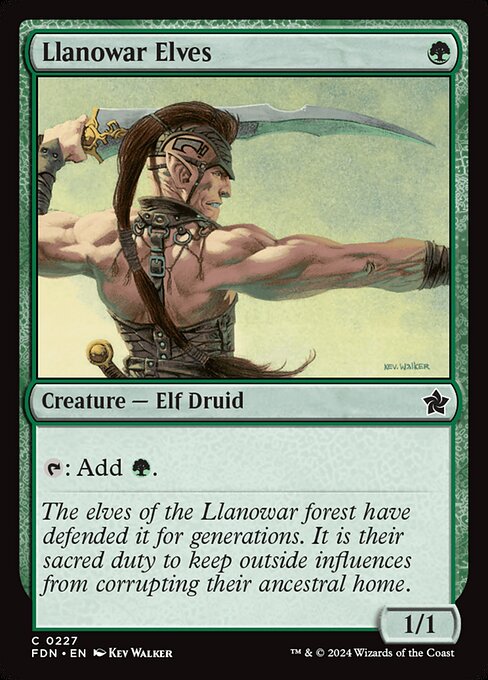 fdn-227fdn-227Shop on TCGplayer Llanowar Elves gives the strategy an earlier jump in mana, which means its payoff turns can arrive before an opponent is ready to answer them. Those cards don't all do the same job, but together they make the deck's basic plan unusually consistent.
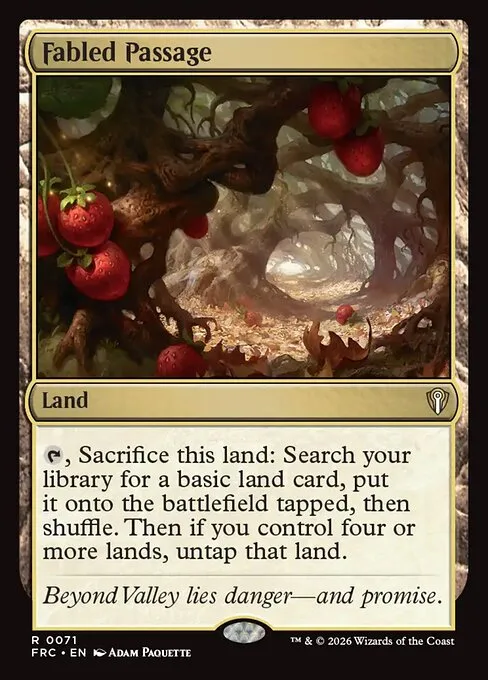 Fabled Passage turns a single land drop into an extra landfall trigger, the core engine behind Mono-Green Landfall.
The key strength is that Landfall doesn't have to choose one posture. It can develop creatures and attack, use mana acceleration to make a larger play early, or keep generating value until a longer game favors it. If an opponent plays slowly, the deck can use its early acceleration to punish the delay.
That flexibility is more important in an 18-set format. The deck has enough support to make land drops matter in several ways, and opponents can't assume that answering the first threat ends the game. A good Landfall pilot is always asking what the next land does.
The weaknesses are real, though. Mono-Green Landfall relies heavily on creatures that fight on the ground, so it can have trouble when an opponent doesn't cooperate with a normal ground race. It also runs very little interaction. That leaves it exposed to efficient spot removal, especially when a key creature is removed before its landfall investment compounds.
Board wipes are another clean pressure point. Landfall can rebuild, but a well-timed sweeper forces it to spend the next turns recreating the battlefield instead of converting land drops into damage and value. Fast aggressive starts create a similar problem. If Landfall has to block early or use its mana defensively, its flexible game plan becomes less flexible.
None of that makes the matchup easy. Landfall sits at the top of this Standard metagame tier list because it can punish a slow draw, recover from a narrow answer, and change roles as the game develops. Make those transitions expensive.
Dimir Midrange is the blue-black deck in the top tier, and its job is to make the opponent's best turns less effective. It combines efficient removal, card advantage, and midrange value threats. That gives it the shape of a control answer without requiring it to sit back and answer every spell forever.
The archetype wins by trading resources at a favorable pace. Early interaction keeps the opponent from snowballing, card advantage helps Dimir recover from those exchanges, and value threats close the game once both players have fewer options. It can play patiently against a creature deck, but it can also turn the corner when the opponent stumbles.
That role explains why Dimir belongs in the top three without being the format's single best deck. In a no-rotation environment, it can select answers and threats for the expected field instead of losing them with the season. The structure is familiar: interact, trade, draw, then win with whatever threat survives.
Its presence changes how the other two leaders are played. Mono-Green Landfall can't assume that a large creature will stay on the battlefield, and Izzet Spellementals can't assume that cheap spells become uncontested advantage. Dimir's pressure is the demand that every opposing card produce value before it gets answered.
Izzet Spellementals is the blue-red deck built around a high density of instants and sorceries, spells-matter payoffs, and the Spellemental creature type or mechanic introduced by the current set. Its identity is simple to describe but demanding to play: cast enough spells to make the payoffs matter, then use that spell activity to keep pressure on the opponent.
The archetype fills a different role from Dimir. Dimir wants efficient exchanges and a long-game edge. Izzet wants its spells to do more than answer one problem. A cheap spell can interact early, advance the payoff plan, and keep the deck active while other decks are setting up.
Izzet is also a natural part of the Landfall conversation. Mono-Green's creatures are powerful, but the deck doesn't carry much interaction of its own. A blue-red shell that can pressure from a different angle and keep mana available can make those green turns awkward. That doesn't mean Izzet wins every exchange. It means the archetype is built to ask Landfall questions before Landfall has assembled its full board.
The no-rotation environment helps here, too. A spells-matter deck needs enough support to avoid drawing payoffs without action, and 18 legal sets give it more material to choose from. The build will change as players test new options, so treat this as a September snapshot rather than a fixed definition.
GODEEPER: See how these three sets fit into the full 2026 Standard-legal schedule, including what's still coming before year end. Magic: The Gathering 2026 Set Release Schedule Guide →
Start by identifying which of Landfall's plans your deck can attack. You don't need one perfect answer. You need a sequence that prevents the deck from getting comfortable, then a way to reset the board if its first wave sticks.
Fast pressure is the cleanest place to begin. Landfall has little interaction, so an aggressive start can force it to spend mana and creatures on defense. The goal isn't to race blindly. Make the green deck answer your board before it can turn repeated land drops into a decisive advantage.
Efficient spot removal should target the creature about to convert landfall into the most value. Answer it before the next land arrives when possible, and don't assume that one early kill spell means the engine is finished.
Board wipes give you a second layer because Landfall's battlefield presence is creature-based. If you only trade one card at a time, the deck may rebuild faster than you can answer it. A sweeper resets a developed board, but don't hold it forever for a perfect exchange. Use it before the next attack is impossible to absorb.
You should also force Landfall to act on your schedule. If your deck is slower, apply pressure or generate value while holding up interaction. Passing several turns with no threat lets the green deck choose the pace, where its flexibility is strongest.
For an RCQ, build the matchup plan around these checks:
Those questions are more useful than copying a supposed silver bullet. Mono-Green Landfall is strong because it asks several questions at once. Beat it by making your deck answer in layers: early pressure, clean removal, and a reset when the board gets too large.
This ranking will change. New RCQs will show which adaptations stick, and a future set can add a better answer or a stronger engine. For now, the September 2026 data gives players a clear starting point: prepare for Landfall first, respect Dimir's resource exchanges, and expect Izzet Spellementals to punish decks that can't interact with a spell-heavy plan.
What are the top three Standard archetypes right now? Per Wizards of the Coast's own September 2026 Metagame Mentor report, Mono-Green Landfall, Dimir Midrange, and Izzet Spellementals together account for over half of the winner's metagame at Regional Championship Qualifiers.
Why is there no Standard rotation in 2026? Wizards of the Coast realigned the rotation schedule to the calendar year, so 2026 skipped its usual rotation. Eighteen sets are legal simultaneously, and the next rotation is 2027-01-23.
What makes Mono-Green Landfall the best deck in Standard? It turns extra land drops into multiple useful actions at once: creature growth, mana acceleration, and incremental value. That flexibility lets it adapt its game plan depending on the matchup, but it runs very little interaction.
How do you beat Mono-Green Landfall? Combine fast pressure with efficient removal or board wipes. The deck has little interaction of its own, so an aggressive start or a well-timed sweeper can force it to rebuild instead of converting land drops into value.
Will this tier list stay accurate? No, treat it as a September 2026 snapshot. New RCQ results, the Reality Fracture release on October 2, and further metagame shifts will change which archetypes lead.
cEDH Staples Guide: Fast Mana, Tutors, and Interaction
12 min read