Loading…
Loading…
BaseMTG · Guides
Reviewing
Magic: The Gathering
MTG format legality explained starts with one distinction: a card has to belong to a format's card pool, and it also has to avoid that format's banned list. In 2026, Standard adds an unusual wrinkle because it has no rotation at all this year, leaving 18 sets legal simultaneously. That makes this a good time to learn the actual checks instead of relying on a format's reputation or an old decklist.
TL;DR: Format legality means checking both whether a card's set is in the format's defined pool and whether that format separately bans the card. Standard has no 2026 rotation, so its legal pool has grown to 18 sets at once; the next rotation is 2027-01-23, when Duskmourn and all earlier sets leave Standard. Commander uses a different structure, with exactly 100 cards including the commander, singleton construction, and color identity.
Format legality means a card is legal in a format when its set is in that format's defined card pool and the card is not on that format's separate banned list. Those checks are independent, so being old enough, new enough, or printed in the right set does not by itself make a card playable in a particular format.
Standard is the format most closely associated with rotation. Its legal pool is made from a changing group of newer sets, which means older sets eventually leave and newer sets enter. That moving boundary is what keeps the format focused on recent releases and makes it important to check dates rather than assume that a card remains legal forever.
2026 is different. There is no Standard rotation in 2026, so the Standard-legal pool has grown to 18 sets, all legal at once. Wizards of the Coast skipped the 2026 rotation specifically to re-align the rotation schedule to the calendar year going forward. This is a real schedule change, not a reason to treat Standard as a permanently nonrotating format.
The next rotation is 2027-01-23. On that date, Duskmourn and all earlier sets will drop out of Standard. If you're building a deck during 2026, that date gives you a clear point to consider when deciding whether to invest in cards that are approaching the edge of the pool. It also explains why a guide written before 2026 can give an incomplete picture of the format today.
Standard deck construction is straightforward compared with Commander. Your main deck must contain at least 60 cards. You can play up to four copies of any card by name, while basic lands are unlimited, and you can use an optional 15-card sideboard. The four-copy rule applies to card names, not to a vague idea of how many versions of an effect you own, so check the exact cards in the list before you submit it.
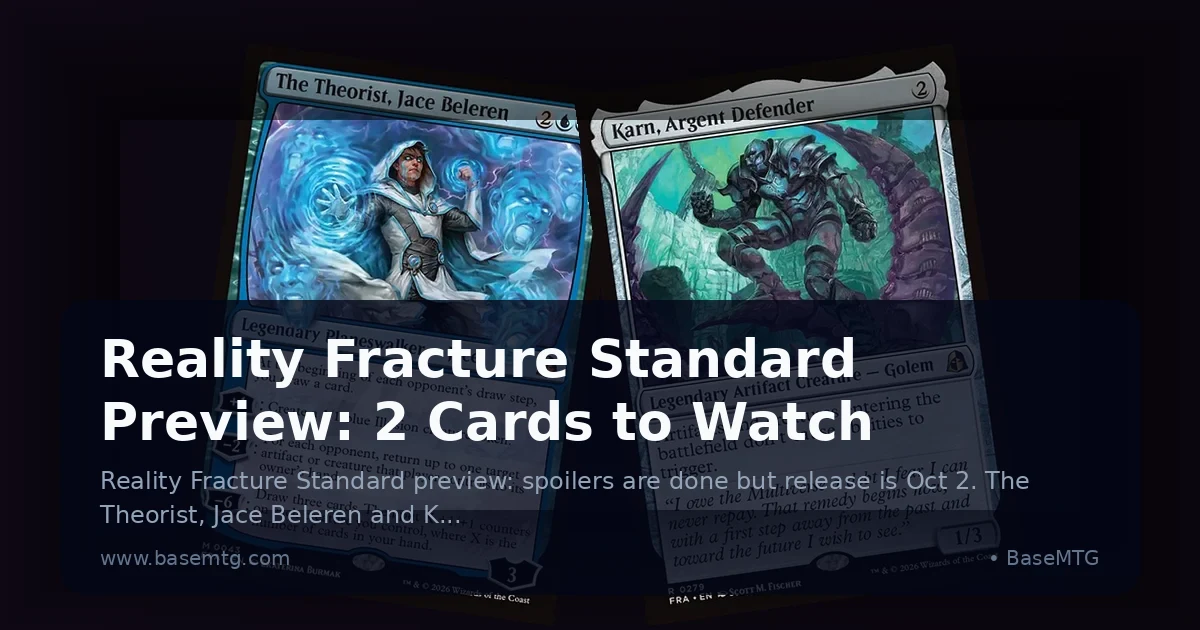
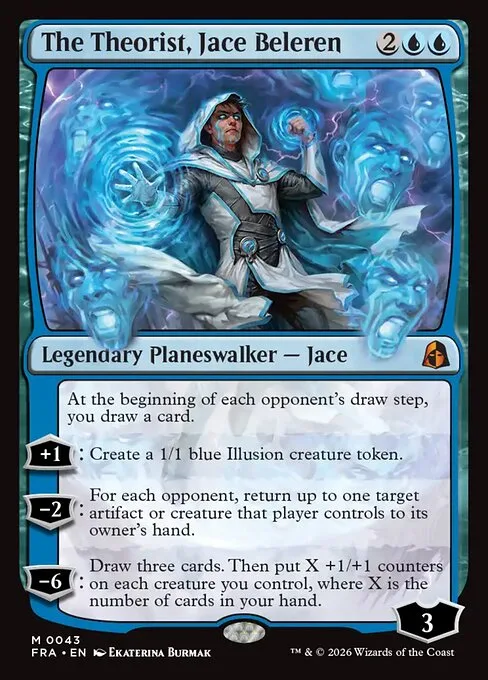 Every new Standard-legal set, like Reality Fracture, joins the current 18-set pool rather than replacing it in 2026.
The main deck minimum, copy limit, sideboard option, and card-pool date all describe different parts of legality. A card can be from a set that is still in the 18-set Standard pool and still fail the separate banned-list check. Conversely, a card that feels old or unfamiliar is not automatically illegal without checking which set it came from and whether that set remains in the current pool.
GODEEPER: See the full Standard archetype breakdown built on top of this no-rotation format. MTG Standard Format Guide: Rotation, Archetypes, Meta →
Was this guide helpful?
About the author

Commander & Standard Deck Analyst
Commander and cEDH grinder covering deckbuilding, precons, and the Standard/Commander metagame. Plays out of a local game store scene, reads spoilers the day they drop.
Disclaimer
This article is published for informational and entertainment purposes. It does not constitute professional financial, legal, or technical advice. Game performance, online services, patch schedules, and store listings change. Verify critical details (pricing, system requirements, regional availability) with publishers and storefronts before you buy. Affiliate links, where present, help support our editorial work and are labelled in our affiliate disclosure.
Commander, also called EDH, approaches legality from a different direction. Its card pool reaches across nearly the entire card pool, but the format adds structural rules that radically change how a legal deck is built. Checking only whether a card was printed in an old or new set won't answer the Commander question.
A Commander deck has exactly 100 cards, including its commander. It uses singleton construction, which means one copy maximum of any card by name, with basic lands excepted. Every card also has to fit the commander's color identity. That color-identity check is separate from the question of whether the card's set belongs to the broad Commander pool, so a card can be available in the wider pool and still not fit a particular commander's deck.
Commander is normally played with three to four players, who start at 40 life instead of 20. Those table and starting-life expectations don't replace deck legality checks, but they explain why a deck that is legal in Commander is built and played differently from a normal 60-card format deck. The 100-card requirement, singleton rule, and color identity are the first structural checks to make after identifying the format.
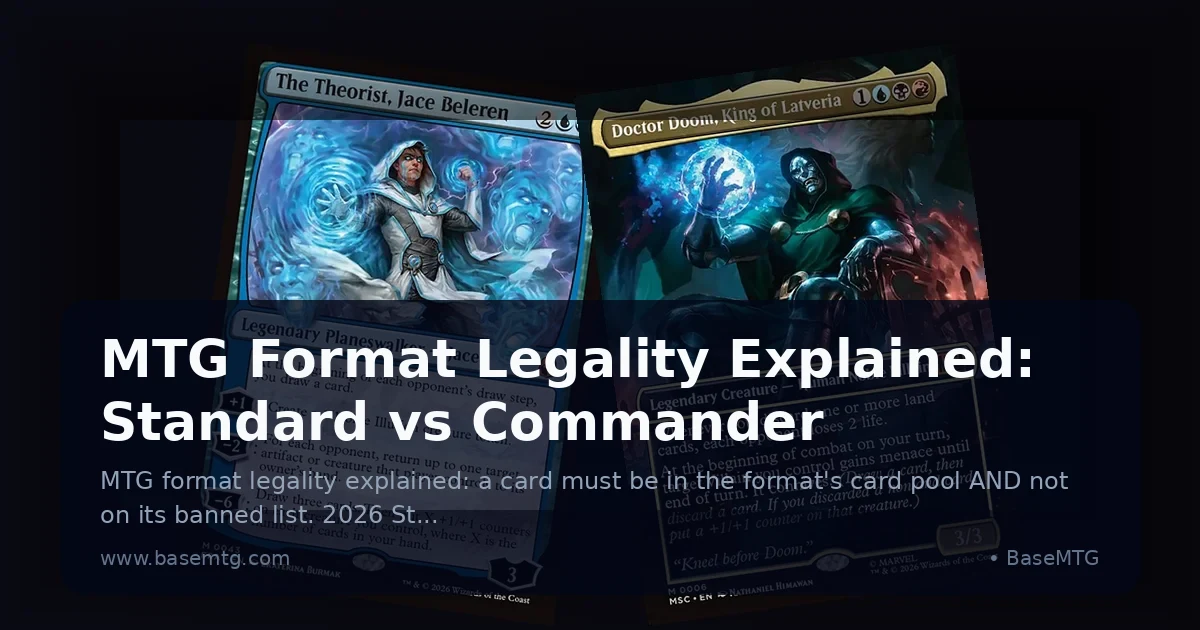
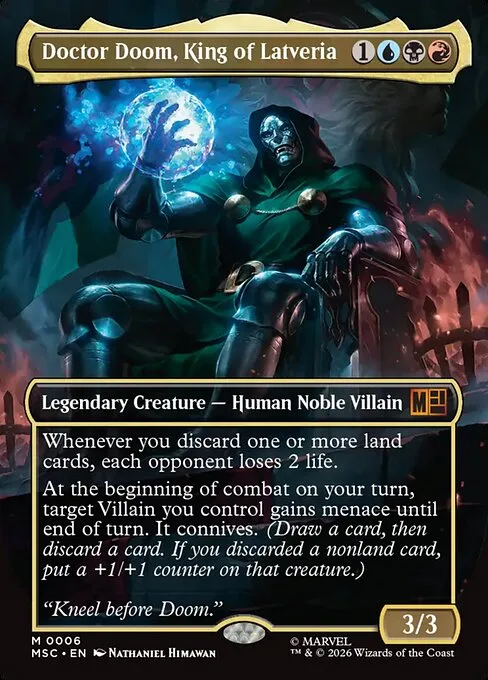 A Commander card like Doctor Doom, King of Latveria has to fit your commander's color identity, a check that has nothing to do with Standard legality.
Commander also has its own banned list, separate from Standard's. A card can be legal in Standard's card pool but banned in Commander, or legal in Commander while banned in Standard. The format's age, its multiplayer setting, and its card-pool breadth do not allow you to transfer a legality answer from one format to another.
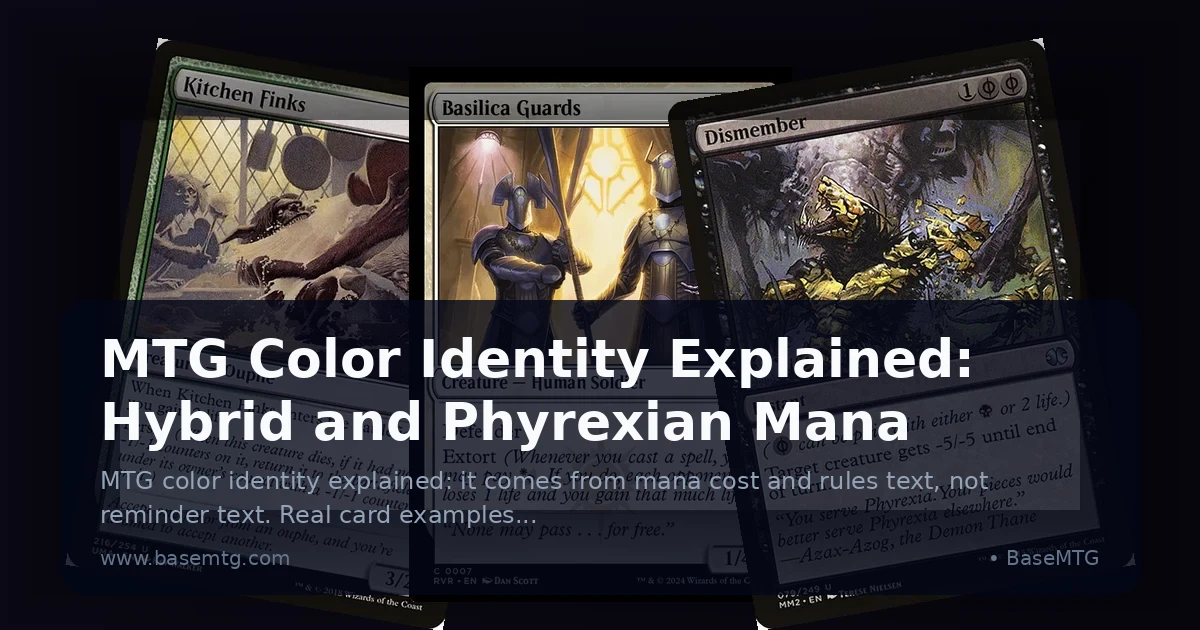
GODEEPER: Color identity is one of the fastest ways for an otherwise playable card to fail a Commander deck check. MTG Color Identity Explained: Hybrid and Phyrexian Mana →
1. Identify your format. Start with the event, decklist, or table you're preparing for and name the exact format: Standard, Commander, Pioneer, Modern, Pauper, Legacy, or Vintage. The same card can face different card-pool and banned-list rules in each one.
2. Check the card's set against the format's legal pool. Confirm which set the card belongs to, then compare that set with the format's defined pool. For Standard, this means checking the current rotation schedule and the 18-set 2026 pool; for nonrotating or broad-pool formats, use that format's own starting point or card-type restriction.
3. Separately check the format's banned or restricted list. Do not stop after confirming that the set is legal. Banned and restricted lists exist separately per format and can change independently of rotation, so a card in the right pool still needs this second check.
4. Compare the answer only within the format you are playing. A card can be legal in one format and banned in another, independently of whether both formats include its set. Standard legality does not establish Commander legality, and Commander legality does not establish Standard legality.
5. Recheck after a banned-list update. Legality changes over time, and a list update can alter the answer without any new set release. Before an event, revisit the current card-pool and banned or restricted information, especially if the last check was made before an announcement.
Formats sit on a spectrum. At one end is Standard, which uses the newest sets and rotates, although 2026 is an unusual no-rotation year. At the other end are Legacy and Vintage, which draw from nearly the entire card pool ever printed. The format name tells you where to begin, but the exact legality answer still comes from that format's card-pool definition and its separate banned or restricted list.
Pioneer sits between those ends with a fixed starting point in 2012 and sets forward from there. It doesn't rotate, so its pool grows as eligible sets are released. Modern starts with 2003 and moves forward, and it also doesn't rotate. For both formats, the key question is whether the card falls within the stated starting point and whether the format's own list places a separate restriction on it.
Pauper uses a different filter: cards from any set can be considered, but only commons qualify. That means the set date alone won't answer a Pauper legality question. Legacy and Vintage are broad, nearly whole-card-pool formats, while Commander draws from a similarly broad pool and adds the 100-card, singleton, color-identity structure on top. The eternal 60-card formats don't use those Commander construction rules.
This spectrum is useful because it prevents a common shortcut: assuming that “older format” means “anything goes.” Every format still has a definition, and every format can have its own banned or restricted list. Think of legality as a combination of the pool, the list, and, when relevant, the deck's construction rules.
Is there a Standard rotation in 2026? No. Wizards of the Coast skipped the 2026 rotation to re-align the schedule to the calendar year, leaving 18 sets legal simultaneously. The next rotation is 2027-01-23, when Duskmourn and earlier sets drop out of the format.
What's the difference between a card being legal and being banned? Legality means the card's set is in the format's defined pool. Being banned is a separate restriction that can apply even to a card from a legal set. You have to check both independently.
How many cards does a Commander deck need? Exactly 100, including the commander, with singleton construction (one copy per card by name, basic lands excepted), and every card must fit the commander's color identity.
Can a card be legal in Standard but banned in Commander, or the reverse? Yes. Each format keeps its own separate banned list. A card's Standard legality has no bearing on its Commander legality, and vice versa.
Where can I quickly check a card's format legality? A card's Scryfall page lists per-format legality directly, which is a fast starting point. Confirm against the current official announcement or banned list when the answer matters for an actual event.
Standard Metagame Tier List: Top 3 Decks (Sept 2026)
11 min read