MTG Turn Phases Explained: Every Phase and Step in Order
You can play a whole game knowing only draw, play, attack. The upkeep and the end step you skip past are where a lot of today's Standard cards do their work.
Verdict
A turn has five phases: beginning (untap, upkeep, draw), first main, combat (five steps), second main and ending (end step, cleanup). The end step is the one Standard cards name most: 202 Standard-legal cards mention it.
MTG turn phases always run in the same order: beginning, first main, combat, second main and ending. Rule 500.1 of the Comprehensive Rules puts it in one line: "A turn consists of five phases, in this order: beginning, precombat main, combat, postcombat main, and ending." Three of those phases are split into steps, and those steps are where most timing questions come from.
The first and second main phases are the same thing under two names. Rule 505.1 calls them "the first main phase (also known as the precombat main phase) and the second main phase (also known as the postcombat main phase)," and every Standard-legal card's current Oracle text uses the first-and-second wording: Scryfall finds no card whose rules text still says "precombat main phase".
MTG turn phases in order
| Phase | Steps | What happens | Do players get priority? |
|---|---|---|---|
| Beginning | untap, upkeep, draw | untap your permanents, upkeep triggers, draw a card | not in untap; yes in upkeep and draw |
| First main | none | play a land, cast creatures and sorceries | yes |
| Combat | beginning of combat, declare attackers, declare blockers, combat damage, end of combat | attack and block | yes, in every step |
| Second main | none | same as the first main phase | yes |
| Ending | end step, cleanup | end step triggers, discard to seven, damage wears off | yes in the end step; usually not in cleanup |
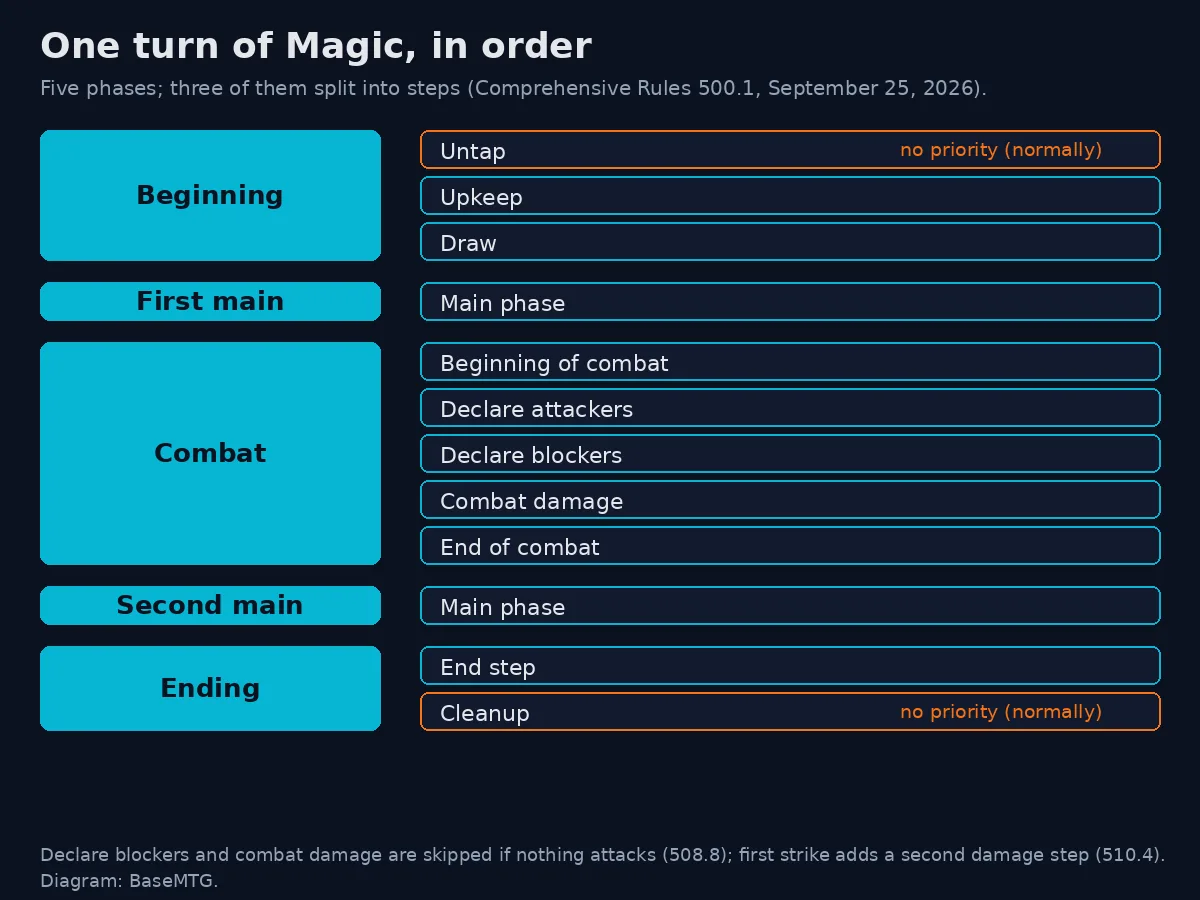 The full MTG turn structure. Untap and cleanup are the two steps where nobody normally gets to cast anything. Image: BaseMTG diagram.
Wizards' own 96-second learn-to-play video walks the same order. Its chapter list runs from "The Beginning Phase (Untap, Upkeep, and Draw)" to "Ending Phase (End Step & Cleanup)", and it treats combat as a separate lesson.
From Wizards of the Coast's Foundations series (November 2024). It covers phases only; combat has its own video.
Beginning phase: untap, upkeep and draw
Rule 501.1 says "The beginning phase consists of three steps, in this order: untap, upkeep, and draw."
Untap. You untap everything you control. Nobody can cast spells here: rule 502.4 says "No player receives priority during the untap step," and anything that triggers is "held until the next time a player would receive priority, which is usually during the upkeep step."
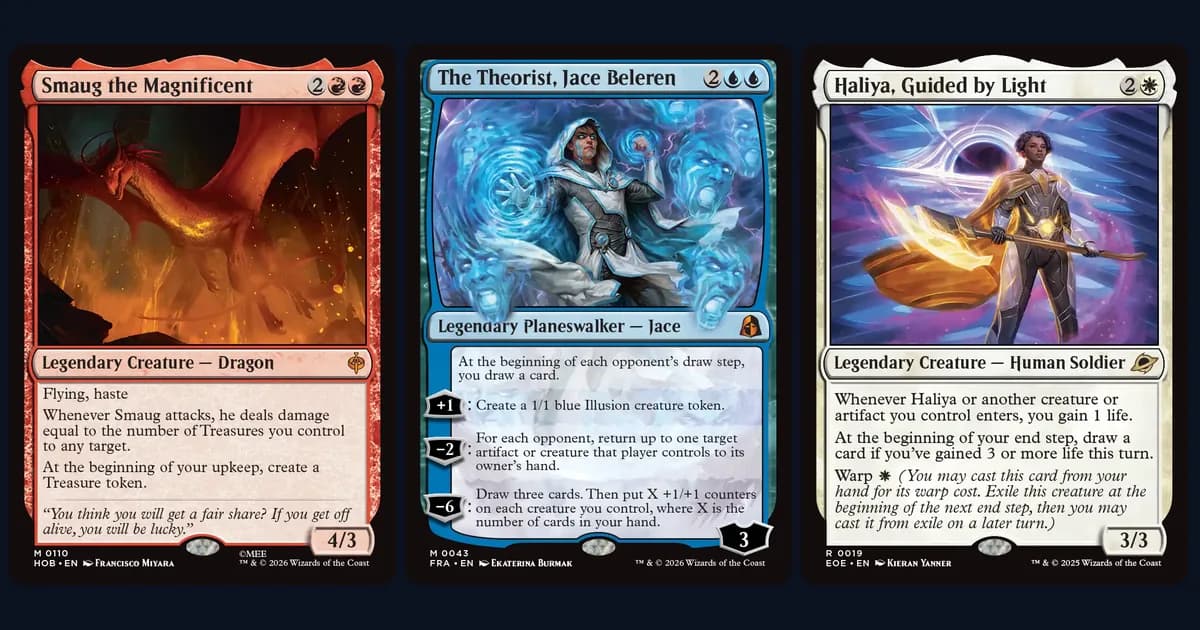
Upkeep. The upkeep has no built-in action. It exists for triggers. Smaug the Magnificent says "At the beginning of your upkeep, create a Treasure token," and Obsessive Pursuit makes you lose 1 life and create a Clue each upkeep. We searched Scryfall on October 23, 2026: 70 of the 5,164 Standard-legal cards name the upkeep. Across 755 Magic Online Standard Challenge decklists from October 1 to 21, 118 main decks played at least one of them, mostly Obsessive Pursuit and Smaug.
Draw. You draw a card, which doesn't use the stack (rule 504.1), and then players can cast instants. In a two-player game, rule 103.8a says "the player who plays first skips the draw step" of their first turn. The draw step is also a trigger point, just for fewer cards: only six Standard-legal cards name it. The one that matters is The Theorist, Jace Beleren  fra-43
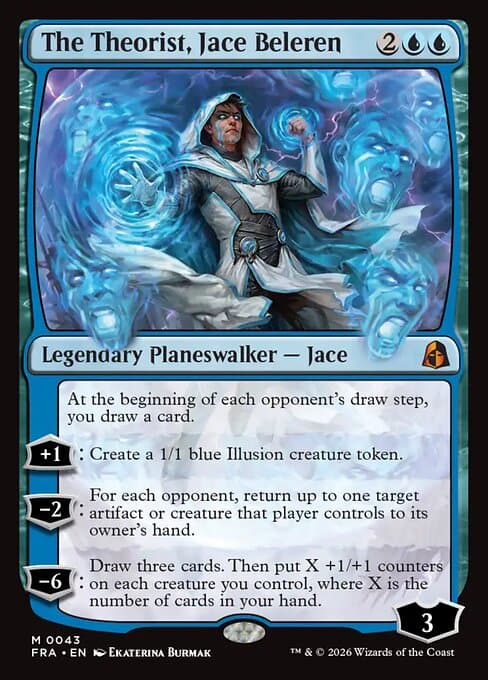 fra-43Shop on TCGplayer, which reads "At the beginning of each opponent's draw step, you draw a card." It was in 90 of the 755 Challenge main decks.
Main phases: lands, creatures and sorceries
Rule 505.6a: "The main phase is the only phase in which a player can normally cast artifact, creature, enchantment, planeswalker, and sorcery spells." You can do that only on your own turn and only with an empty stack (rule 117.1a). Your land drop works the same way: once per turn, in either main phase, with the stack empty (rule 505.6b).
One thing happens automatically at the start of your first main phase: each Saga you control gets a lore counter (rule 505.4). That's why a Saga's next chapter shows up after you draw, not in your upkeep.
Which main phase should you use? Cast a creature before combat when it helps the attack (a haste creature, a lord, an attacker you want on the board). Otherwise wait for the second main phase, after blocks, when your opponent has seen less of your hand. Only 27 Standard cards name the first main phase and 15 the second, so the choice is usually yours, not the card's.
MTG combat phase steps
Rule 506.1 lists five steps: "beginning of combat, declare attackers, declare blockers, combat damage, and end of combat."
- Beginning of combat. A trigger window before attacks. Guiding Hydra
 fra-11
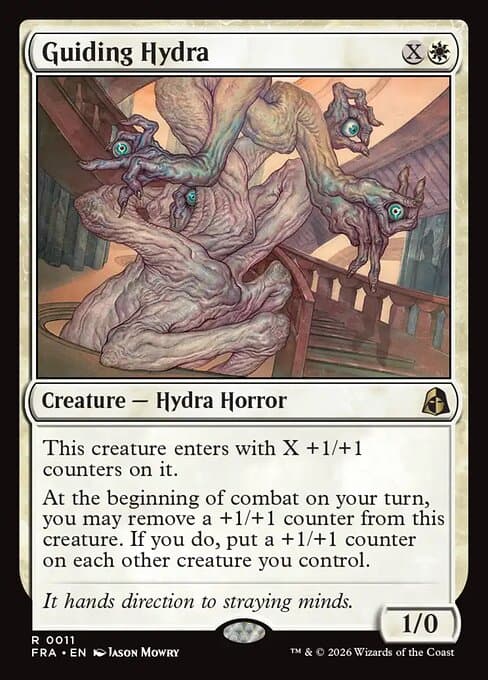 fra-11Shop on TCGplayer can remove a +1/+1 counter from itself here to put a +1/+1 counter on each other creature you control, and Ardyn, the Usurper
 fin-89
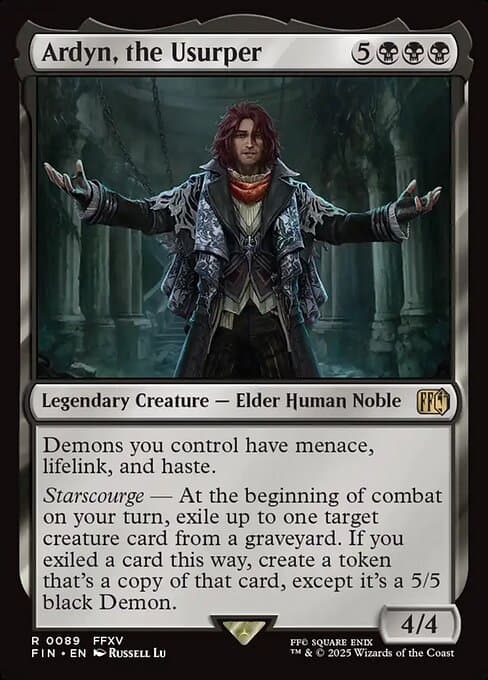 fin-89Shop on TCGplayer makes a 5/5 Demon copy of a creature card from a graveyard "at the beginning of combat on your turn." It's also your opponent's last chance to tap or remove an attacker before you declare it.
- Declare attackers. You choose attackers, and they tap. Rule 508.1f is clear that "Tapping a creature when it's declared as an attacker isn't a cost; attacking simply causes creatures to become tapped." A creature can attack only if it has haste or you've controlled it "continuously since the turn began" (508.1a).
- Declare blockers. The defending player blocks, then both players can cast instants.
- Combat damage. All damage is dealt at once, and rule 510.2 says no player can respond "between the time combat damage is assigned and the time it's dealt." If any attacker or blocker has first strike or double strike, there are two damage steps (rule 510.4).
- End of combat. Triggers "at end of combat" happen here, and then every creature is removed from combat (rule 511.3).
If nothing attacks, rule 508.8 skips declare blockers and combat damage. The beginning of combat step still happens, so those triggers still fire. Our keyword abilities guide covers first strike and double strike in more detail.
Ending phase: end step and cleanup
Rule 512.1: "The ending phase consists of two steps: end and cleanup."
End step. This is the busiest trigger window in Standard right now. Of the 5,164 Standard-legal cards, 202 name the end step in their rules text, far more than any other step. Haliya, Guided by Light  eoe-19
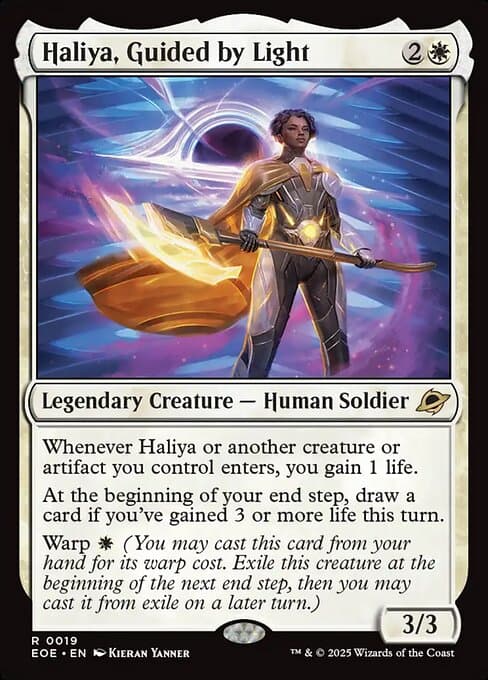 eoe-19Shop on TCGplayer draws a card "At the beginning of your end step" if you've gained 3 or more life, and Enlightened Confidant
 fra-5
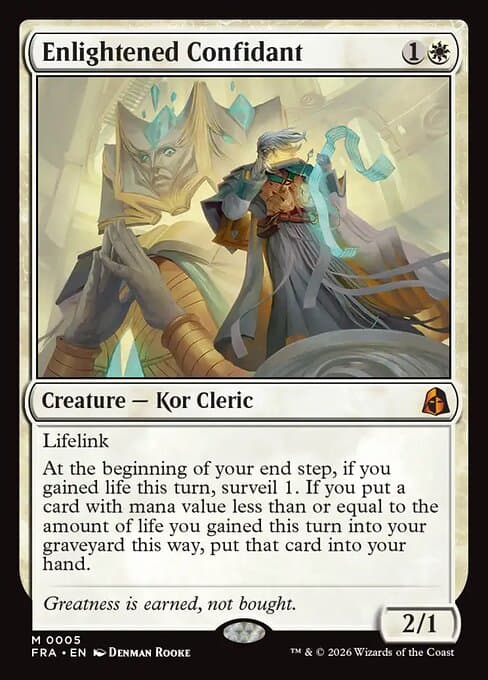 fra-5Shop on TCGplayer surveils at the same point if you gained any life. In the Challenge decklists, 146 main decks played at least one end-step card, led by Haliya, Enlightened Confidant, Lunar Convocation and Moseo, Vein's New Dean.
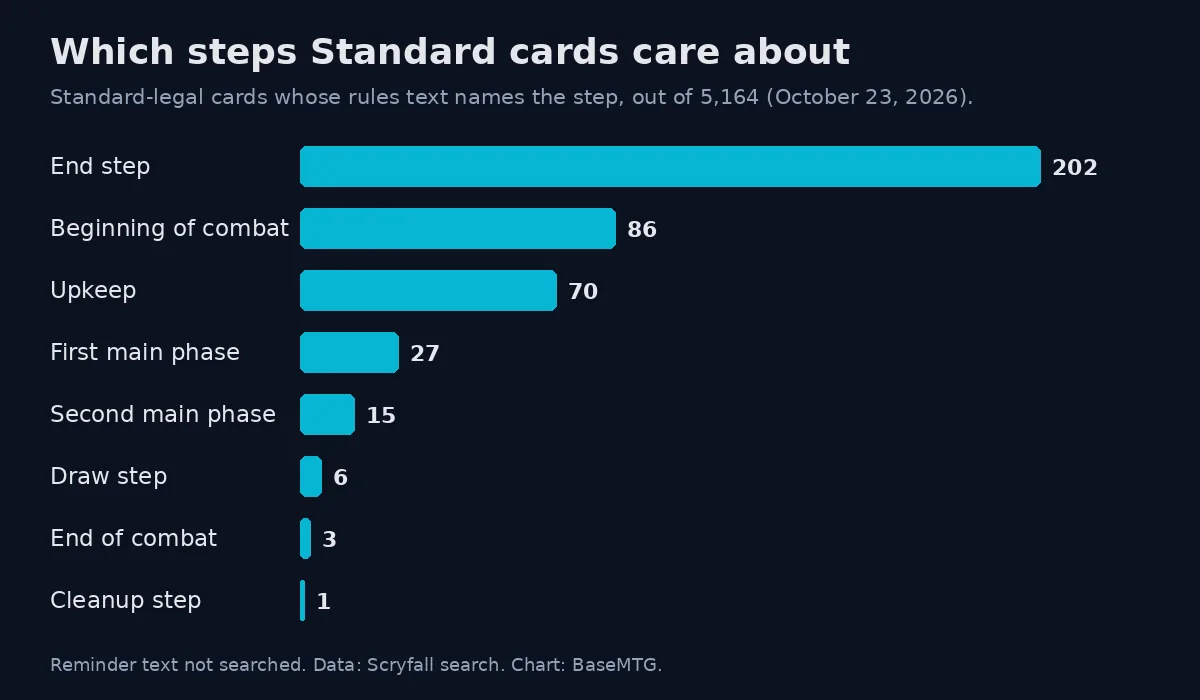 Standard-legal cards whose rules text names each step, out of 5,164. Data: Scryfall search, October 23, 2026. Image: BaseMTG chart.
There's a catch for anything that arrives late. Rule 513.2 says a permanent with an end step trigger that enters during the end step won't trigger until next turn: "the step doesn't 'back up' so those abilities can go on the stack."
Cleanup. First you discard down to your maximum hand size, normally seven (rule 514.1). Then, at the same time, "all damage marked on permanents (including phased-out permanents) is removed and all 'until end of turn' and 'this turn' effects end" (rule 514.2). Normally nobody gets priority here (514.3). The exception is rule 514.3a: if a state-based action happens or something triggers during cleanup, players get priority, and then another cleanup step begins.
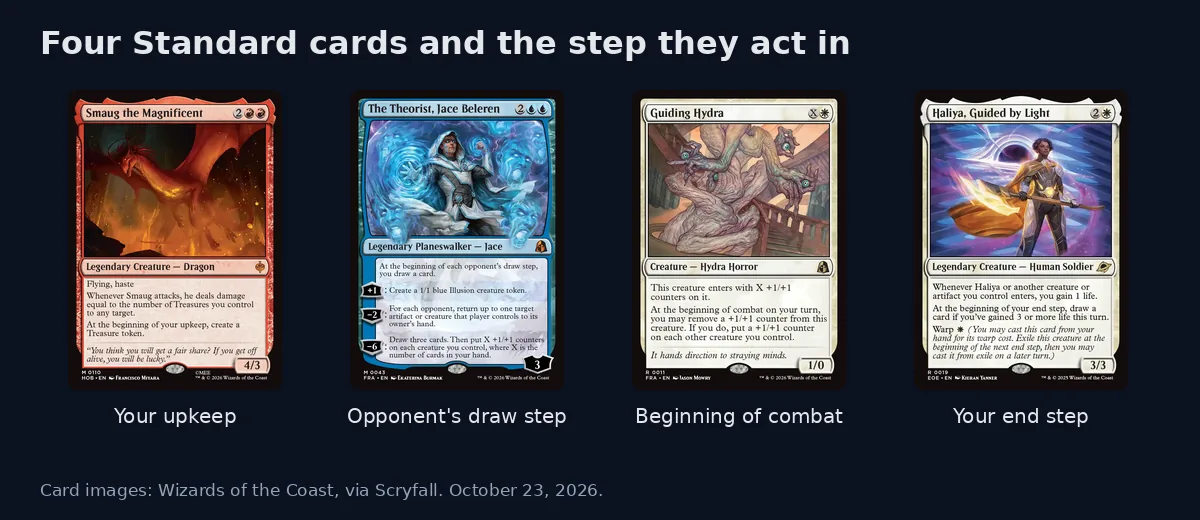 Card images: Wizards of the Coast, via Scryfall.
Where priority and mana fit into each phase
A step doesn't end the moment the stack is empty. Rule 500.2 says "all players have to pass in succession with the stack empty." That's what gives your opponent a window in your upkeep, after your draw, before attackers and in your end step. Our guide to the stack explains how priority passes back and forth.
Two rules catch new players. Mana doesn't carry over: as each step or phase ends, "any unspent mana left in a player's mana pool empties" (rule 500.5). And there are only two steps where you normally can't act, the untap step and the cleanup step (rule 117.3a).
Responses at those other points are normal in Standard. In the 755 Challenge decklists, 687 main decks had at least one instant or flash card, about 11 copies per deck on average.
On MTG Arena the game moves through steps for you, and you can tell it where to stop. In a r/MagicArena thread on holding full control, u/Captcha142 pointed at the simplest setting: "On your opponent's step symbols, you can set it to stop on the Declare Attackers step."
MTG turn phases questions that come up at the table
Can I cast a creature during combat? Only if it has flash or something else lets you. Creatures are main-phase spells (rule 505.6a).
Do I draw on my first turn? Not if you go first in a two-player game (rule 103.8a). In multiplayer games other than Two-Headed Giant, everyone draws on their first turn (rule 103.8c).
When does damage on my creature go away? In the cleanup step of the turn it was dealt (rule 514.2). A creature that took 3 damage on your turn starts the next turn with no damage marked on it.
If I don't attack, is combat skipped? Not all of it. The beginning of combat and end of combat steps still happen; only declare blockers and combat damage are skipped (rule 508.8).
How we checked this
On October 23, 2026 we read rules 103.8, 117.1a, 117.3a and 500 to 514 in the September 25, 2026 Comprehensive Rules file. Card text comes from Scryfall's API. The step counts are Scryfall searches of Standard-legal cards for each step's name, run the same day; Scryfall's o: search skips reminder text, and a card that names two steps is counted under both. For the deck numbers we took the 755 Standard Challenge decklists Magic Online posted for October 1 to 21, matched every main-deck card to its Scryfall rules text (reminder text removed) and counted the decks with at least one card naming each step.
Our take
Learn the turn as "draw, main, combat, main, end," then add the two trigger windows people rush past: your upkeep and your end step. Those are where Standard's card draw and value engines live, so a forgotten trigger there costs you real cards. If you play on paper, say the step out loud when something triggers. It costs nothing and heads off a lot of timing arguments.
For the rest of the basics, see how to play Magic: The Gathering, MTG zones explained and our mulligan rules guide. Building a deck around these cards? The Standard format guide is the place to start.
References
- Wizards of the Coast: Comprehensive Rules, September 25, 2026 (text file)
- Wizards of the Coast: Magic rules page
- Scryfall: search syntax
- Scryfall: Standard-legal cards that name the end step
- Scryfall: The Theorist, Jace Beleren
- Magic Online: Standard decklists
- YouTube: Taking Your Turn, Magic Foundations (Wizards of the Coast)
- Reddit: r/MagicArena, holding full control across phases
Was this guide helpful?
About the author

Spoilers & New Sets Desk
Pen name for the BaseMTG new-sets desk: spoiler season, set reviews, Universes Beyond crossovers and rules news. Cards are read from the official text, and what is confirmed is kept apart from our own reading of it.
- Spoilers, set reviews and Universes Beyond
- Card text read from official sources
- Confirmed facts marked apart from our reading
Keep reading
MTG Zones Explained: Every Zone and Your Board Layout
Guides · 11 min
MTG Stack Explained: How Priority and Responses Work
Guides · 8 min
MTG Color Combinations: Names, Playstyles and How to Pick
Guides · 10 min
MTG Mulligan Rules Explained: London Mulligan Step by Step
Guides · 7 min
Bury MTG Meaning: What the Old Destroy Wording Did
Guides · 13 min
Board Wipe in MTG: The 5 Kinds and Which Decks Play Them
Guides · 9 min
MTG Keyword Abilities Explained: Combat and Protection
Guides · 7 min
MTG Format Legality Explained: Standard vs Commander
Guides · 11 min
Disclaimer
This article is published for informational and entertainment purposes. It does not constitute professional financial, legal, or technical advice. Game performance, online services, patch schedules, and store listings change. Verify critical details (pricing, system requirements, regional availability) with publishers and storefronts before you buy. Affiliate links, where present, help support our editorial work and are labelled in our affiliate disclosure.