

BaseMTG · Guides
MTG Keyword Abilities Explained: Combat and Protection
Reviewing
Magic: The Gathering
MTG keyword abilities turn recurring Magic: The Gathering rules into short labels that fit on a card. Learning the basic definitions is only the first step, because the real questions come up when several keywords meet in one combat. This guide explains the common abilities in plain English and works through the interactions that cause the most confusion.
TL;DR: Keyword abilities are shorthand for reminder-text rules printed on cards. Evasion keywords (flying, reach, menace) control what can block what. Timing keywords (first strike, double strike, vigilance) change when and how often damage happens. Deathtouch makes any nonzero damage lethal, which combines with trample to punch far more damage through a large blocker than toughness alone would suggest. Hexproof stops targeting outright, while ward taxes it after the fact, neither stops a non-targeted effect like a board wipe.
Key Takeaways
- Flying can be blocked by flying or reach, while menace requires at least two legal blockers.
- First strike deals damage in an earlier combat damage step, and double strike deals damage in both steps.
- Deathtouch makes any nonzero damage to a creature lethal for damage-assignment purposes, which makes trample much more effective.
- Vigilance, haste, and lifelink change how a creature functions during and around combat, not just how it can be blocked.
- Hexproof prevents opponents from targeting a permanent, while ward allows the target but taxes the opponent or counters the spell or ability.
What Are Keyword Abilities? (quick answer)
Keyword abilities are shorthand for reminder-text rules printed directly on cards, so players do not need to memorize the full Comprehensive Rules wording for common effects. A keyword such as flying or lifelink points to a defined game rule that works consistently across cards. Some cards include the reminder text in parentheses, while more familiar keywords may appear without it.
Evasion Keywords: Flying, Reach, and Menace
Flying means a creature can be blocked only by creatures with flying or reach. It can still block creatures with or without flying, because the restriction applies to creatures trying to block the flyer.
Reach lets a creature block creatures with flying, but it does not give that creature flying. It still attacks and blocks on the ground normally, so ordinary creatures can block it when it attacks unless another ability changes combat.
Menace means a creature cannot be blocked except by two or more creatures. One blocker cannot block it alone, regardless of size. Both blockers must be legal. A flying creature with menace therefore needs two creatures with flying or reach, in any combination. Two ground creatures without either ability cannot block it.
Check all these restrictions when blockers are declared. A flying menace attacker needs at least two blockers, and each must have flying or reach. A menace attacker without flying can be blocked by any two legal creatures. A single creature with both flying and reach still counts as one blocker.
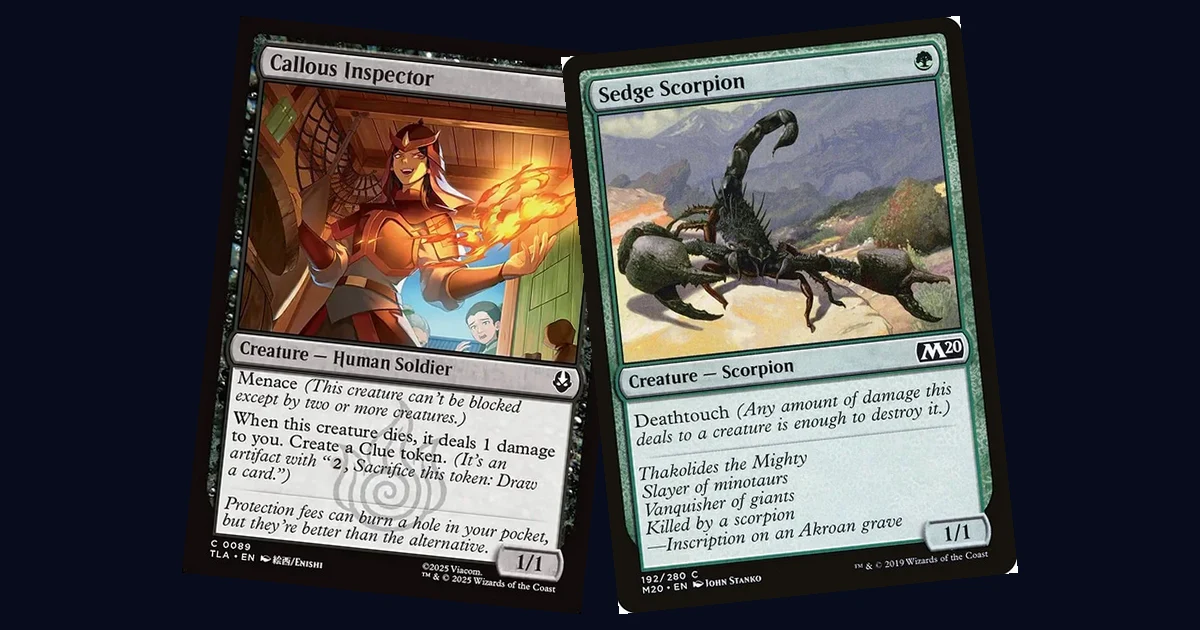
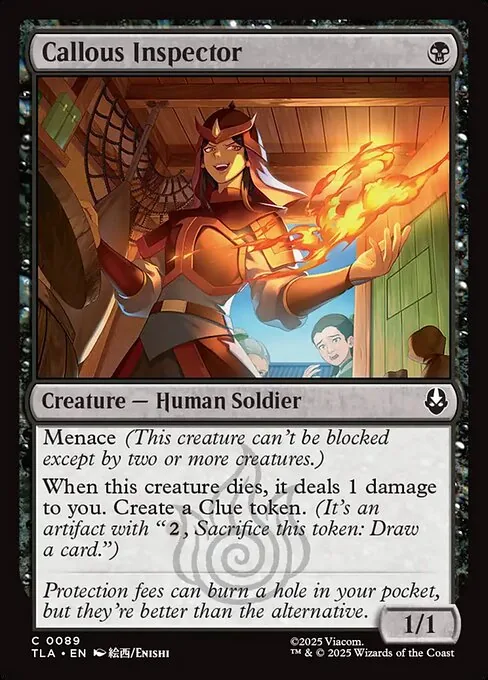 Callous Inspector's printed reminder text spells out menace exactly: "can't be blocked except by two or more creatures."
GODEEPER: Color identity determines which colored mana symbols on a card (including in keyword costs like ward) count toward a Commander's identity. MTG Color Identity Explained: Hybrid and Phyrexian Mana →
Combat Timing: First Strike, Double Strike, and Vigilance
First strike creates a first-strike combat damage step before the regular step. Creatures with first strike or double strike deal damage in the first step. In the regular step, surviving double-strike creatures deal damage again, and creatures without either ability deal damage for the first time.
Suppose a 3/3 with first strike blocks an ordinary 4/4. The 3/3 deals damage first and destroys the 4/4 before regular damage, so the 4/4 deals none. If the 3/3 had double strike and survived, it would deal damage in both steps.
Double strike does not always double a creature's damage. It gives two opportunities to deal combat damage, but a creature can be blocked, destroyed in the first step, or prevented from dealing damage in the second. An unblocked survivor normally deals its power in each step.
Vigilance is about tapping, not timing. Attacking does not cause a creature with vigilance to tap, so it remains available to block during the opponent's following turn. Vigilance does not grant haste and does not let a creature use tap abilities while it has summoning sickness. It only changes the normal result of declaring that creature as an attacker.
Damage Keywords: Deathtouch, Trample, and Lifelink
Deathtouch means any nonzero damage this creature deals to another creature is enough to destroy that creature during the state-based action check. A 1/1 with deathtouch can destroy a 10/10 if it deals one damage. Deathtouch does not make damage to players or planeswalkers lethal, and damage must still be dealt.
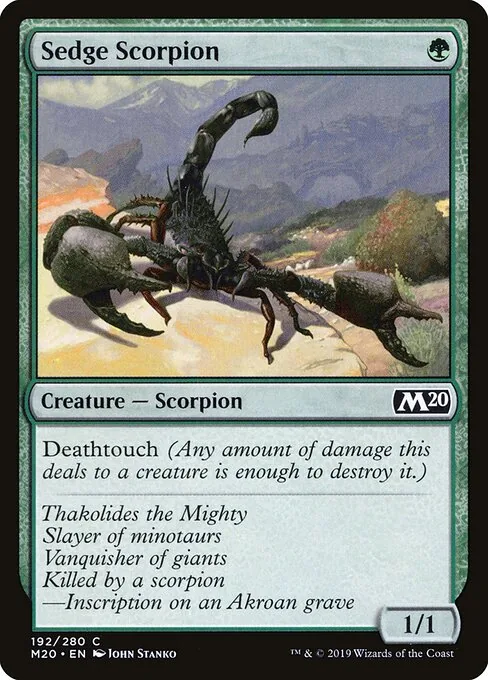 Sedge Scorpion is a simple, real example of deathtouch: a 1/1 that can trade with anything it damages, regardless of that creature's toughness.
Trample changes how a blocked attacker assigns damage. Its controller must assign lethal damage to each blocker before assigning any excess to the defending player. Once lethal damage is assigned to all blockers, the rest can trample over. Trample does not ignore blockers or send all damage through automatically.
Deathtouch lowers the lethal amount for trample. A 6/6 creature with both deathtouch and trample is blocked by a 0/8 wall. Without deathtouch, it cannot assign eight damage to the wall and still trample. With deathtouch, 1 damage is lethal for assignment, so the controller assigns 1 to the wall and the remaining 5 damage to the defending player. The wall is destroyed during the state-based action check.
With several blockers, a deathtouch creature with trample assigns one damage to each ordinary blocker in order, then sends the rest through. Damage prevention or indestructible may keep a blocker from being destroyed, but one damage can still satisfy the normal deathtouch-based assignment rule.
Lifelink makes its controller gain life equal to damage dealt by that creature at the same time the damage is dealt. A 4/4 with lifelink that deals four damage to a creature still gains four life. The rule applies to total damage from the source, in combat or outside combat.
Step-by-Step: Reading a Keyword-Heavy Card
1. Start with the keyword line. Read every keyword before deciding how the creature attacks, blocks, or interacts with a spell. A card with flying, menace, and deathtouch has three separate rules, and each one can matter in the same combat.
2. Check the reminder text. If a keyword is unfamiliar, read the words in parentheses instead of guessing from its name. Reminder text is a concise explanation of the rule, and a card may also have an unusual additional ability beside the keyword.
3. Sort the effects by job. Mark which keywords affect combat access, combat timing, damage, targeting, tapping, or life totals. This keeps flying and menace from being confused with first strike, and keeps deathtouch from being treated like a targeting ability.
4. Check targeting before casting. Before you aim a spell or ability at the creature, look for hexproof and ward. Hexproof may make the target illegal immediately, while ward may require an extra payment after the targeting attempt. Neither keyword changes whether a non-targeted effect can affect the creature.
5. Recheck combat order and other abilities. If the creature has first strike or double strike along with a noncombat ability, determine which ability triggers or resolves and which damage step applies. Then check whether the creature survives the first-strike step before assuming it will deal damage again.
Protection Keywords: Hexproof, Ward, and When They Don't Apply
Hexproof means the permanent cannot be the target of spells or abilities its opponents control. Its controller can still target it with their own spells and abilities, unless another rule says otherwise. Hexproof does not make the permanent generally untouchable. It protects against the specific game action of being targeted by an opponent.
Ward is a different exchange. Whenever a permanent with ward becomes the target of a spell or ability an opponent controls, ward triggers. When that triggered ability resolves, the opponent must pay the listed ward cost, such as mana or another specified cost, or the targeted spell or ability is countered. Ward does not prevent the targeting attempt. It allows the target and then creates a tax or condition that the opponent must handle.
That distinction matters when a spell has several targets or when a player has limited mana. Hexproof can stop an opponent from choosing the permanent as a target at all. Ward lets the opponent choose it, but the spell or ability may fail if the opponent cannot or will not pay. Paying the ward cost does not make the permanent lose ward or become easier to target later.
Neither hexproof nor ward stops a non-targeted effect. A spell that says "destroy all creatures" does not target any creature, so it can affect creatures with either keyword. The same is true for an effect that says each player sacrifices a creature, or an effect that only asks whether you control a permanent. These abilities also do not prevent combat damage, damage from a source that does not target, or other effects that follow their own non-targeting rules.
GODEEPER: Once you're comfortable with keywords, the next skill is building a manabase that can actually cast the cards that have them on curve. MTG Mana Base Guide: The Land Count Formula Explained →
Tips for New Players
Don't assume "can't be blocked" means unblockable entirely. Menace does not mean no one can block. It means the defending player needs at least two legal blockers, so save enough creatures to meet that condition.
Count legal blockers, not just available blockers. A ground creature without flying or reach cannot help block a flying menace creature. Check every blocking restriction before you count the pair.
Use the first damage step as a checkpoint. First strike and double strike may destroy a blocker before it deals damage. Pause after first-strike damage and check state-based actions before moving to regular damage.
Separate targeting from affecting. Ask whether a spell or ability uses the word "target" in the relevant rules text. Hexproof and ward matter there, but they do not stop a non-targeted board-wide effect.
Frequently Asked Questions
What is the difference between hexproof and ward?
Hexproof prevents an opponent from targeting the permanent at all. Ward does not prevent the target from being chosen. Instead, it triggers after the targeting attempt and asks that opponent to pay a listed cost. If the cost is not paid when the ward ability resolves, the targeted spell or ability is countered.
Does trample work without deathtouch?
Yes. Trample works on its own, but the attacker normally has to assign enough damage to each blocker to be lethal based on toughness and damage already marked. Deathtouch reduces that assignment requirement to one damage per blocker, so the combination sends excess damage through more easily. Trample still cannot ignore blockers.
Can a 1-power deathtouch creature kill anything?
It can destroy almost any creature it actually damages, regardless of that creature's toughness, because one damage is nonzero and therefore lethal from a deathtouch source. This does not defeat indestructible, damage prevention, or replacement effects that stop the damage. The deathtouch creature must connect with the creature for the rule to matter.
What blocks a flying creature?
Only a creature with flying or reach can block a creature with flying. An ordinary ground creature cannot block it, even if that blocker is large. A creature with reach does not gain flying, so it can block flyers while still being blocked by ordinary creatures when it attacks, unless another ability changes those rules.
Can a creature with vigilance block immediately after it enters?
Yes, assuming it is otherwise untapped and able to block. Summoning sickness does not stop a creature from blocking, so vigilance is not needed for that. Vigilance matters when the creature attacks: it does not tap as part of attacking, leaving it available to block during the opponent's next turn.
Does double strike always deal twice the creature's power?
No. Double strike gives the creature a chance to deal combat damage in both combat damage steps. If it is blocked, destroyed in the first step, prevented from dealing damage, or otherwise removed before the regular step, it may deal damage only once or not at all. An unblocked surviving creature normally deals its power twice.
Related Reading
- MTG Format Legality Explained: how Standard, Commander, and other formats decide which cards (and their keywords) are legal to play.
- cEDH Staples Guide: Fast Mana, Tutors, and Interaction: many of the format's best interaction spells specifically target through or around hexproof and ward.
- MTG Basics Complete Guide: the full foundational hub for new players, from colors to deck building.
References
Was this guide helpful?
About the author

Commander & Standard Deck Analyst
Commander and cEDH grinder covering deckbuilding, precons, and the Standard/Commander metagame. Plays out of a local game store scene, reads spoilers the day they drop.
- Weekly Commander night regular, 6+ years
- Tracks EDHREC/MTGGoldfish data for every article
- Covers every Standard-legal set + Commander precon on release
Disclaimer
This article is published for informational and entertainment purposes. It does not constitute professional financial, legal, or technical advice. Game performance, online services, patch schedules, and store listings change. Verify critical details (pricing, system requirements, regional availability) with publishers and storefronts before you buy. Affiliate links, where present, help support our editorial work and are labelled in our affiliate disclosure.