Loading…
Loading…
BaseMTG · Guides
Reviewing
Magic: The Gathering
cEDH staples aren't simply the most famous cards in Commander. They're cards that do an important job quickly and consistently enough to matter when a game is decided in its first few turns.
TL;DR: The most useful way to think about cEDH staples is by function, not by an alphabetical card list. Fast mana helps you act ahead of the table, cheap tutors help you find the right card, and efficient interaction protects your plan or stops someone else's. A first cEDH build shouldn't include a staple without a clear reason for its slot, plus enough compact win-condition density to close a game when an opening appears.
cEDH staples are widely useful cards that help a competitive Commander deck accelerate, select resources, interact efficiently, or assemble and protect a compact win condition. The strongest default choices usually combine speed, interaction, and card or mana advantage from the commander or the deck itself.
Fast mana is the clearest way a cEDH deck changes the pace of a Commander game. In a casual deck, spending an extra turn developing a land or a mana rock may be harmless. In cEDH, games can be won or lost by a turn or two, so producing more mana than your land count suggests can determine who gets to act first and who has to react.
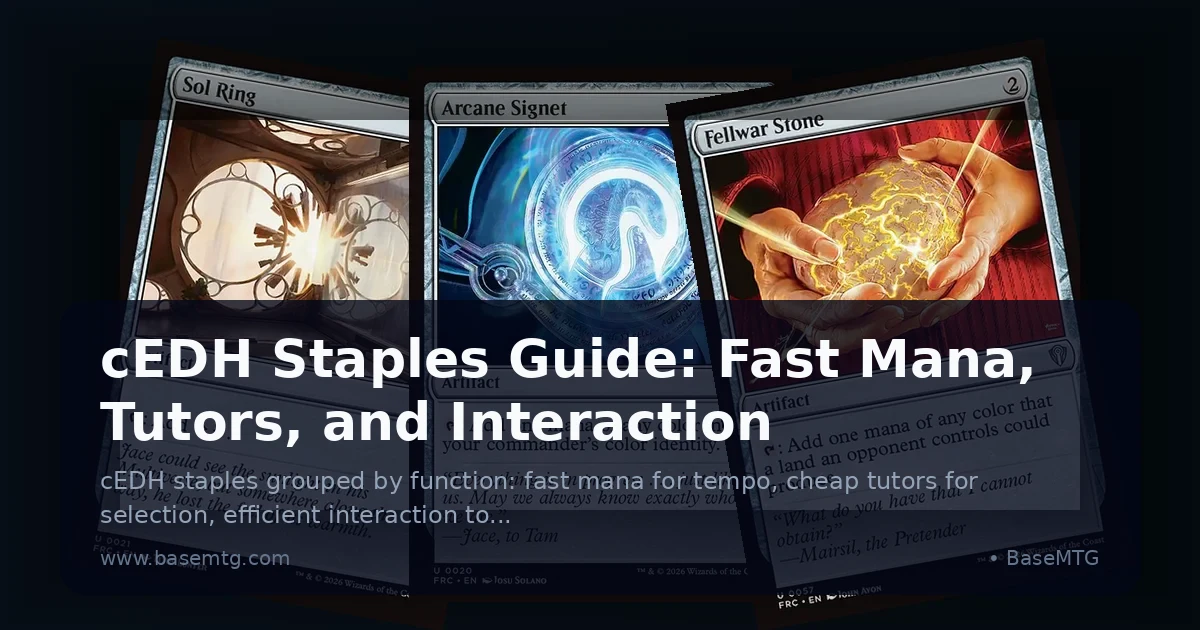
The commonly recognized fast mana staples include:
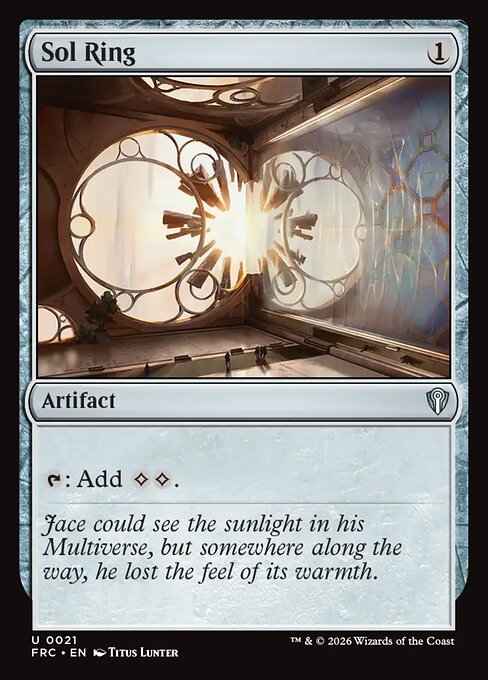 frc-21frc-21Shop on TCGplayer Sol Ring: These are high-impact colorless sources that can produce a large amount of mana relative to the effort required to cast them.
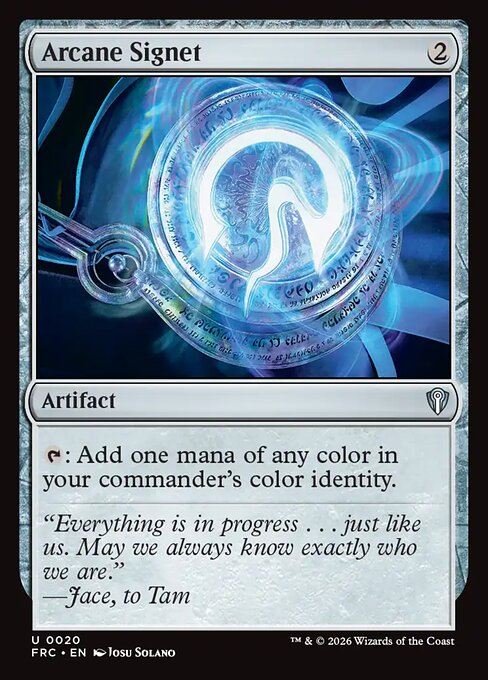 frc-20frc-20Shop on TCGplayer Arcane Signet and
 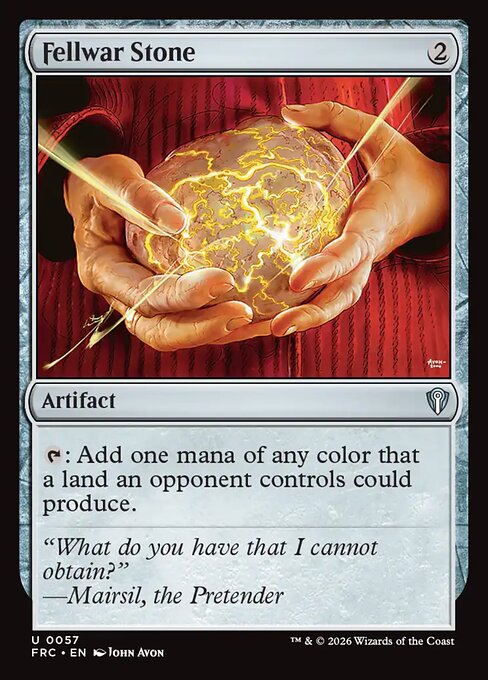 frc-57frc-57Shop on TCGplayer Fellwar Stone: These are two of the most efficient cheap mana rocks and are widely accessible choices for players moving toward cEDH.
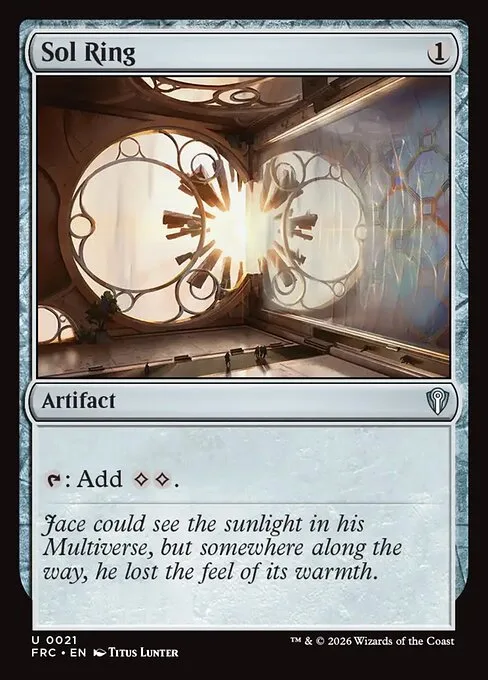 Sol Ring costs 1 and taps for 2 colorless mana, the single most reprinted fast mana staple in Commander.
The functional question isn't just, "Does this card make mana?" It's, "How much earlier does this card let me do something that matters?" A fast mana source can let you cast a commander before opponents are ready, deploy a tutor while still holding up interaction, or turn a narrow opening hand into a functional one.
That speed comes with tradeoffs. Some of the strongest fast mana options are pricier or harder to acquire, and some decks can't treat every mana source as interchangeable. Color requirements and costs paid from your hand also affect whether a source fits.
Arcane Signet and Fellwar Stone show what accessible efficiency looks like. They won't always create the same explosive start as every higher-power option, but they can still help a deck play its commander or key spell sooner. When evaluating a mana package, count the turns saved, the colors provided, and the cost paid in cards or conditions.
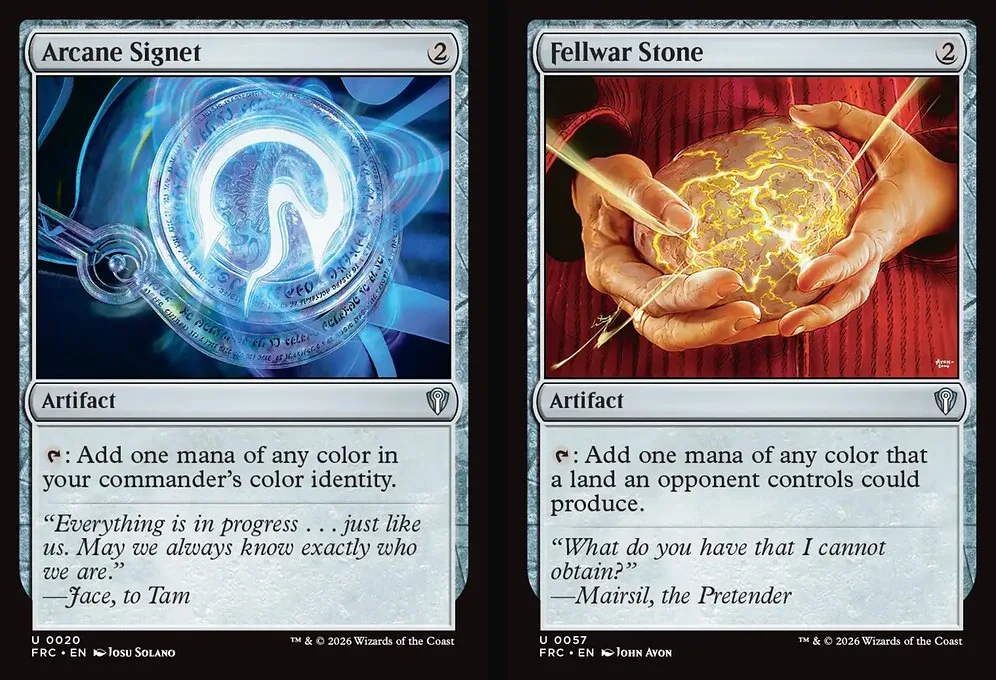 Arcane Signet and Fellwar Stone are the two most accessible cheap mana rocks, both far less scarce than Mana Crypt or the Moxen.
GODEEPER: Learn how to evaluate a Commander mana base by the jobs it needs to perform in the opening turns. MTG Mana Base Guide: Land Count and Curve →
Was this guide helpful?
About the author

Commander & Standard Deck Analyst
Commander and cEDH grinder covering deckbuilding, precons, and the Standard/Commander metagame. Plays out of a local game store scene, reads spoilers the day they drop.
Disclaimer
This article is published for informational and entertainment purposes. It does not constitute professional financial, legal, or technical advice. Game performance, online services, patch schedules, and store listings change. Verify critical details (pricing, system requirements, regional availability) with publishers and storefronts before you buy. Affiliate links, where present, help support our editorial work and are labelled in our affiliate disclosure.
Cheap tutors are the selection engine behind many cEDH decks. Instead of hoping to draw the right card at the right time, a tutor lets you search for a specific combo piece, an answer to a developing threat, or a protection piece that keeps a key turn from falling apart.
The core cheap tutor staples in this category are Mystical Tutor, Enlightened Tutor, Vampiric Tutor, Imperial Seal, Worldly Tutor, and Gamble. Most are one-mana spells, which is important because a low cost lets you search without giving up the entire turn. In the right opening, a tutor can effectively function as an extra copy of the most important card for the situation, although each tutor's search restrictions still matter.
Think of a tutor as a role-player with several possible assignments. If your deck's one card away from its win condition, it can find the missing piece. If another player is threatening to end the game, it can look for an answer. If you're about to commit several resources to a decisive turn, it can find protection instead of leaving the result to the top of the deck. That flexibility is why cheap tutors remain staples even when they don't all search for the same card types.
Tutors also make deck construction more honest. A list may contain a powerful plan, but that plan isn't reliable unless the deck can find its important pieces or make consistent use of its commander. A tutor adds consistency, but it doesn't solve a deck with too few meaningful targets or no way to turn a searched card into a win.
The best time to cast a tutor isn't always as soon as possible. It may be better to find a mana source, wait for an opponent to reveal a threat, or hold the tutor for protection. In a cEDH game, preserving information can make the search more valuable, provided the table isn't about to force a decision.
When adding tutors, map each one to the jobs it can perform in your particular deck. Note whether it can find a combo piece, an answer, protection, or a resource that improves your next turn. Then ask whether the cost, timing, and search restriction fit the commander. This prevents the common mistake of treating every tutor as an automatic copy of every other tutor.
Fast mana and cheap tutors explain much of cEDH's pace, but they do not explain how decks survive contact with each other. Competitive lists also prioritize free or cheap counterspells and other efficient interaction. The goal is to stop a dangerous spell, protect a decisive action, or force opponents to spend more resources than you do while you continue developing your own plan.
The word "free" is functional here, not absolute. An interaction spell may avoid a traditional mana payment while asking for another resource, or it may cost only a small amount of mana. Either way, the advantage is that you can interact while still advancing your board or keeping another option available. A deck with no efficient interaction may look fast in goldfish testing and still fail when another player contests its first attempt.
The other half of the category is compact combo density. cEDH decks generally want win conditions that use a small number of cards, fit the commander's plan, and do not require several turns of setup once the needed pieces are available. The specific pieces vary by deck, so the useful question is not which single combination is famous. Ask whether your deck has enough ways to assemble, find, protect, and finish its plan without filling every slot with cards that are weak outside the combo.
This is where the categories overlap. Fast mana helps you attempt a win earlier. Tutors help you find the relevant card. Interaction protects the attempt or interrupts another player. Compact combo pieces provide the endpoint. A cEDH list needs the four jobs to support one another, because maximizing only one of them creates a deck that's explosive but inconsistent, consistent but too slow, or interactive without a credible way to close.
1. Identify the job. Start by labeling the card's primary function: mana, selection, interaction, or win condition. A card can have more than one use, but you should know which job justifies its slot. If you can't explain what the card helps you do in a typical game, it may be a thematic inclusion rather than a staple for this deck.
2. Compare the speed. Ask how fast the card performs its job compared with the alternatives available to your commander and colors. A mana card that costs less, a tutor that can be cast earlier, or an interaction spell that leaves resources open may matter more than a stronger effect that arrives a turn late. In cEDH, timing is part of power, not a separate detail.
3. Check replacement and protection. Decide whether the card is replaceable or whether it protects a key piece of the plan. Some cards are interchangeable sources of selection or mana. Others fill a narrow role that keeps a commander, tutor, interaction spell, or win condition from becoming a liability. If the card leaves the list, identify what takes over its job and what that replacement costs you.
4. Match the table and card pool. Your playgroup's power level should support the card's intended role, and your available card pool should support the deck around it. A staple that requires a specific density of artifacts, colors, targets, or compact win conditions won't perform the same way in every shell. Consider access, testing time, and the actual games you play rather than building toward an abstract list of premium cards.
5. Reassess as the environment changes. Revisit the slot when the metagame changes, your commander pool changes, or your own experience reveals a different weakness. A card can move from essential to replaceable as opponents adjust, or become better when a new commander gives it a more reliable home. cEDH deckbuilding is an ongoing process of measuring jobs, speed, and consistency.
GODEEPER: For the format's full deckbuilding rules beyond staple selection, see the Commander guide. MTG Commander Deck Guide: Building, Budget, and cEDH →
What does cEDH mean? cEDH stands for competitive Elder Dragon Highlander, Commander played at maximum power level. Decks are built around fast combos and efficient interaction instead of casual synergy themes, and games are frequently decided in the first several turns.
What are the best fast mana staples for cEDH? Mana Crypt and Sol Ring are the highest-impact colorless options. Mox Diamond, Chrome Mox, Mox Opal, Lotus Petal, and Mana Vault add more acceleration. Arcane Signet and Fellwar Stone are the most accessible cheap mana rocks for players building toward cEDH.
What are the best cheap tutors for cEDH? Mystical Tutor, Enlightened Tutor, Vampiric Tutor, Imperial Seal, Worldly Tutor, and Gamble are the core one-mana tutor staples. Each searches a different card type, so match the tutor to what your deck actually needs to find.
Do I need free counterspells to play cEDH? Efficient interaction matters a great deal, but this article doesn't name a specific free-counterspell list since verification requires checking the current banned list and your exact commander's card pool. The functional need is interaction that doesn't cost your whole turn.
How much does it cost to build a cEDH deck? This article doesn't state a specific price since fast mana and tutor prices shift over time. Budget versions of most staple categories exist, and starting with an existing deck and upgrading gradually is cheaper than buying every premium staple at once.
Standard Metagame Tier List: Top 3 Decks (Sept 2026)
11 min read