Loading…
Loading…
BaseMTG · Guides
Reviewing
Magic: The Gathering
This Doom Prevails precon upgrade guide starts from a simple fact: Doom Prevails isn't a generic collection of Marvel villains waiting for a pile of universally strong Commander cards. It's built around Connive, discarded lands, and life drain, so the useful upgrades will make those parts work more often without sanding away the deck's character. You won't improve that identity by replacing it with Grixis goodstuff.
TL;DR: Keep the Connive and life-drain shell, then replace the least relevant filler with cards that improve those same actions. Add cheap interaction before expensive finishers, and only push into heavier sacrifice or graveyard support if you're willing to tune the rest of the deck around it. The stock list has no Game Changers and sits at Bracket 2, so stronger upgrades should be discussed with your group before they go in.
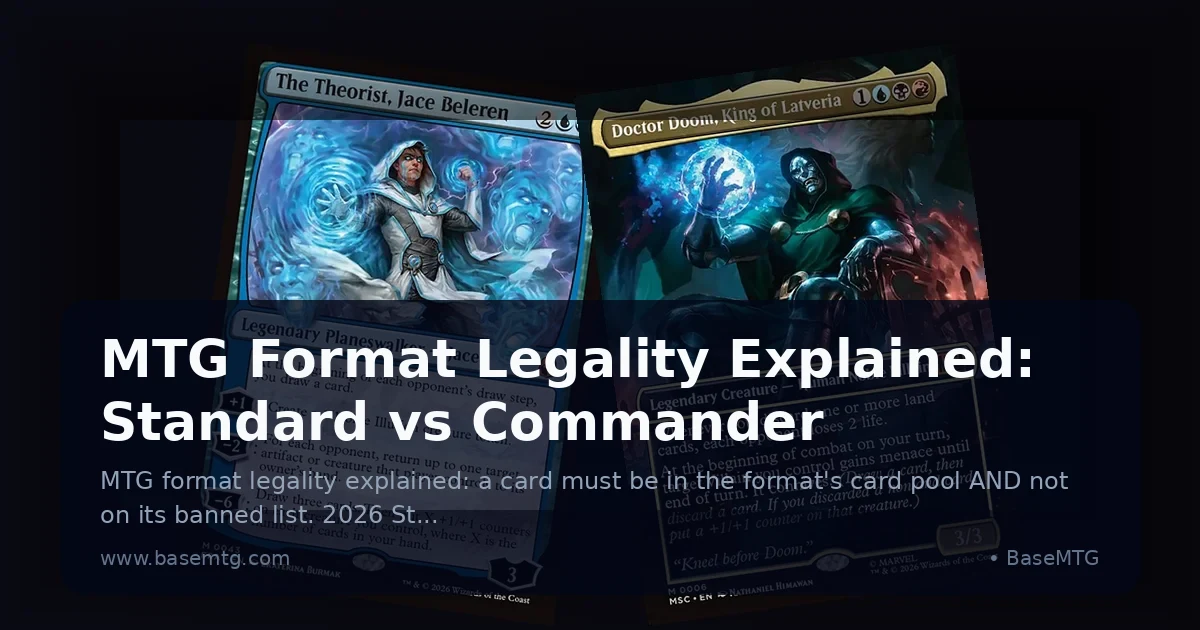
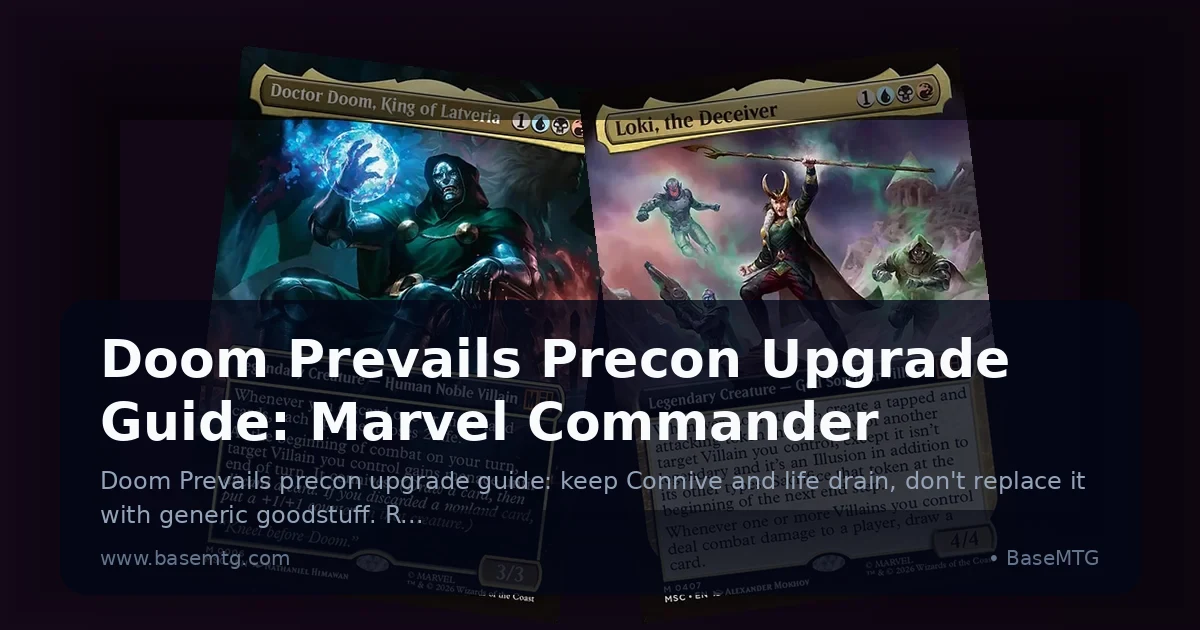
Doom Prevails is a Grixis Commander precon from the Marvel Super Heroes Commander set, code MSC, released on June 26, 2026. Its partner-style commander pairing is 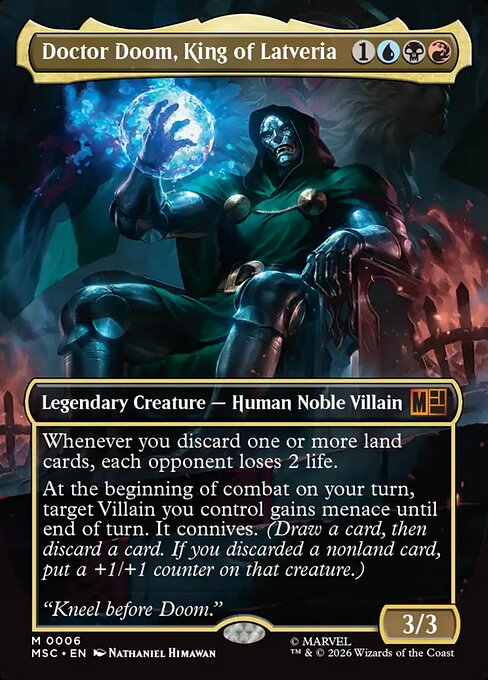 msc-6msc-6Shop on TCGplayer Doctor Doom, King of Latveria and
 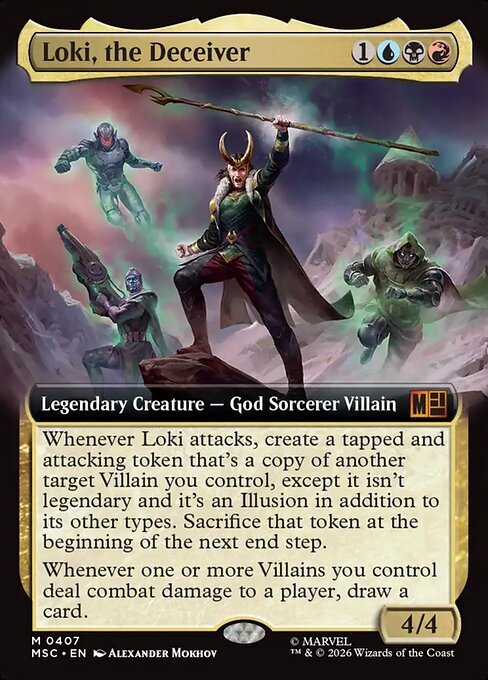 msc-407msc-407Shop on TCGplayer Loki, the Deceiver.
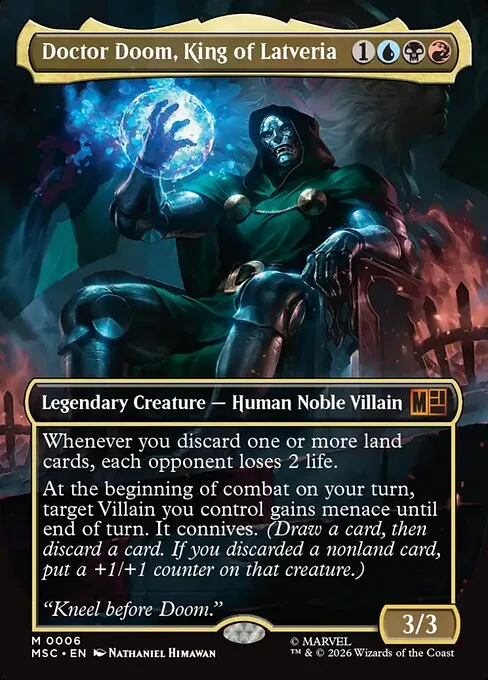 Doctor Doom's own text is where the land-discard drain and Connive plan comes from.
Doom Prevails isn't just revisiting a familiar mechanic. It brings back Connive, first introduced in Streets of New Capenna, and pairs it with life-drain effects. The stated play pattern is to use Doom to connive through the deck, discard lands to drain opponents, and give Villains menace so combat remains relevant. Connive helps you see more cards, discard cards that may be less useful in the moment, and turn nonland discards into creature growth. The deck then gives those discard decisions a second job: lands and other cards that leave your hand can help feed effects that drain opponents. That's what makes card selection, graveyard texture, combat pressure, and life totals part of one system.
That's why you should evaluate an upgrade by its connection to the system. A card that merely draws one card might be fine, but a card-advantage effect that also causes a discard, rewards a full graveyard, or contributes to life drain is more aligned with the deck. A creature that gives you another way to connive, benefits when a card is discarded, or turns a disposable body into a resource can do more work over a full game.
The land-discard angle's worth particular attention. In many Commander decks, discarding a land is simply a cost you tolerate when you need to find action. Here, the deck's stated plan is to discard lands to drain opponents, so a land in hand can become a delayed source of pressure rather than a dead draw. You still can't discard every land you see, though. The goal isn't to discard every land you see. It's to create enough selection and recursion that excess lands can leave your hand without making your next turns stumble.
Doctor Doom, King of Latveria isn't just the natural reference point for this plan; he's the lens for judging additions. When you're looking at a possible card, ask whether it makes Doom's card flow happen more frequently, turns discarded material into damage or life loss, or protects the turn where you're trying to establish that engine. Loki, the Deceiver gives the pairing its broader villain identity, but the deck shouldn't drift so far into unrelated creature themes that its Connive payoffs become incidental.
Menace matters because life drain and combat pressure reinforce each other. If the deck is giving Villains menace, opponents have fewer comfortable blocks, and their life totals have to account for both attacking creatures and triggered loss of life. You don't have to win through combat alone. You'll want combat to make blocking awkward while your drain effects close the gap.
What you'll get is a deck that prefers velocity over spectacle. You'll want to make a useful play early, turn spare cards into selection, and leave opponents with increasingly narrow options. Big finishers can still belong in the list, but they should close a game that your engine has already shaped. They shouldn't be the only cards that matter when you're behind.
GODEEPER: Before you swap in a single card, confirm it actually fits Doctor Doom and Loki's color identity. MTG Color Identity Explained: Hybrid and Phyrexian Mana →
Was this guide helpful?
About the author

Commander & Standard Deck Analyst
Commander and cEDH grinder covering deckbuilding, precons, and the Standard/Commander metagame. Plays out of a local game store scene, reads spoilers the day they drop.
Disclaimer
This article is published for informational and entertainment purposes. It does not constitute professional financial, legal, or technical advice. Game performance, online services, patch schedules, and store listings change. Verify critical details (pricing, system requirements, regional availability) with publishers and storefronts before you buy. Affiliate links, where present, help support our editorial work and are labelled in our affiliate disclosure.
Grixis isn't just a natural color identity for a villain-focused deck. Blue supplies selection and manipulation, black connects the plan to graveyards, sacrifice, and life loss, and red adds pressure and immediate damage. Those roles overlap cleanly with Connive and discard without requiring the deck to abandon its Marvel theme.
There's also a direct Magic reference behind the color choice. Nicol Bolas, one of the game's most iconic villains, uses the Grixis color combination. Doom Prevails leans into that familiar association while giving it a Marvel-specific cast of characters. It feels intentional: the colors signal ambition, manipulation, and resource conversion before you even look at the individual effects.
That thematic fit's useful during deckbuilding because it gives you a filter. When you're comparing two possible upgrades, favor the one that supports the villain plan through conniving, discarding, draining, sacrificing, or exploiting the graveyard. You don't need every card to mention a villain, but your additions should make the deck feel more like the same deck with better follow-through.
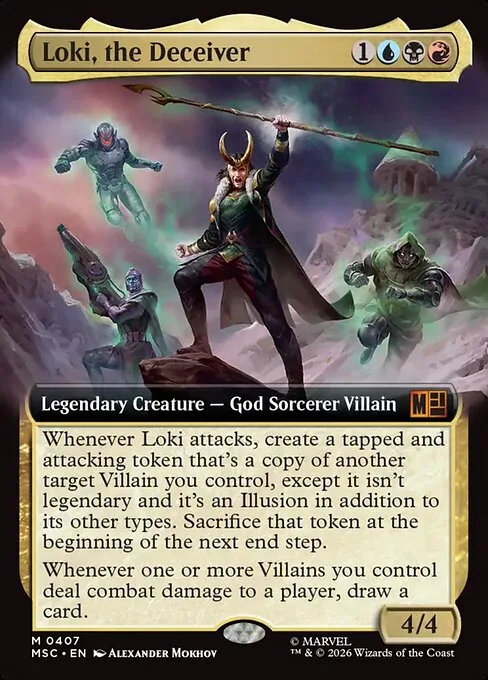 Loki's card-draw trigger rewards the same combat pressure Doctor Doom's menace ability sets up.
1. Keep the deck's core categories. Start by sorting the stock list into jobs instead of judging cards one at a time. Mark the cards that enable Connive, reward discarding, drain life, make Villains more threatening, provide card selection, interact with opposing permanents, ramp your mana, or help you recover resources. Preserve the categories that already connect to the commanders, because a budget upgrade works best when it improves consistency instead of asking you to buy an entirely different deck.
Pay special attention to cards that perform two jobs. A selection effect that also discards is more valuable here than a draw spell with no connection to the plan. A creature that can pressure life totals while producing a resource when it dies is more useful than a body that only attacks. If a card supports Connive and creates a drain trigger, it should receive extra consideration even if its raw rate looks modest. These overlapping roles are where the precon's identity becomes an advantage.
2. Cut the least relevant creatures first. The cleanest early upgrades usually come from removing generically weak filler creatures, especially ones that neither advance the engine nor protect it. Don't cut a creature simply because it has a low power value. Cut it because it doesn't help you see cards, turn discards into value, contribute to life drain, create useful sacrifice material, or make the combat step matter. Replace those slots with creatures or noncreature permanents that directly support Connive, discard payoffs, graveyard use, or the drain plan.
Use a simple test for each proposed cut: if this card is drawn after the commanders are online, does it make the next turn better? If the answer is consistently no, it's a reasonable candidate. A few games of notes will reveal more than a goldfish session that only counts how quickly the deck can cast its largest spell.
3. Add cheap interaction before expensive finishers. Grixis can answer a wide range of problems, but Doom Prevails shouldn't fill every open slot with costly answers. Prioritize low-cost interaction categories that can stop a key permanent, counter a pivotal spell, disrupt a graveyard, or prevent an opponent from assembling a winning turn. Flexible answers are particularly useful when your own engine needs mana during the early and middle turns.
The reason is structural. Your deck wants to spend turns developing Connive and applying life-total pressure, so an answer that costs a small amount can fit around that plan. An expensive finisher often competes with the same mana you need to keep the engine moving. Begin with a modest package of efficient interaction, play several games, and add more only if you regularly lose to a specific class of permanent or combo.
4. Add one or two graveyard payoffs if you want that angle. Discard naturally fills the graveyard, and sacrifice can give the deck another way to convert expendable creatures into cards, damage, or life loss. If you want to lean harder into that angle, add only one or two pieces at first that reward sacrifice, discarded cards, or a stocked graveyard. Then check whether the rest of the list actually creates enough of those events to justify the slots.
This is where many upgrades lose focus. A graveyard card can look attractive while asking you to play a different deck. Avoid adding a large package of recursion or sacrifice effects unless you are also changing the creature base, mana curve, and interaction to support it. Doom Prevails already has a discard identity, so a small number of payoffs can give the theme more depth. A whole second engine can make Connive feel like setup for a plan you rarely reach.
5. Recheck lands and curve after every batch of changes. Once you have made several swaps, count your mana sources and group the new cards by casting cost. Discarding lands for value doesn't mean you can trim lands aggressively. You need to make early land drops so the commanders, selection effects, interaction, and payoffs arrive in the same game. If your new cards are cheaper, you may be able to smooth the curve. If you added more high-cost finishers, you may need additional mana support or a second look at those finishers.
Play a few real games before making another round of cuts. Note whether you miss land drops, whether you have too many cards that ask for a discard without providing a payoff, and whether your hand contains interaction at the moments you need it. A good final curve lets you develop, hold up an answer, and still use Connive or a drain effect in the same turn. That flexibility is worth more than a single impressive top-end card that stays stranded in hand.
You can, but adding cards from Wizards' Game Changers list pushes the deck toward a higher Commander bracket, generally Bracket 3 or above. Do that only if your playgroup is comfortable with the change. The stock Doom Prevails build deliberately has no Game Changers, which keeps it at Bracket 2 and gives the deck a clear casual-to-mid power starting point.
The question isn't whether a listed card is strong in isolation. It is whether the card changes the kind of games your group expects to play. If your table uses bracket conversations, disclose the change before the game and treat the bracket as part of the deck's social contract.
Be proactive early. Develop your selection and pressure instead of passing with a hand full of answers while opponents build their boards.
Watch all three life totals. Your drain effects can make a player vulnerable before combat, and menace can turn a small attack into meaningful damage when blocks are constrained.
Treat land discards as planned resources. Keep enough mana sources to cast your spells, then use excess lands when the payoff is immediate or sets up the next turn.
Sequence Connive before committing to a discard payoff when possible. Seeing an extra card can tell you whether to keep a land, discard a spell, or preserve interaction for the table's most dangerous turn.
GODEEPER: For the format's full deckbuilding rules beyond this one precon, see the Commander guide. MTG Commander Deck Guide: Building, Budget, and cEDH →
What set is the Doom Prevails precon from? Doom Prevails is a Commander precon deck from the Marvel Super Heroes Commander set (set code MSC), released June 26, 2026. It's a preconstructed 100-card Commander deck, not a booster-draft product.
Who are the commanders in Doom Prevails? Doctor Doom, King of Latveria and Loki, the Deceiver, a partner-style pairing in Grixis colors (blue, black, red). Doctor Doom drains life when you discard lands, and Loki draws cards when Villains deal combat damage.
What is the Doom Prevails game plan? The deck uses Connive (draw a card, then discard a card) to filter your hand, discards lands specifically to drain opponents, and gives Villains menace to make combat pressure harder to block.
Does Doom Prevails include any Game Changers? No. The stock build deliberately runs no cards from Wizards' Game Changers list, which keeps it at Commander Bracket 2. Adding Game Changers pushes the deck toward Bracket 3 or higher.
Why are Doom Prevails' colors Grixis? Blue, black, and red split the deck's jobs cleanly: blue for card selection, black for graveyard and life-loss effects, red for damage and pressure. Grixis is also the color combination of Nicol Bolas, one of Magic's most iconic villains, which fits the deck's villain theme.