cEDH Meaning in MTG: What Competitive Commander Actually Is
Same rules, same banlist, completely different game. Here is what changes when the table plays to win.
Verdict
cEDH is Commander built to win as early as the table allows, usually through a compact combo. Try it with a deck people actually play in tournaments, and agree on it with your pod first.
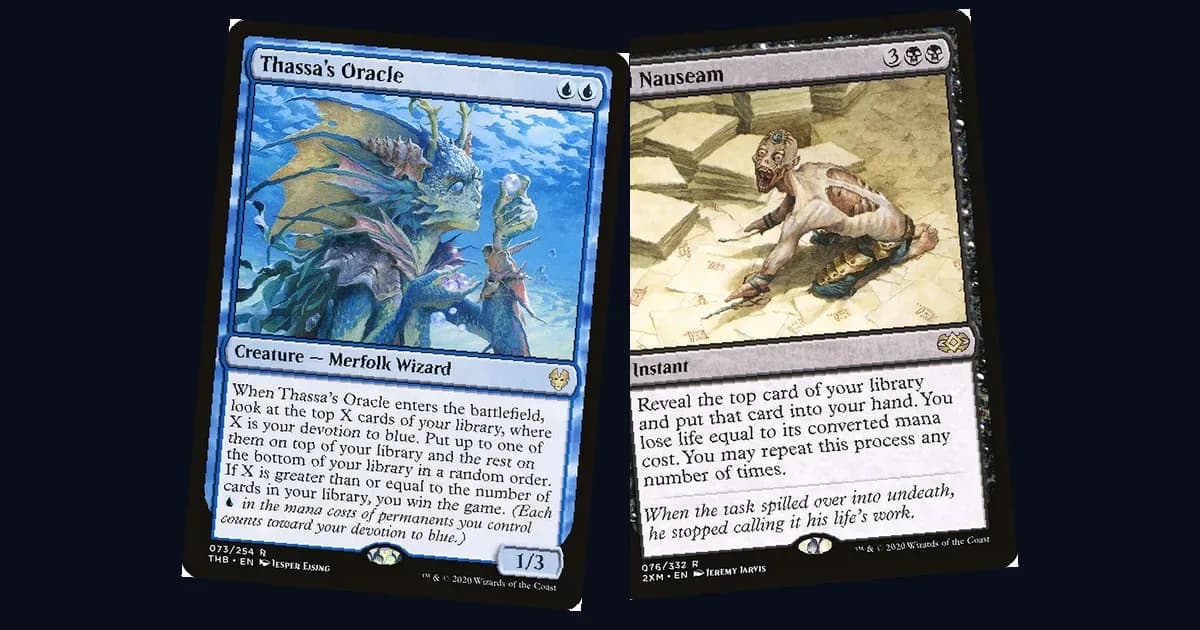
The cEDH meaning is Competitive Elder Dragon Highlander: Commander played to win as fast and as reliably as possible. It isn't a separate format. The rules and the banlist are the same as any other Commander game; what changes is how the decks are built and what the table expects.
Why cEDH feels like a different game
Picture the pace first. A deck that can threaten a win on turn 3 or 4 is having a very different conversation from a deck that expects a long game. Its mana, card selection, commander and win condition all support an early attempt while the pilot keeps protection up.
That speed changes what a turn means. In a slower Commander game, a player develops a board and sees which value engine survives. In cEDH the same turns go to spotting an opening, holding up interaction, or making opponents spend answers before the real attempt. Everyone watches cards in hand and open mana, because one small window can decide the game.
Wizards' own Commander Brackets put numbers on that difference. Bracket 2 decks should expect at least eight turns before anyone wins or loses, Bracket 4 at least four, and Bracket 5, the cEDH bracket, says only that "These games could end on any turn." A short game by turn count can still be a long one by the clock, because every win attempt draws responses from three other players.
cEDH Meaning in Practice: How cEDH Decks Actually Win
Almost every real cEDH deck uses an infinite combo or a fast alternate win condition. Combat damage against three opponents who each start at 40 life means overcoming 120 life in total, which is impractical as a primary closing plan without a huge force multiplier. A compact combo lets a deck turn one opening into a game-ending result without spending many turns attacking.
Thassa's Oracle is the clearest example of a fast alternate win condition. When it enters the battlefield, you look at the top X cards of your library, where X is your devotion to blue. You win if X is at least the number of cards left in your library. That makes the card a direct finish after an effect has emptied or nearly emptied the library.
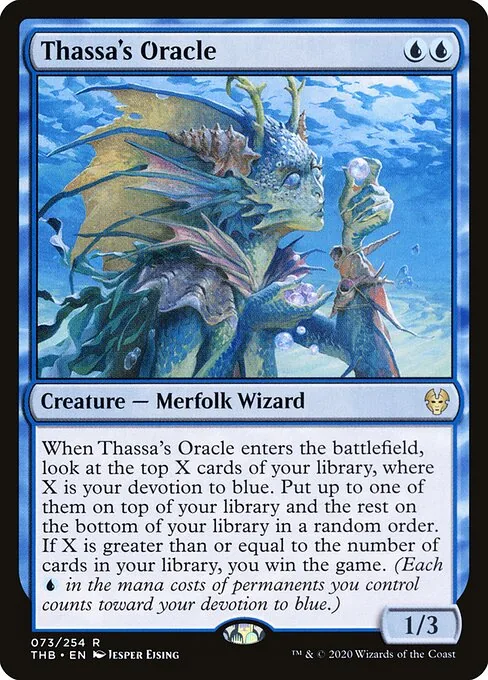 Thassa's Oracle turns an empty or near-empty library into an immediate win, the payoff half of many cEDH combo lines. Card image: Wizards of the Coast, via Scryfall.
Hermit Druid is a classic way to enable that kind of finish. Its activated ability costs green mana and a tap, then reveals cards until a basic land is found. The basic land goes to its owner's hand and everything else goes to the graveyard. In a deck built to use the ability, the result can put the library in the graveyard and leave a Thassa's Oracle style win available.
Ad Nauseam represents a different part of the same philosophy. You pay life to keep drawing cards from the top of the deck, so a low-life, low-curve deck can dig for the pieces it needs. The card is not a win by itself. Its role is to turn life into access to the win and the protection around it.
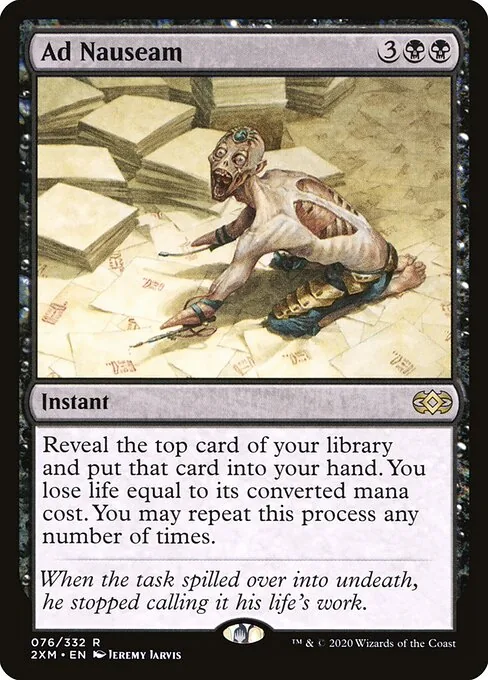 Ad Nauseam converts life total into raw card selection, the engine behind several fast, low-curve cEDH kill lines. Card image: Wizards of the Coast, via Scryfall.
Partner commanders show the same thinking from the command zone. Rograkh, Son of Rohgahh costs zero mana, so a deck that pairs him with Silas Renn, Seeker Adept (players call the pair Rog/Si) gets a free commander on turn one and a second one that can recast artifacts from the graveyard. Neither card wins on its own; they make the deck cheaper and faster to operate.
These examples show why cEDH is not simply "Commander with stronger cards." A fast mana piece changes when the deck can act, selection finds the needed piece, interaction challenges opposing wins, and the finish ends the game when an opening appears.
What cEDH players are actually playing
EDHTop16 tracks cEDH tournament results. Over the three months to October 20, 2026, these were the most-played commanders:
| Commander(s) | Tournament entries | Share of entries | Made top cut |
|---|---|---|---|
| Kinnan, Bonder Prodigy | 1,600 | 2.5% | 27.7% |
| Kraum, Ludevic's Opus / Tymna the Weaver | 1,590 | 2.4% | 28.4% |
| Rograkh, Son of Rohgahh / Thrasios, Triton Hero | 1,116 | 1.7% | 27.0% |
| Rograkh, Son of Rohgahh / Silas Renn, Seeker Adept | 983 | 1.5% | 23.1% |
| Sisay, Weatherlight Captain | 980 | 1.5% | 29.5% |
No commander reaches even a twentieth of the field, so the format is far more spread out than its reputation suggests. Kinnan has moved past Kraum and Tymna since our October 14 count, but only by ten entries, which is a tie in practice. Four of the five top spots are partner pairs or a commander that fetches other legends, which tells you how much cEDH values a flexible command zone.
Players on r/CompetitiveEDH tell newcomers to start from that list. When a new player asked where to begin, the top reply was blunt: "Please play a meta deck, its so much easier to have fun." (comment). In another thread, a player pushed back on reading the format through its famous win card: "Thoracle is just the card with “you win the game” printed on it if that makes sense." (comment).
Tolarian Community College's video on Bracket 4 versus cEDH is a good next step if you're deciding which of the two your deck belongs in.
GODEEPER: Once you know you want to build for this pace, use the functional card categories in the cEDH Staples Guide: Fast Mana, Tutors, and Interaction →.
How to tell if your deck is cEDH
These checks describe what the deck is built to do, not one lucky result. Look for a consistent plan and the resources that make it realistic.
1. Name the hard-combo win condition. Write down the exact compact combo or fast alternate win your deck is trying to assemble. Thassa's Oracle after a library-emptying effect is the kind of clear endpoint to look for. If the plan is mainly combat damage, gradual value, or hoping a large threat survives, the deck is probably not built for the cEDH conversation.
2. Compare the realistic win turn to four. Goldfish the deck with normal sequencing and record when it can actually threaten its win, not only when every draw is perfect. A list that is consistently presenting a protected win around turns 3 or 4 is operating in the range players usually mean by cEDH. A deck that needs several more turns to assemble its plan belongs in a different power-level discussion.
3. Count the cards that protect the attempt. Check how many cards exist mainly to find the combo, replace a missing piece, or protect the decisive turn. Then ask whether you can attempt the win while keeping interaction available. A combo that works only when the entire hand is committed is a weaker diagnostic signal than a plan that leaves the pilot able to respond.
4. Stress-test a stumble or disruption. Remove a key piece, imagine an opponent stopping the first attempt, and see what the deck does next. Can the commander, selection, or alternate line help it rebuild, or does one failed tutor leave the deck with no meaningful action? A cEDH deck should be built for a hostile table, not only a goldfish where no one contests its hand or stack.
cEDH vs Casual Commander, Bracket by Bracket
The labels describe different table expectations more than different rules. Every one of these decks plays by the same Commander rules; Wizards' brackets just put numbers on how long each kind of game should last.
| cEDH | Optimized | Upgraded | Core | |
|---|---|---|---|---|
| Wizards bracket | 5 | 4 | 3 | 2 |
| Turns before anyone should win or lose | "could end on any turn" | at least four | at least six | at least eight |
| Game Changers allowed | no limit | no limit | up to three | none |
| What Wizards says players expect | decks "meticulously designed to battle in the cEDH metagame" | decks that are "lethal, consistent, and fast" but don't follow the cEDH metagame | decks "powered up with strong synergy and high card quality" | decks that are "unoptimized and straightforward" |
So the line between cEDH and a strong casual deck isn't the card pool: a Bracket 4 deck can run every Game Changer it likes. It's whether the list is built for the tournament field. The category is about intended performance, not the value of a single card or the reputation of its commander, and two decks can share a commander while belonging at different tables.
Tips Before You Try cEDH
Start with the pod conversation, the Rule Zero talk, not the decklist. Tell the other players that you want to play a deck built to threaten an early win, and ask what they mean by cEDH. If someone expects an upgraded precon game, dropping a competitive list into that pod creates a social contract mismatch even if every card is legal.
Use the first games to learn the deck's decision points. Notice which opening hands can develop and protect a line, which cards are only combo pieces, and how the deck recovers after interruption. The aim is to understand the repeated choices that make the plan reliable.
Wizards' Commander Brackets are the closest thing to an official description of cEDH. Bracket 5 is the cEDH bracket, and the Game Changers limit stops applying after Bracket 3. That is a framework for expectations, not a new rules format, so you still have to describe your deck to the pod in plain words.
GODEEPER: For the official bracket language and the wider Commander power conversation, read MTG Commander Brackets Explained: All 5 Brackets in 2026 →.
Related Reading
- MTG Commander Deck Guide: Building, Budget, and cEDH covers the broader format before you choose a competitive direction.
- MTG Color Identity: Hybrid, Phyrexian and Reminder Text explains the Commander deckbuilding restriction that determines which colors a list can use.
- MTG Mana Base Guide: The Land Count Formula Explained shows how to think about mana sources before tuning a fast deck.
- MTG Format Legality Explained: Standard vs Commander separates a format's card pool from its banlist and legality checks.
References
Corrections and updates
- 2026-10-14: Earlier versions named a Rograkh, Throne-Breaker and Silas Renn, Opulent Options pairing called Blue Farm. Those card names do not exist; the real pair is Rograkh, Son of Rohgahh and Silas Renn, Seeker Adept, known as Rog/Si. The Bracket 5 quote has also been corrected to Wizards' wording.
Was this guide helpful?
About the author

Commander & Budget Desk
Pen name for the BaseMTG Commander desk: budget builds, precons, upgrades and deck-building. Lists are priced from Scryfall on the publish date and every card pick comes with a reason.
- Commander builds, budget lists and precon upgrades
- Prices checked on Scryfall, dated in the article
- A sources table behind every card and number
Keep reading
Wakanda Forever Precon Upgrade Guide: Marvel Commander
Guides · 15 min
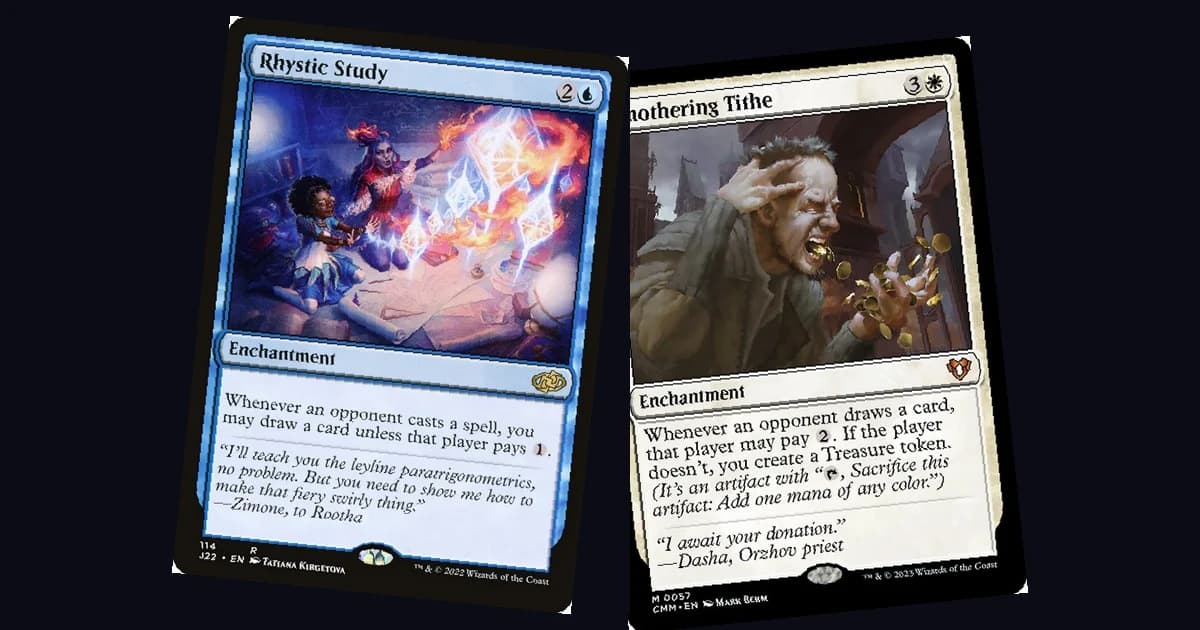
MTG Commander Brackets Explained: All 5 Brackets in 2026
Guides · 6 min
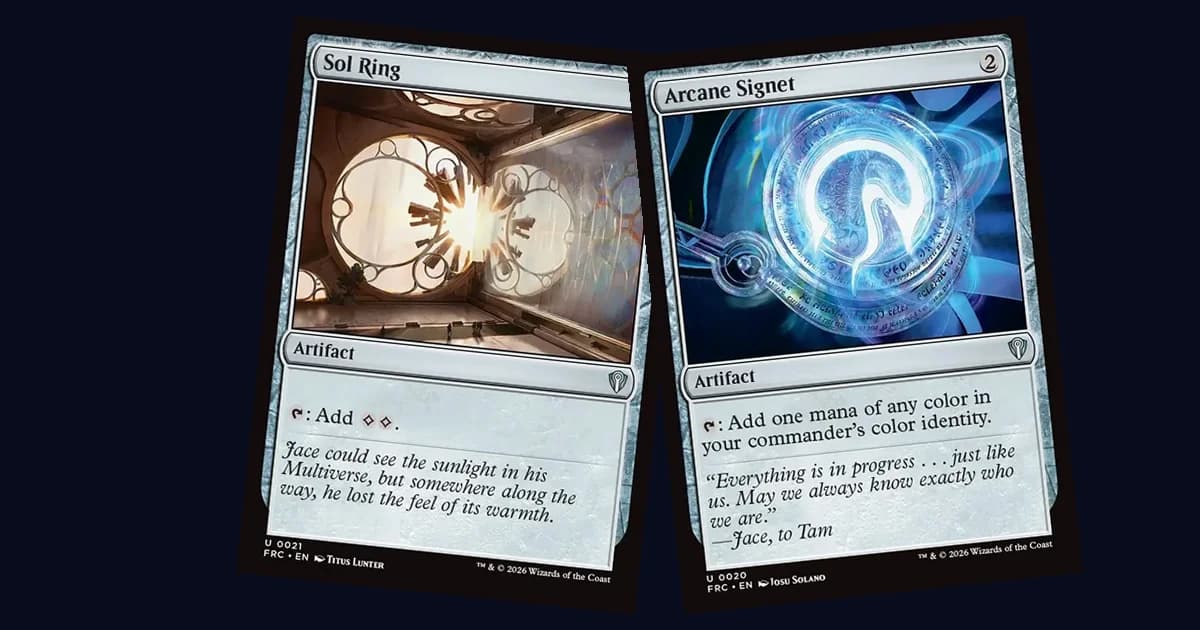
How to Build Your First Commander Deck: Lands, Ramp, Removal
Guides · 7 min
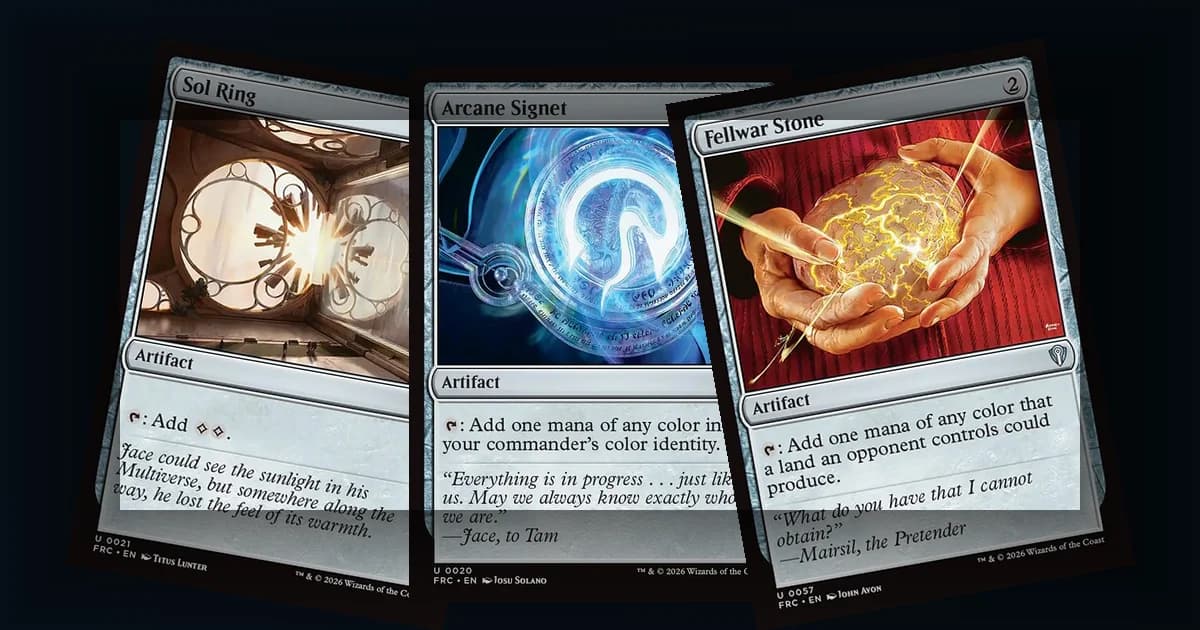
cEDH Staples Guide: Fast Mana, Tutors, and Interaction
Guides · 16 min
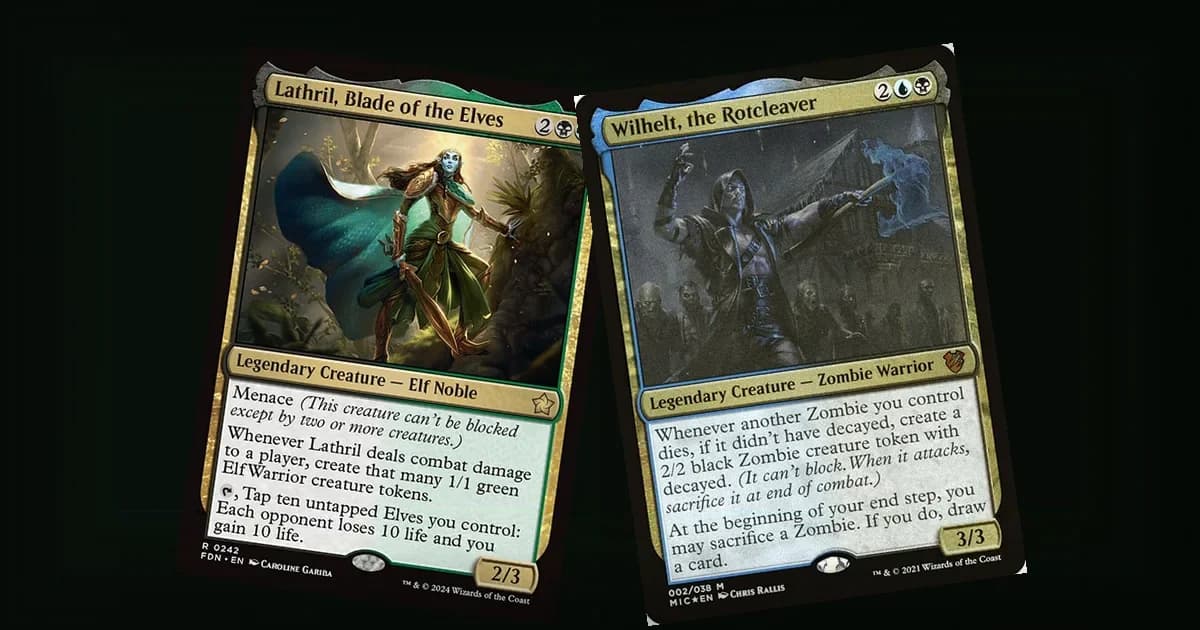
Budget Commander Decks Under $50: What Actually Fits
Guides · 11 min
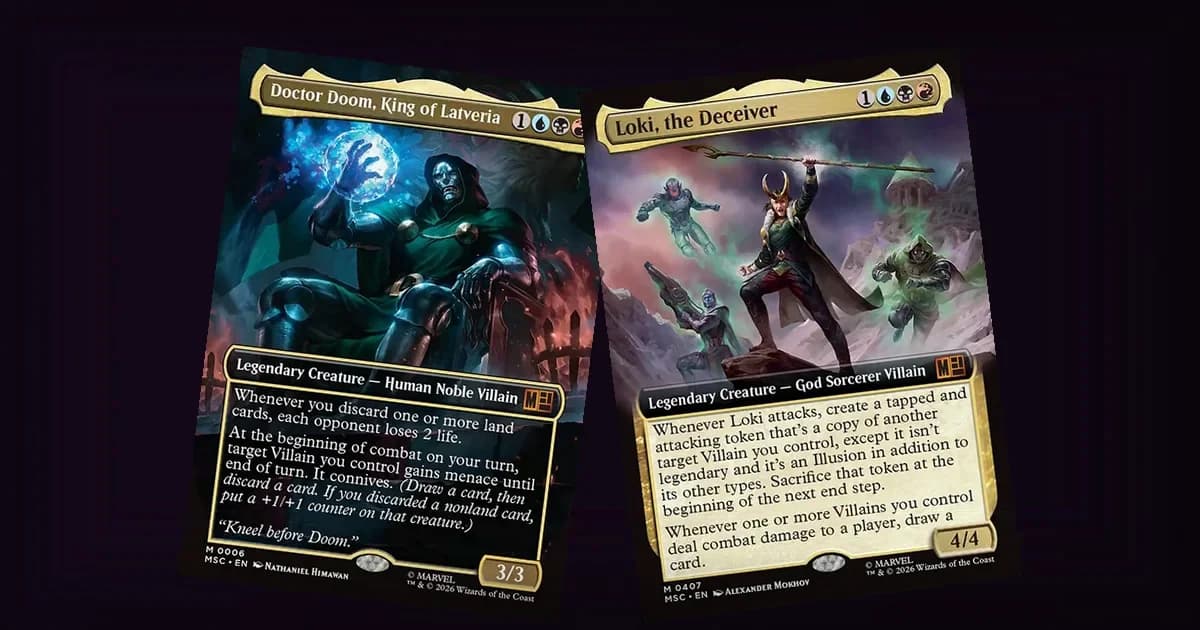
Doom Prevails Precon Upgrade Guide: Stay in Bracket 2
Guides · 8 min
MTG Commander Deck Guide: Building, Budget, and cEDH
Guides · 9 min
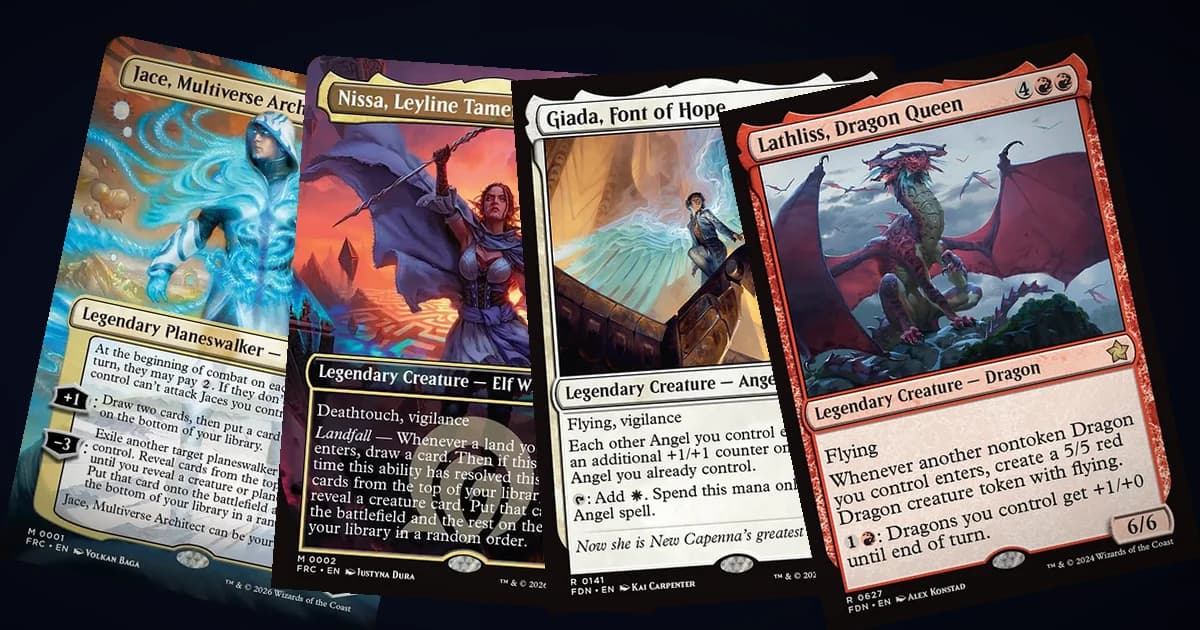
Reality Fracture Precons Ranked: Which of the 6 to Buy
Guides · 19 min
Disclaimer
This article is published for informational and entertainment purposes. It does not constitute professional financial, legal, or technical advice. Game performance, online services, patch schedules, and store listings change. Verify critical details (pricing, system requirements, regional availability) with publishers and storefronts before you buy. Affiliate links, where present, help support our editorial work and are labelled in our affiliate disclosure.