

BaseMTG · Guides
Izzet Spellementals Standard Deck Guide (September 2026)
Reviewing
Magic: The Gathering
Izzet Spellementals is the Standard deck for players who want every cheap spell to do two jobs: answer a threat now and make the next Elemental stronger. The blue-red shell is a tempo-combo deck, not a pure all-in combo list. It filters with Opt and Sleight of Hand, fills its graveyard, then turns that spell activity into hasty pressure, discounted creatures, and explosive combat turns.
That plan has made Izzet Spellementals one of the format's defining decks. Wizards of the Coast's official Metagame Mentor data puts it at roughly 12% of the metagame, tied with Mono-Green Landfall as the number two tier-one archetype. Recent MTGO results add context: SpockVidaLoka posted a 6-2 Top 4 in MTGO Standard Challenge 32 on September 11, 2026, while duanceyao won MTGO Standard Challenge 16 with a 7-1 record on September 3, 2026.
TL;DR: Izzet Spellementals is a blue-red tempo-combo deck that turns cheap instants and sorceries into selection, graveyard fuel, and Elemental pressure. A typical build runs a low creature count, around 28 noncreature spells, and about 20 lands, but exact 75-card configurations vary. Cast spells with a purpose, then use the tempo window to land a threat or end the game.
Key Takeaways
- Izzet Spellementals is a tier-one Standard tempo-combo deck with about a 12% metagame share in the current Wizards of the Coast snapshot, tied with Mono-Green Landfall.
- Opt and Sleight of Hand improve card quality while adding to the spell-heavy engine. The deck's low creature count keeps the focus on making each spell do more than one job.
- Colorstorm Stallion turns instants and sorceries into temporary power, while Eddymurk Crab and Sunderflock reward a developed spell and Elemental sequence.
- Play the deck as a tempo deck first. Use interaction and selection to create a safe turn for your payoffs instead of casting every threat as soon as you can.
What Is Izzet Spellementals? (Quick Answer)
Izzet Spellementals is a blue-red Standard archetype built around a high density of instants and sorceries plus Elemental creatures that reward that spell activity. The deck wins by making small spells matter twice. A cantrip can find a land or threat while growing Colorstorm Stallion, adding to the graveyard, or helping turn on a discounted creature.
Tempo describes the deck's ability to answer a problem while developing its own battlefield. The combo element is less about one deterministic sequence and more about overlapping triggers. Several ordinary spells can create a cheaper creature, a larger hasty attacker, or an Elemental ready to close before the opponent rebuilds.
This is different from a traditional blue-red control list. Izzet does not want to trade every card one for one and wait forever. It wants selection, removal, and threats to converge on the same turn, leaving the opponent to answer a creature while you still have a card or mana to continue the chain.
The Core Engine: Cheap Spells Become Pressure
The engine begins with card selection. Opt and Sleight of Hand improve the next several draws, which matters in a deck balancing lands, interaction, and payoff creatures. Use them to find the missing piece, not simply because you have spare mana. If you already have a threat and enough lands, look for interaction. If you lack a payoff, dig for one while adding another spell to the graveyard.
The second resource is the graveyard. Eddymurk Crab cares about the number of instants and sorceries there, so exchanging or filtering spells can reduce a future threat's cost. You want enough spells to make creatures efficient while keeping a meaningful spell for the turn when the creature enters and you attack or protect it.
The third resource is the spell trigger itself. Colorstorm Stallion gets +1/+1 until end of turn whenever you cast an instant or sorcery, turning an Opt or cheap answer into combat damage. If five or more mana was spent casting the spell, its Opus ability also creates a token copy of Colorstorm Stallion, so one expensive spell can turn a single attacker into two.
The engine is strongest when one card advances two resources at once. A spell that selects a card, grows Colorstorm Stallion, and increases the Eddymurk Crab discount has done more than its printed rate suggests. The opponent must then choose between answering the creature, the next spell, or the tempo created by both.
The Key Cards and Their Jobs
Hearth Elemental // Stoke Genius: Hearth Elemental costs {5}{R}, while its Stoke Genius Adventure costs {1}{R}. That split profile gives the deck a lower-cost spell mode and a larger Elemental mode in one card. Use the Adventure side when advancing the spell engine matters more than presenting a creature, and the Elemental side when a body can convert setup into pressure.
Eddymurk Crab: This {5}{U}{U} Elemental Crab costs {1} less for each instant or sorcery in your graveyard. It is a payoff for normal Izzet play, not a reason to build a separate self-mill package. Its discount can turn a later turn into a threat plus an extra spell. If an effect lets you cast it during an opponent's turn, it enters tapped, so it is not a surprise blocker.
Sunderflock: Sunderflock is a {7}{U}{U} flying Elemental with a cost reduction based on the greatest mana value among Elementals you control. It rewards establishing a meaningful Elemental before committing to the top end. It is not a reason to keep a hand that cannot cast its early spells. It is the payoff for making the second creature realistically affordable.
Colorstorm Stallion: At {1}{U}{R}, Colorstorm Stallion brings haste and ward {1}, so it affects the game as soon as it resolves. Its Opus ability gives it +1/+1 until end of turn whenever you cast an instant or sorcery, and creates a token copy of itself if five or more mana was spent casting that spell. Plan its turn around your available spells while keeping flexibility to respond.
Burst Lightning 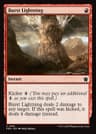 fdn-192
 fdn-192Shop on TCGplayer is flexible early interaction. For {R}, it deals 2 damage to any target. Its kicker cost is {4}, and the kicked version deals 4 instead. Early, it can remove a small creature while leaving mana for selection. Later, the same card can finish a larger target or provide reach. Do not spend the kicker automatically, because the cheap mode keeps the engine moving.
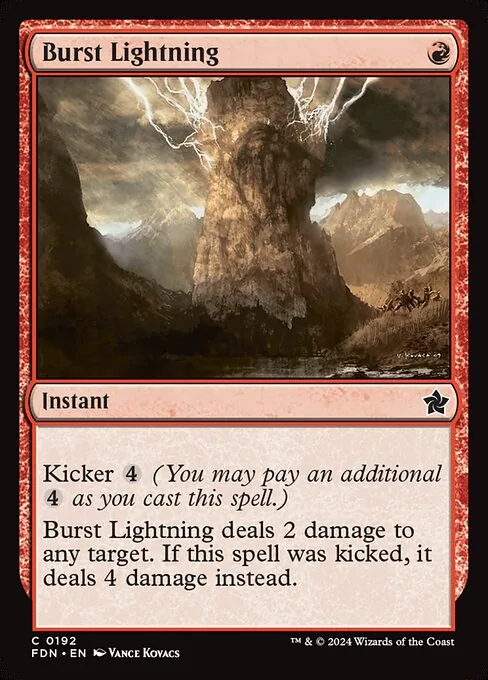 Burst Lightning's kicker mode turns a cheap early removal spell into reach for the late game.
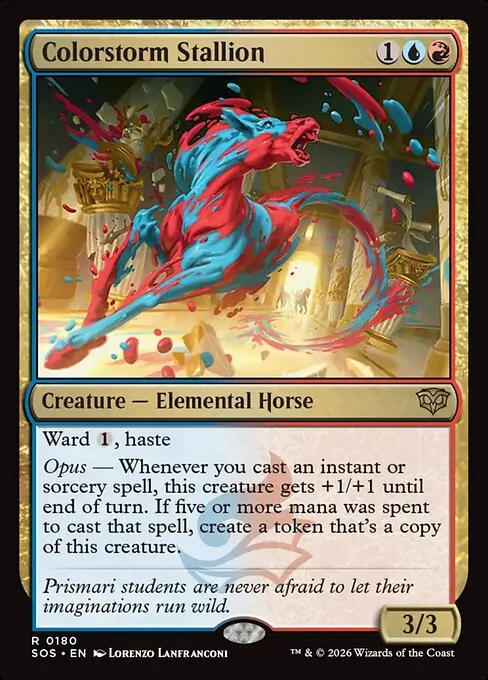 Colorstorm Stallion's Opus ability creates a full token copy of itself when you cast a spell costing five or more mana.
These cards are not a rigid ladder. Their value changes with the spells already cast, the graveyard, and the opponent's available mana. The deck rewards reading the current turn rather than following a fixed card order.
A Typical Izzet Spellementals Shell
A typical build runs roughly this split: about 8 creatures, around 28 noncreature instants and sorceries, and roughly 20 lands in the 60-card list, with remaining flex slots and classifications varying by pilot. Treat those numbers as a shell description, not a definitive 75-card decklist. Adventure cards and utility permanents make exact counts differ from event to event.
Early interaction should cover expected threats without crowding out the spells that make the deck function. Burst Lightning is one example. The larger principle is that an answer should preserve your sequencing or scale into the later game. The exact mix depends on whether the field asks you to kill creatures, race tempo decks, or protect a slower payoff turn.
Card selection is the connective tissue. Opt and Sleight of Hand help the deck avoid flooding, find the second land, or locate a creature after an exchange. They also help you choose between casting a payoff and holding up interaction. Cantrips are strongest when they find the kind of card the current stage requires.
Evaluate the creature slots by function. Colorstorm Stallion rewards continued spell casting. Hearth Elemental offers a spell mode and a larger body. Eddymurk Crab turns a used graveyard into a cost reduction, while Sunderflock asks you to establish an Elemental first. Too many creatures reduce spell density; too few fail to turn cantrips into a clock.
The land count is part of the engine. The deck needs mana for early spells, a three-mana threat, and eventually a larger spell or kicker cost. Do not cut lands simply because the deck contains cantrips. Selection smooths draws, but it does not replace land drops when a turn requires several spells or a discounted creature plus interaction.
What Recent Results Tell You
The recent results support the archetype's place in the tier-one discussion without proving that every version is equally strong. The Izzet Spellementals archetype page, MTGGoldfish records SpockVidaLoka's Top 4 finish at 6-2 in MTGO Standard Challenge 32 on September 11, 2026, and duanceyao's 7-1 win in MTGO Standard Challenge 16 on September 3, 2026.
Those finishes show the shell can produce both a deep run and a tournament win in the same early-September window. They are not a universal win rate or a substitute for matchup testing. Treat them as evidence that the core plan is competitive, then tune the interaction and threat balance for your expected field.
GODEEPER: Izzet Spellementals is one of the three leading Standard archetypes in the current snapshot. See how its tempo-combo plan compares with Mono-Green Landfall and Dimir Midrange in the Standard Metagame Tier List: Top 3 Decks (Sept 2026) →.
Step-by-Step: Piloting the Spellementals Engine
1. Keep a hand with a route. You do not need every named payoff. You need a plausible first three turns, enough mana, a spell that improves your position, and a way to convert setup into pressure or more cards. A hand full of expensive Elementals is not an engine hand just because the cards are powerful.
2. Decide what your first spell is buying. Before casting Opt or Sleight of Hand, identify the missing resource. If you need a land, find it. If you have lands and a threat, look for interaction or another spell that keeps the initiative. The spell adds to the engine, but its immediate job should guide the selection.
3. Hold up interaction when the payoff can wait. If the opponent is likely to deploy a must-answer threat, preserve mana to respond instead of tapping out for an Elemental that produces no immediate advantage. A payoff is strongest after the opponent spends mana or when your spell makes the creature matter immediately. Tempo is about the order of exchanges.
4. Count the graveyard before casting Eddymurk Crab. Check how many instants and sorceries are available and what the Crab will cost. If an effect lets you cast it during an opponent's turn, it enters tapped, so do not treat it as a surprise blocker. On your own turn, it can enter ready to attack after earlier spells enabled the discount.
5. Give Colorstorm Stallion a real combat turn. Its haste lets it attack immediately, but its best attacks are planned around the spells you can cast before combat. Each instant or sorcery can increase its power for the turn, and a spell with five or more mana spent gets the additional Opus trigger. Do not cast every spell if holding one preserves a better response.
6. Use the largest Elemental to unlock Sunderflock. Sunderflock's reduction looks at the greatest mana value among Elementals you control. When possible, establish that Elemental first, then add a flying threat while keeping a cheap spell available. Do not delay a necessary attack or answer for a theoretical maximum reduction. The discount rewards a good sequence, but it is not the whole plan.
7. Convert the window before it closes. Once Elementals attack, use remaining spells to protect the clock, improve combat, or finish a damaged target. Burst Lightning can stay at one mana when efficiency matters, or use its {4} kicker when four damage ends the game. The deck wins by turning a temporary advantage into a decisive one.
Playing the Tempo-Combo Plan Into the Field
Against Mono-Green Landfall, contest the turns where a creature would otherwise become too large to race. Keep cheap interaction available for a major attack, but do not spend every card answering small creatures if your clock is faster. Each exchange should buy enough time for a hasty or discounted Elemental to take over.
Against Dimir Midrange, avoid presenting one large threat followed by dead turns. Cantrips keep spells flowing after a removal exchange, and a flexible threat can be better than spending the whole turn on the biggest creature available. Make the opponent choose between the battlefield and the next spell chain.
In a mirror or another spell-heavy matchup, information and mana matter most. Sequence cantrips so you know whether to commit a creature or pass with interaction. A Colorstorm Stallion that survives one turn can dominate combat, but only if you have respected the opposing response window.
Tips for Piloting Izzet Spellementals
-
Count spells, not just cards. Check how many instants and sorceries are in the graveyard, in hand, and castable before the next attack. That count determines whether a creature is a payoff now or a future plan.
-
Use cantrips to preserve agency. Find a land when you need to develop, interaction when the opponent can punish a tap-out, and a threat when the battlefield is stable enough to support it.
-
Respect tapped timing. Eddymurk Crab's tapped clause matters outside your own turn. Plan for it as a proactive threat unless a tapped body is still useful.
-
Do not confuse haste with free damage. Colorstorm Stallion can attack immediately, but its ceiling comes from the spells around that attack. Decide whether an instant should add power before combat or protect the next exchange.
-
Keep a mana sink in mind. Burst Lightning's kicker gives a late-game use to a card that was efficient early. Evaluate whether a spell is still useful after the first exchange before spending it only to trigger the engine.
-
Mulligan for sequence quality. Two lands, a cantrip, interaction, and a payoff often have a clearer route than three payoffs and no cheap spell. Judge the opening hand by its first meaningful sequence.
GODEEPER: The deck's land count should follow its curve, color requirements, and number of mana-intensive turns. For the underlying math and sequencing framework, read the MTG Mana Base Guide: The Land Count Formula Explained →.
Frequently Asked Questions
What is Izzet Spellementals in Standard?
Izzet Spellementals is a blue-red Standard tempo-combo deck. It plays many cheap instants and sorceries, uses them to filter draws and fill the graveyard, then converts that activity into Elemental pressure. Its creatures are payoffs for the spell engine, so the deck usually wins through efficient sequencing rather than a single deterministic combo.
Is Izzet Spellementals a pure combo deck?
No. It has combo-like overlap between cantrips, spell triggers, graveyard discounts, and Elemental payoffs, but it still plays a tempo game. The deck can win by attacking with a hasty Colorstorm Stallion, deploying a cheaper Eddymurk Crab, or chaining efficient answers while a threat survives. Its best turns combine those plans.
How many creatures and lands does the deck play?
A typical build runs roughly eight creatures, about 28 noncreature instants and sorceries, and around 20 lands in its 60-card shell, with flex slots varying by pilot. Those numbers describe a low-creature, spell-heavy role split rather than a fixed decklist. Exact main decks and sideboards change with the metagame and event.
What does Eddymurk Crab do in the deck?
Eddymurk Crab is a seven-mana blue Elemental Crab that costs one less for each instant or sorcery in your graveyard. It rewards the cantrips and interaction you were already casting, making it a natural midgame payoff. It enters tapped if cast when it is not your turn, so plan it as a proactive threat.
How does Colorstorm Stallion grow?
Colorstorm Stallion costs {1}{U}{R}, has haste and ward {1}, and gets +1/+1 until end of turn whenever you cast an instant or sorcery. Its Opus ability also creates a token copy of Colorstorm Stallion when five or more mana was spent casting that spell. Plan your spell sequence around combat, while keeping a response available when possible.
When should I kick Burst Lightning?
Cast Burst Lightning for its one-mana mode when removing a small creature or preserving mana for another spell matters more than raw damage. Pay its {4} kicker when four damage changes the exchange, clears a larger target, or provides lethal reach. The card is valuable because the early and late modes serve different tempo turns.
Related Reading
- How to Play Magic: The Gathering: Rules and Basics: the foundations of mana, colors, deck construction, and game plans.
- MTG Standard Format Guide: Rotation, Archetypes, Meta: how Standard legality and the wider card pool shape competitive deck choices.
- MTG Keyword Abilities Explained: Combat and Protection: a refresher on abilities such as haste and ward that affect how these threats play.
References
Was this guide helpful?
About the author

Commander & Standard Deck Analyst
Commander and cEDH grinder covering deckbuilding, precons, and the Standard/Commander metagame. Plays out of a local game store scene, reads spoilers the day they drop.
- Weekly Commander night regular, 6+ years
- Tracks EDHREC/MTGGoldfish data for every article
- Covers every Standard-legal set + Commander precon on release
Keep reading
Mono-Green Landfall Standard Deck Guide (September 2026)
Guides · 12 min
Standard Metagame Tier List: Top 3 Decks (Sept 2026)
Guides · 11 min
MTG Standard Format Guide: Rotation, Archetypes, Meta
Guides · 4 min
Reality Fracture Standard Preview: 2 Cards to Watch
Guides · 11 min
MTG Format Legality Explained: Standard vs Commander
Guides · 10 min
Bury MTG Meaning, Plus Extort and Discover Explained
Guides · 11 min
MTG Board Wipes Explained: How They Work and When to Cast
Guides · 10 min
cEDH Meaning in MTG: What Competitive Commander Actually Is
Guides · 11 min
Disclaimer
This article is published for informational and entertainment purposes. It does not constitute professional financial, legal, or technical advice. Game performance, online services, patch schedules, and store listings change. Verify critical details (pricing, system requirements, regional availability) with publishers and storefronts before you buy. Affiliate links, where present, help support our editorial work and are labelled in our affiliate disclosure.